The Craft
Silver Filigree
Andhra Pradesh, Odisha, Rajasthan
Wires of silver string tales of glory
Tarakasi or silver filigree is a centuries old craft. In the Odia language, tara means wire, and kasi refers to design. Cuttack, in Odisha, has an ancient legacy of this silver filigree work and is known as the 'Silver City of India'. The craft flourished during the Mughal rule. Other parts of India have also been major hubs of silver filigree work, like Karimnagar in Andhra Pradesh, and Rajasthan.
The Making
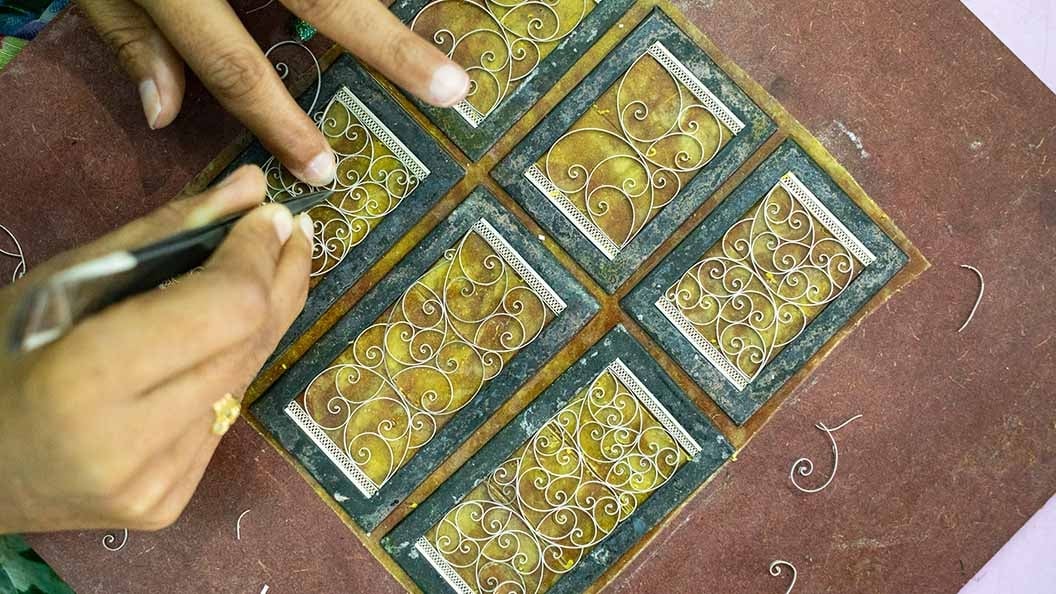
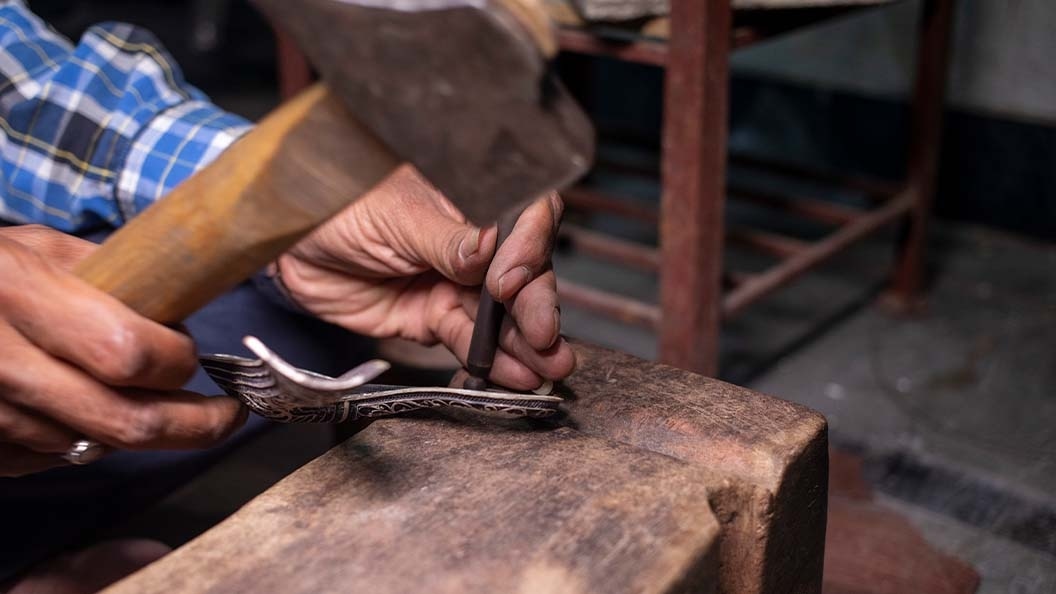
The artisans first draw delicate hair-think wires out of blocks of silver using a wire-drawing machine. The wires are heated before being carefully wound around a charkha (spinning wheel). After the wires are flattened, they are arranged into intricate zigzag patterns. Fine threads of metal are curled, twisted and plaited, then joined with gold or silver soldering with a blowpipe. This craft has three distinct types: fine, non-fine, and superb. Each of these categories is further divided into silka (frame), rua (small balls) and gopal (rose).
The Legacy
The earliest evidence of filigree ornaments in India are from Andhra Pradesh. These are circular filigree ear pendants in gold dating back to early Kakatiya/Chaulukya period (10th-11th century). Later, gold discs with filigree work on their rim were found dating back to the 17th century, Vijaynagara period. Cuttack in Odisha, Karimnagar in Andhra Pradesh, Srinagar in Kashmir, Tiruchirappalli in Tamil Nadu, Agartala in Tripura, Kota in Rajasthan and Thiruvananthapuram in Kerala are centres where varied silver filigree crafts are practiced.