The Craft
Panja Dhurries
Pan India
Rugs Made for Walking
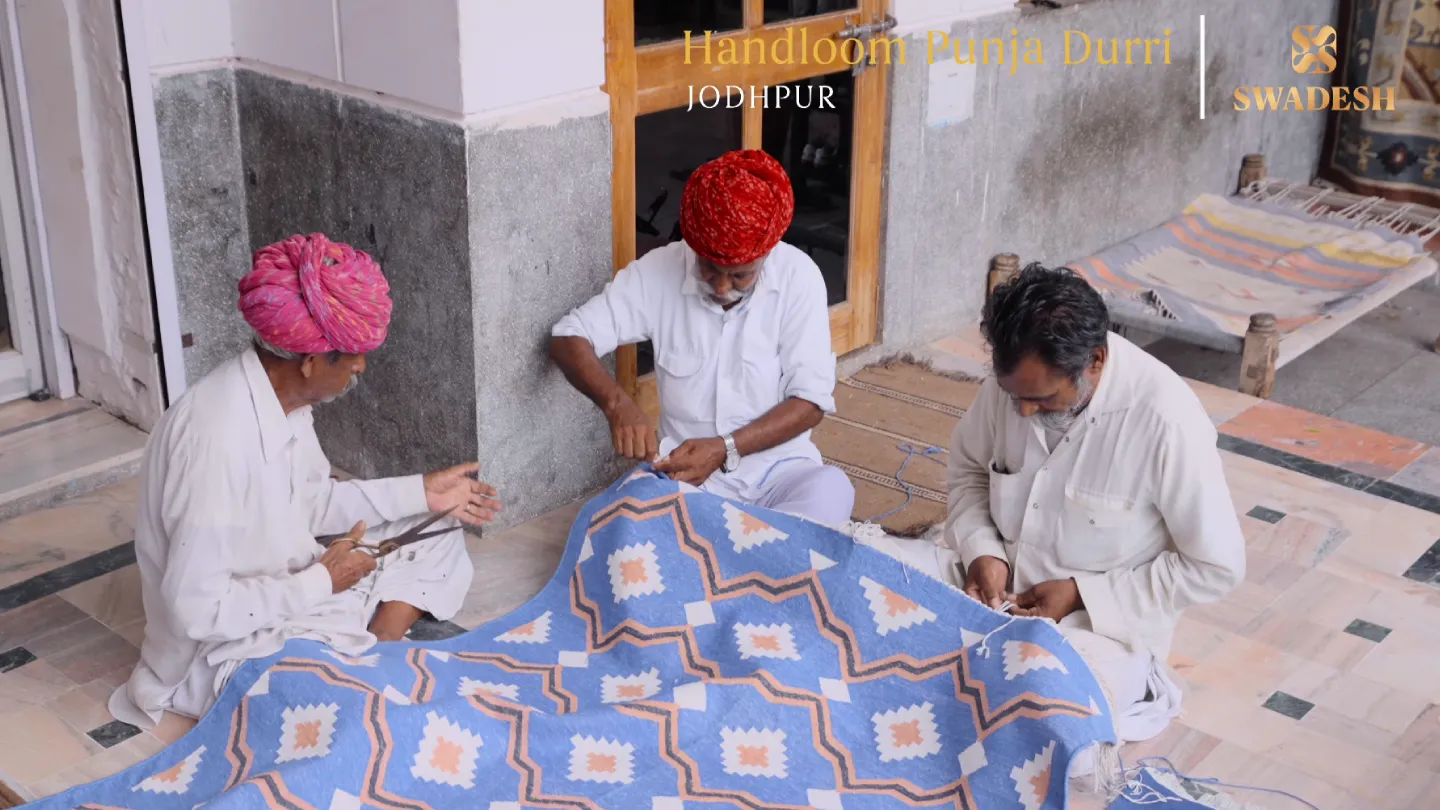
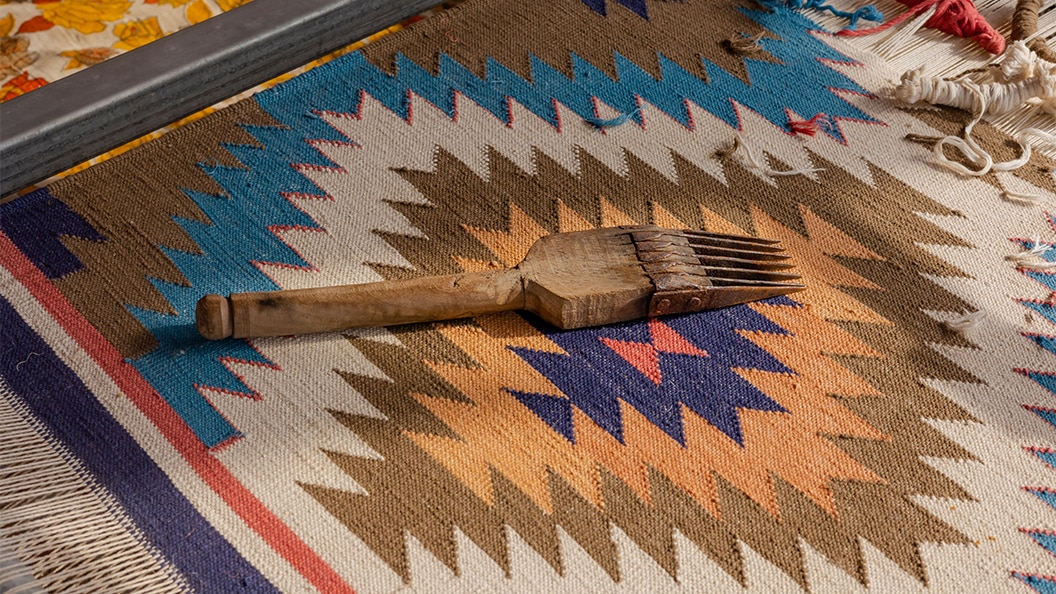
Panja Dhurries are handwoven, dyed cotton yarn rugs, known for their sturdiness. The name comes from a metal tool shaped like a panja or claw that is used to weave. The Panja Dhurries are lightweight and reversible, unlike knotted carpets.
The Making
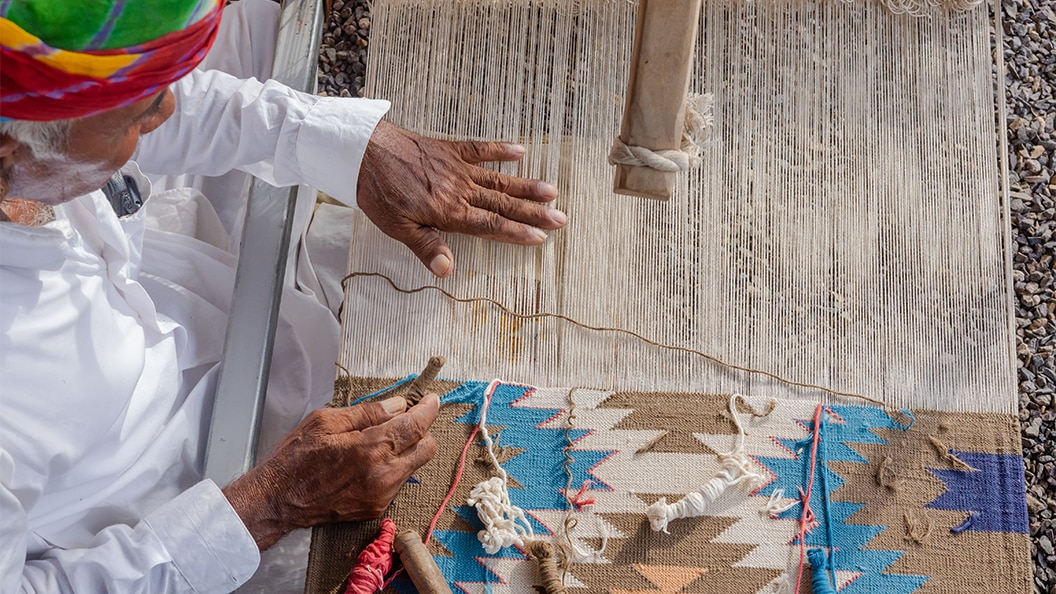
Both men and women are involved in the making of the Panja Dhurries. They set up their panja and pit looms to weave. While men dye the yarn, women hand-spin the cotton threads. Red, orange, indigo and green are the preferred colours that are woven into stripes and geometric shapes. Motifs include the Tree of Life, blooms and birds, medallion patterns and hunting scenes.
The Legacy
Ahmedabad’s Calico Museum of Textiles and the British Museum in London, both, showcase some fine examples of these dhurries. A late 18th century painting, originally created for Lady Impey, wife of the British governor of Bengal, features a striped Indian dhurrie. The technique flourished in the early 19th century under different names - dari or satranji in North India and as jamkalam in South India. Satranji-weaving is mentioned in texts like Ain-i-Akbari, and is featured in Mughal paintings.
Memory Vault
Swami Ram Singh II, the Maharaja of Jaipur in the 19th century, was so impressed by the art, that he allowed prisoners in local jails to become weavers. Several prisons like Delhi's Tihar Jail still offer dhurrie-making as a profession for inmates. These rugs are sold as part of Tihar Haat, a handicraft fair. In the late 1930s, the government of the former United Provinces awarded the All India Weaving and Printing Competition to Bikaner Central Jail.
Discover
The Collection
Featured
More from India