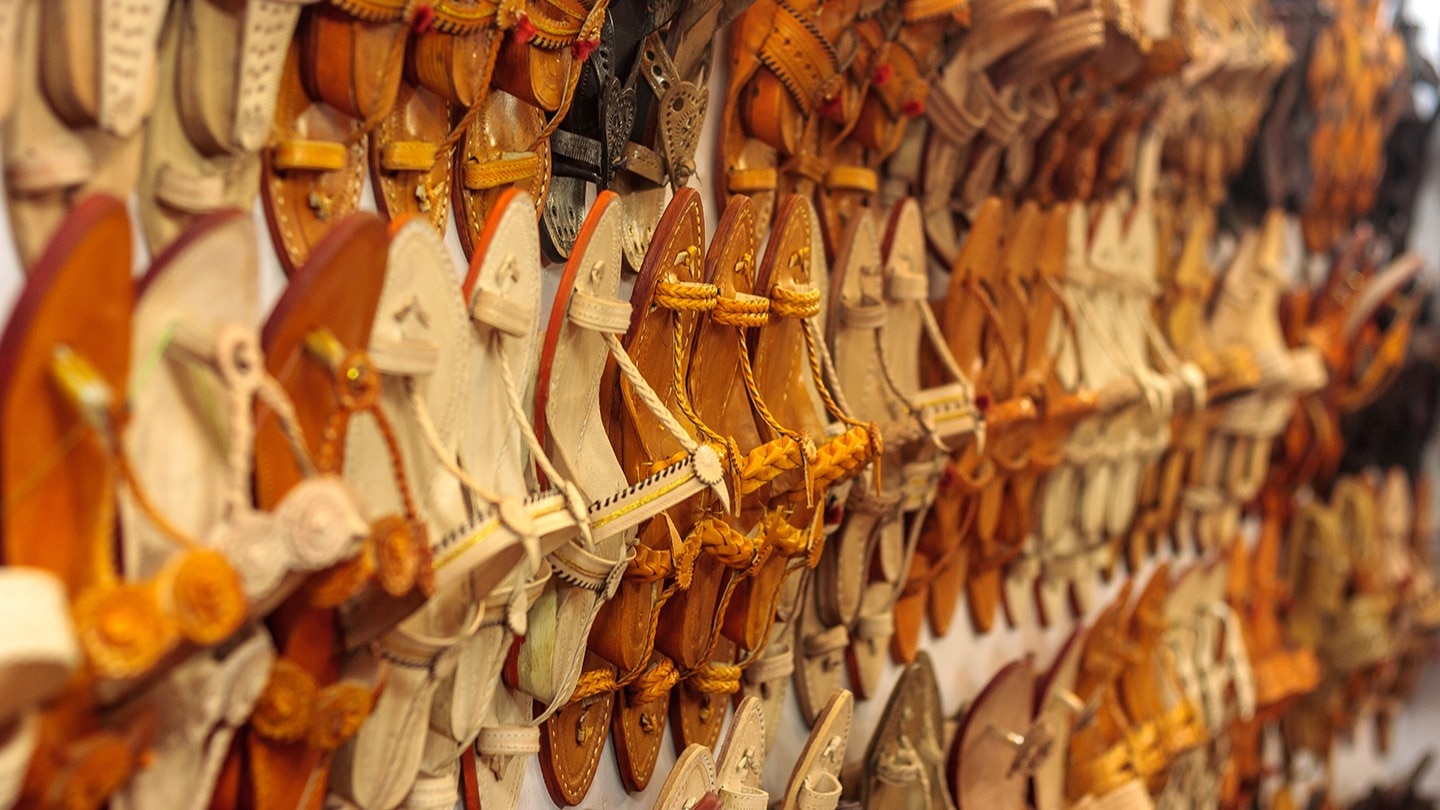
Kolhapuri leathercraft goes back 800 years
The Kolhapuri chappal is among the most popular expressions of Kolhapur’s leathercraft. The town of Kolhapur has, in fact, become synonymous with the colourful footwear. These are characteristically in natural colours with a red pom pom or zari tassel on them. However, Kolhapuri leathercraft today also includes an array of bags, belts, accessories and other products, all made using time-honoured techniques.
The Making
The origin of Kolhapuri leather work goes back 800 years, to when mochis (shoemakers) began using buffalo or bull hide to create leather products. In the 12th century, Chalukya rulers of the Deccan promoted this craft, and Shahu Maharaj was a notable patron. Kolhapuri leather work is dependent on an intensive tanning process. After this, skilled craftsmen cut, shape and stitch leather pieces using machine work and handcrafting techniques.
The Legacy
Drawing inspiration from a rich repertoire of shoemaking tradition, the chappals got various names—Bakkalnali, Pukari and Kachakadi. They are named after villages surrounding Kolhapur. Those made with flaps (or ears) came to be known as Kanwali.When the ‘Kolhapuri’ tradition was certified with a Geographical Indication (GI) tag in 2019, it was for the chappal. This became the most well-known leather product from this town.
Memory Vault
The story of the Kolhapur leather industry has been published several times. There has been special focus on the labour-intensive craft, and the challenges of local craftspeople. There has been a lot of research into why the Kolhapuri identity needs to be saved, and how the tradition can be modernised.
Discover
The Collection
Featured
More from India