The Craft
Zardozi Embroidery
Pan India
The Gold Needle & Thread
An art form that originated in Persia, Zardozi embroidery became prevalent all over India, especially in the north. While Lucknow, the home of Chikankari, is hailed for intricate zardozi work, other centres like Farrukabad, Chennai and Bhopal also boast zardozi artists. The term Zardozi comes from two Persian words, zar (gold) and dozi (embroidery).

The Making
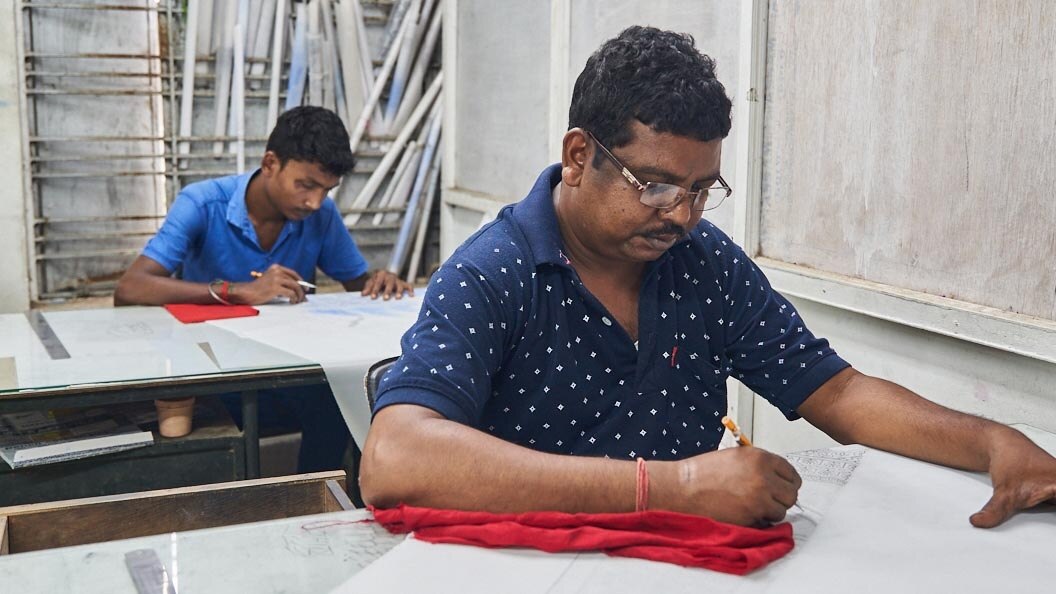
First, the fabric is fixed over a wooden frame to prevent it from shifting. Then, craftsmen embellish with silver or gold thread and beads, pearls, gems, and precious or semi-precious stones. It can take up to 10 days to complete one piece of embroidery work. Popular motifs among zardozi artisans include flowers, leaves, trees, animals, birds, and mango or kairi. Artisans also work on geometrical patterns, jalis, and paisleys inspired by Persian designs. All such designs are embroidered by hand on silk, organza, velvet, and satin, with the help of an aari (needle).
The Legacy
Craftsmen who worked with metallic embellishments were known as zardos workers around the 13th century. In the 16th century, the Mughal era saw a surge in this craft in India.


Memory Vault
In 2022, Prime Minister Shri Narendra Modi gifted attar (perfume) in a Zardozi box to the French President, Emmanuel Macron, at the G7 Summit in Germany. The box was crafted in Lucknow, Uttar Pradesh, and was hand-embroidered on khadi silk and satin tissue in the colours of the French National Flag.
Discover
The Collection
Featured
More from India