The Craft
Walnut Wood Carving
Kashmir
Kashmir’s Nutty Craft
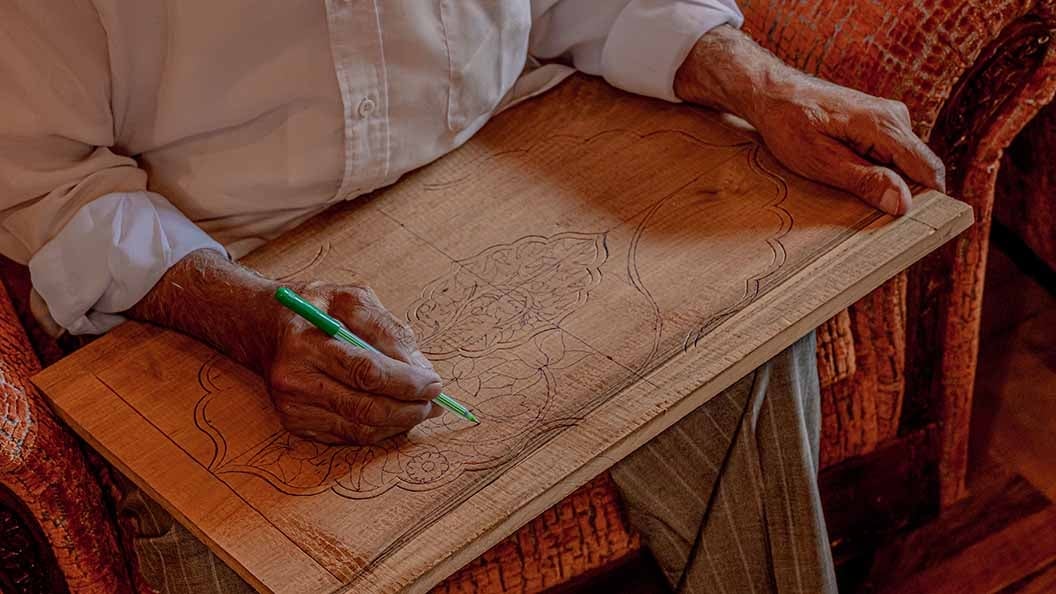
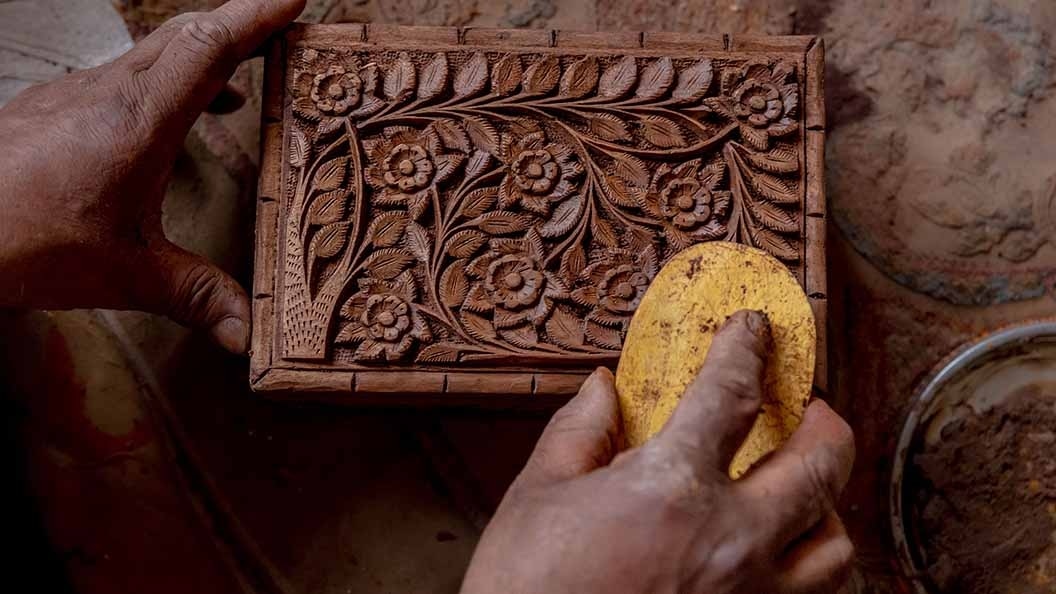
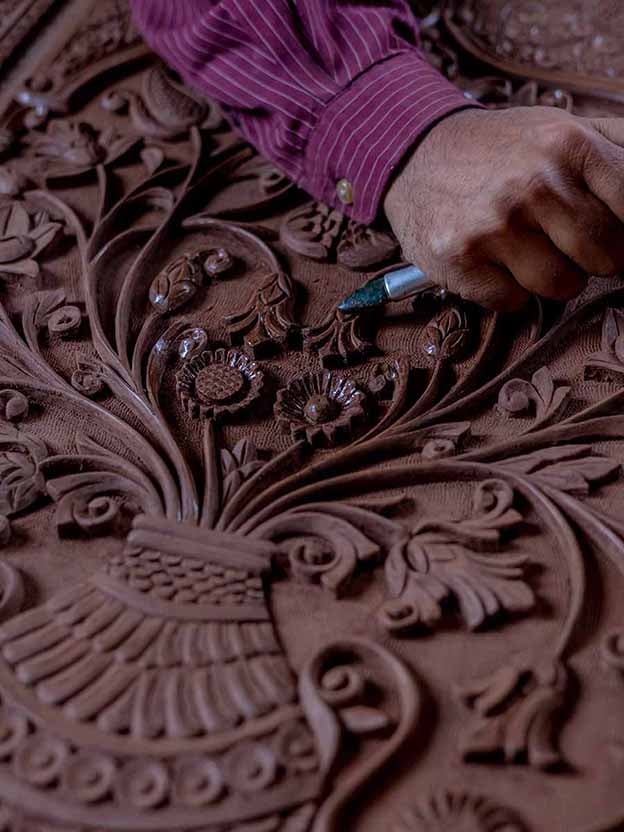
The sturdy quality of the walnut wood and its uniform, smooth texture allows Kashmiri craftsmen to carve some of the most beautiful, intricate designs on it. The designs include motifs of the chinar leaf and other flowers and fruits. The walnut tree is locally called Doon Kul.
The Making
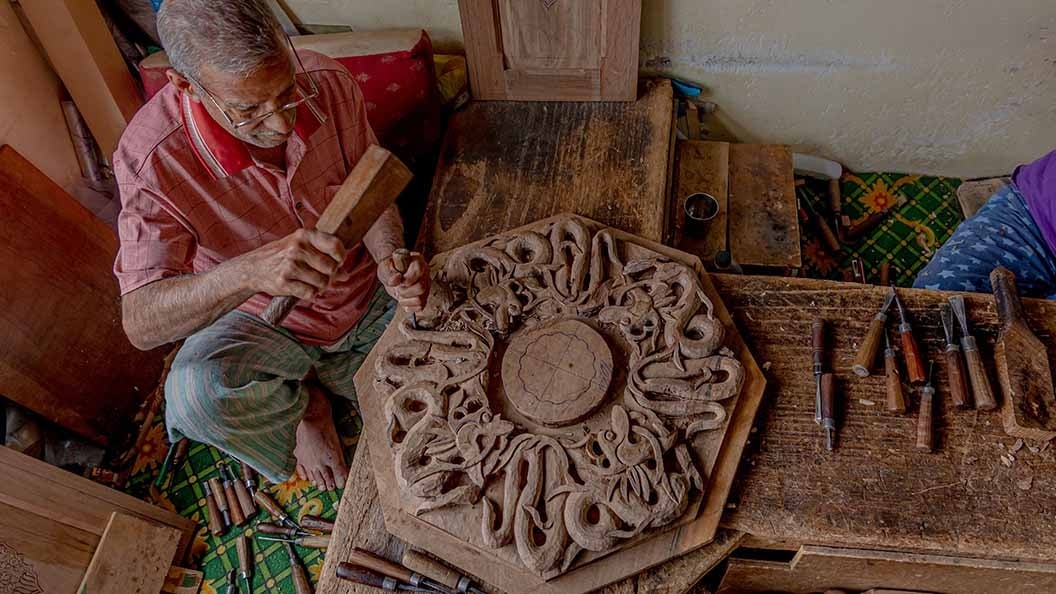
According to research and folklore, a tree is only cut after it reaches the age of 300 years. Walnut wood carvers and craftspeople are trained carpenters, who understand joinery, carving and polishing. The master artisan is called the naqqash. Artisans etch simple designs on the wood before refining them with fine chisels and a wooden mallet. The famous craft is exported to several design stores in many parts of the world.
The Legacy
In the 15th century, Sheikh Hamza Makhdoom introduced walnut wood carving in Kashmir. There are accounts of ruler Zain-ul-Abadin’s palace being carved entirely out of wood. Even today, this exemplary artwork can be seen in the shrines of Nund Rishi, Noor-ud-din-Wali and the Naqshaband mosque of Kashmir. Walnut wood carving has been certified with a Geographical Indication (GI) tag since 2009.
Memory Vault
Earlier this year, several crafts of Jammu & Kashmir such as the Kashmir Pashmina, Kani Shawl, Papier-mâché and Walnut Wood Carving, got a high-tech upgrade. Certified pieces now come with QR labels for security of the customers' purchase.
Discover
The Collection
Featured
More from India
INDIA'S CRAFTS
Discover More
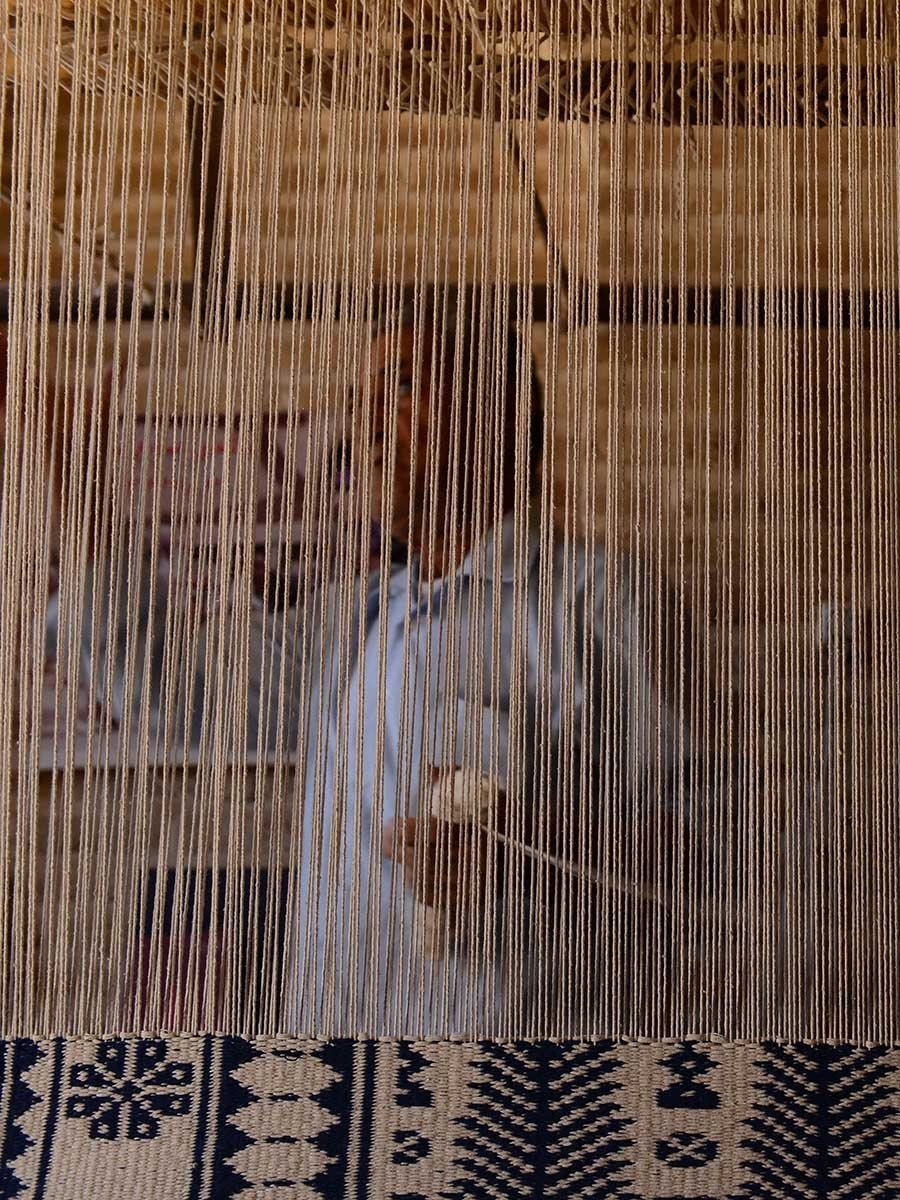
Kashmir Hand Knotted Carpet
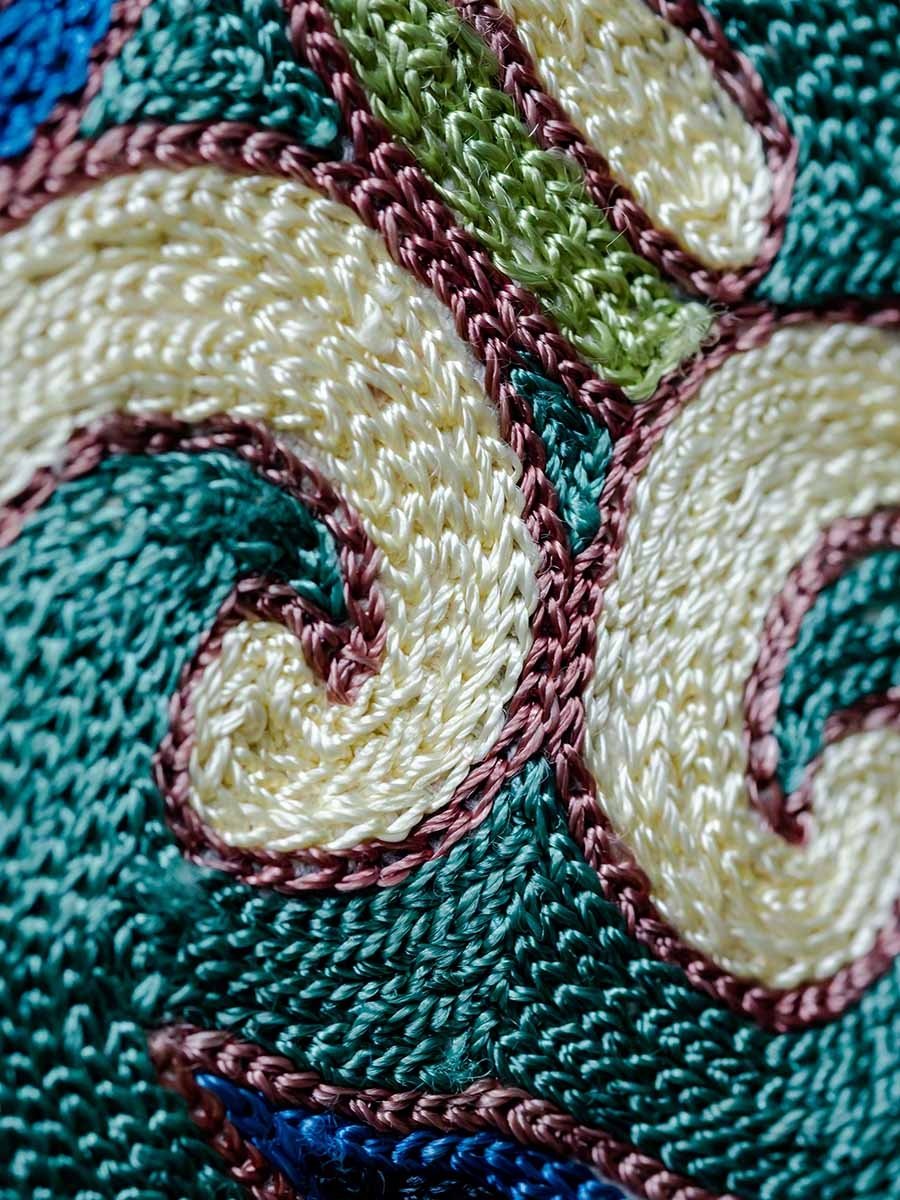
Kashmir Chain Stitch Hand Embroidery
Walnut Wood Carving
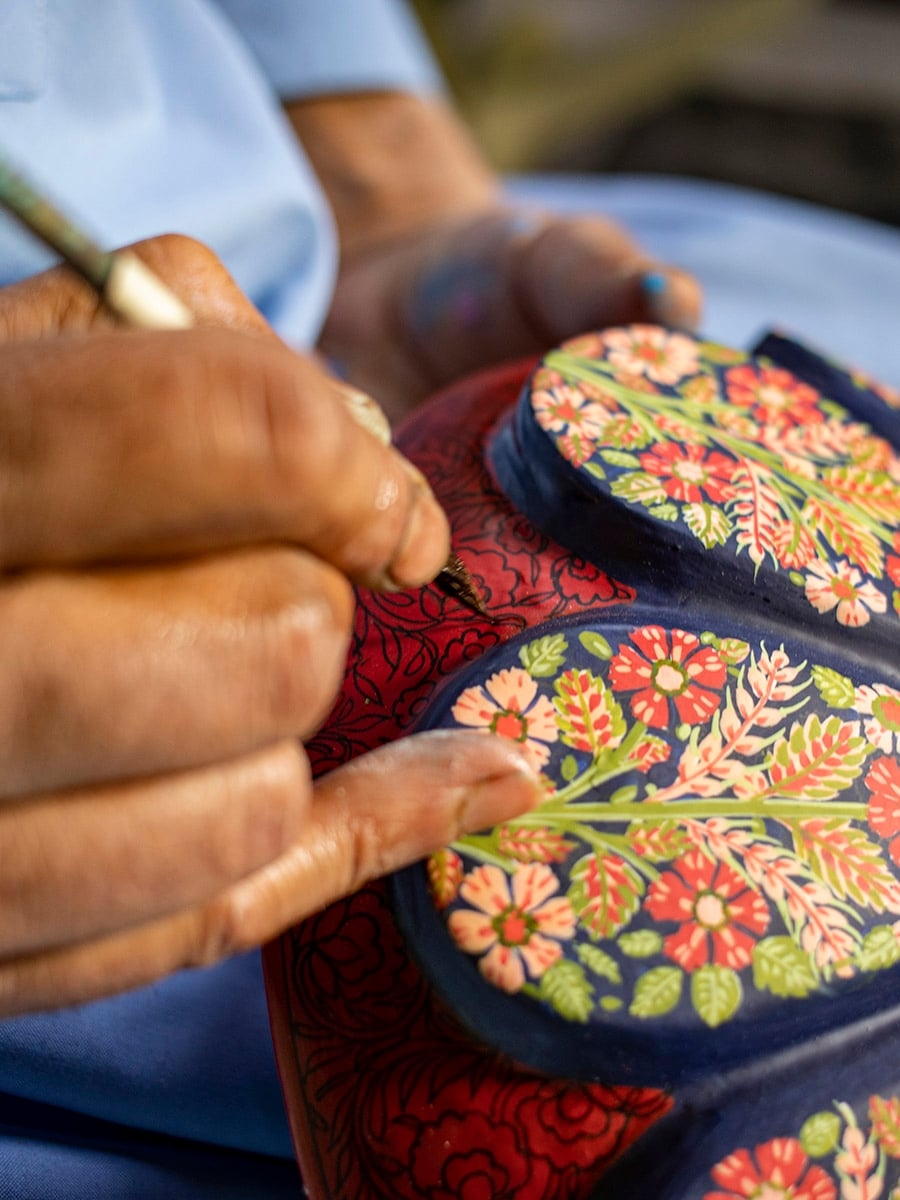
Papier-mache-Patna-Srinagar