The Craft
Terracotta
Rajasthan, West Bengal, Chhattisgarh, Delhi
Terracotta and India’s Good Earth
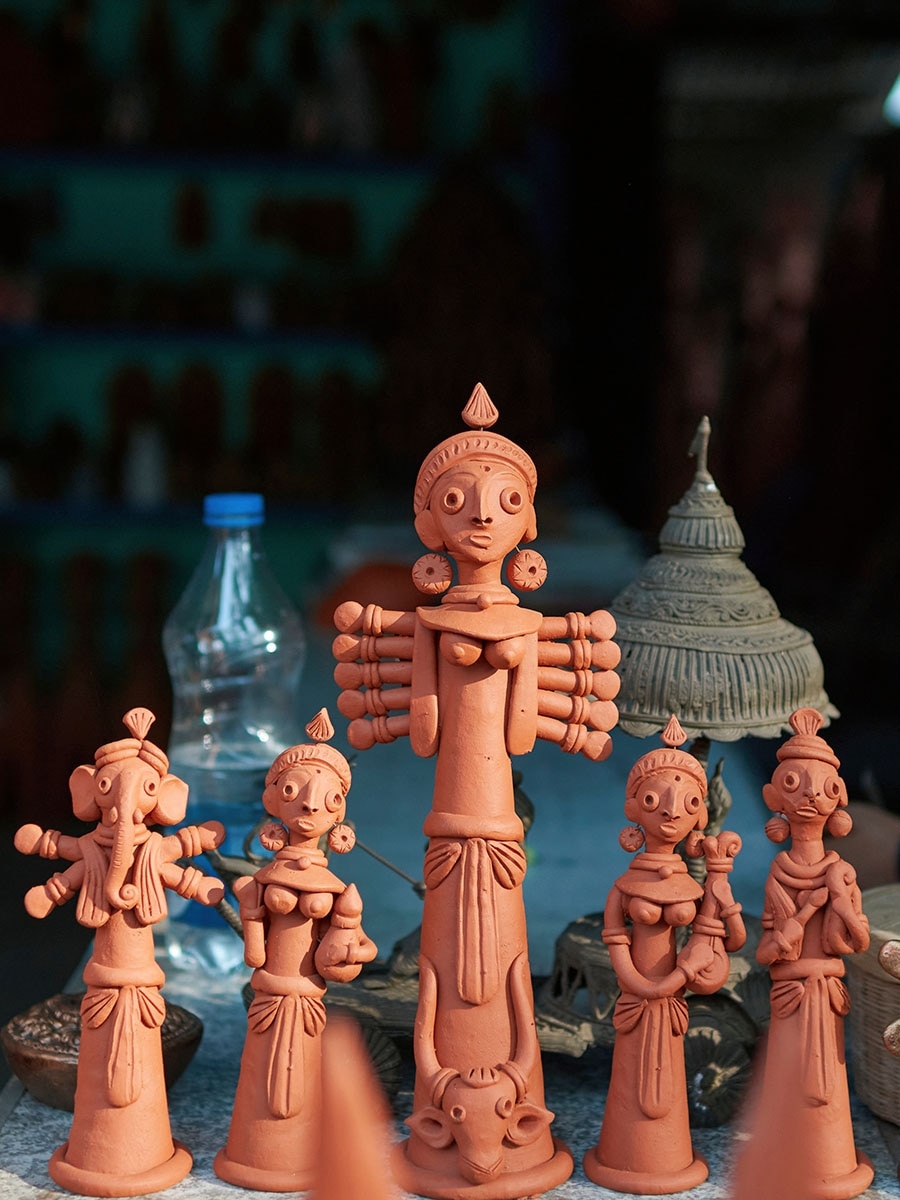
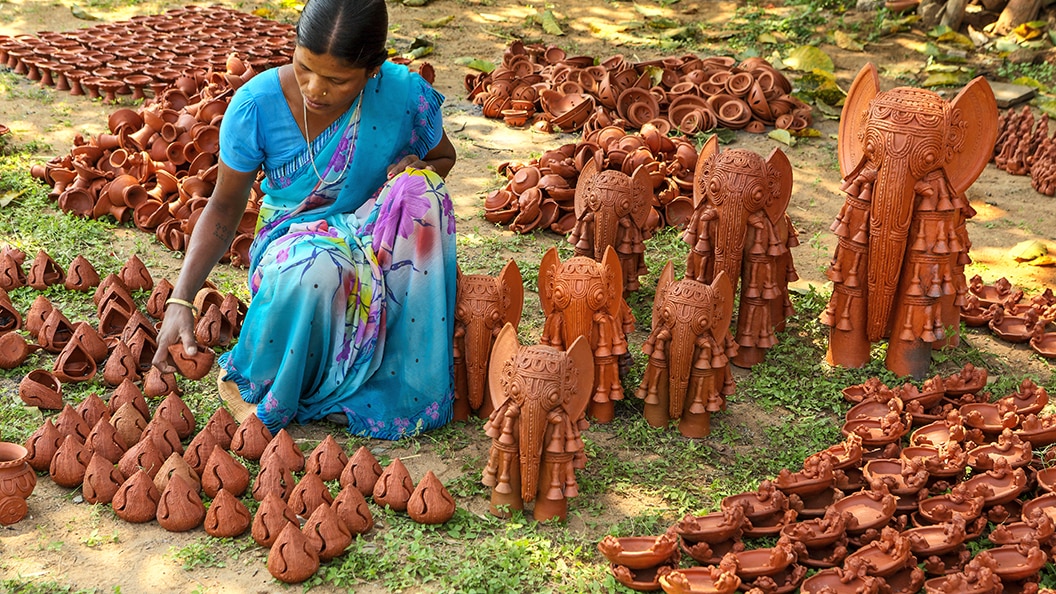
Terracotta is derived from the Latin word for "baked earth". The craft involves creating glazed or unglazed porous earthenware and other decorative items from clay. Historically, the craft dates to 7000 BCE. Figures of deities have been found at the sites of the Indus Valley Civilisation like Birhana, Mehrgarh and Mohenjodaro. Today, India exports exquisite terracotta items like statues, vases, decorations, murals, and more.
The Making
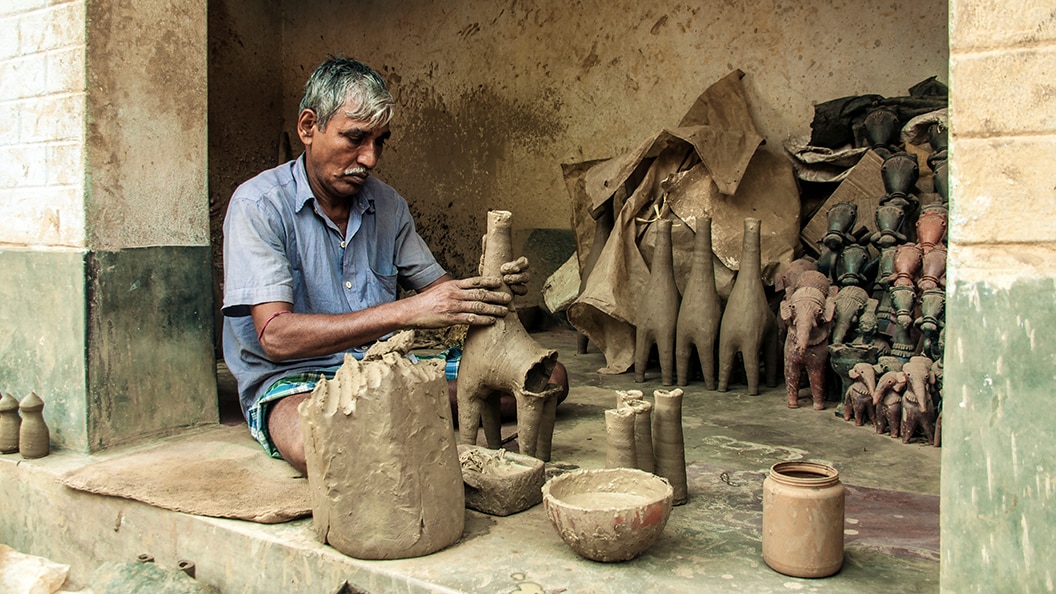
The clay is dried and fired at temperatures around 1000°C, giving it distinct colours. Traditional terracotta items were painstakingly shaped by hand, but as demand and usage increased, artists started using moulds for mass production. The process involves clay refining, removing impurities such as lumps and stones, mixing the clay, throwing it on the wheel, drying and firing.
The Legacy
The rural areas of West Bengal, Alwar and Pokhran in Rajasthan, Edka in Bastar, Chhattisgarh are well-known for terracotta craftsmanship. In Delhi, migrant potters from Haryana, Rajasthan, and Uttar Pradesh have formed a community known as "Kumbhar Basti'' in the Govindpuri and Hauz Rani areas. Here, they produce a variety of earthen objects from a special kind of light red clay.
Memory Vault
The Bankura terracotta horse, made by the Kumbhokars (potters) from Panchmura village in West Bengal, is an example of beautiful terracotta work. It appears in some of the important logos that stand for India’s crafts and cultural economy.
Discover
The Collection
Featured
More from India
___(Kochi)_1.jpg)