The Craft
Sozni Hand Embroidery
Kashmir
Threading the Past and Present with Sozni
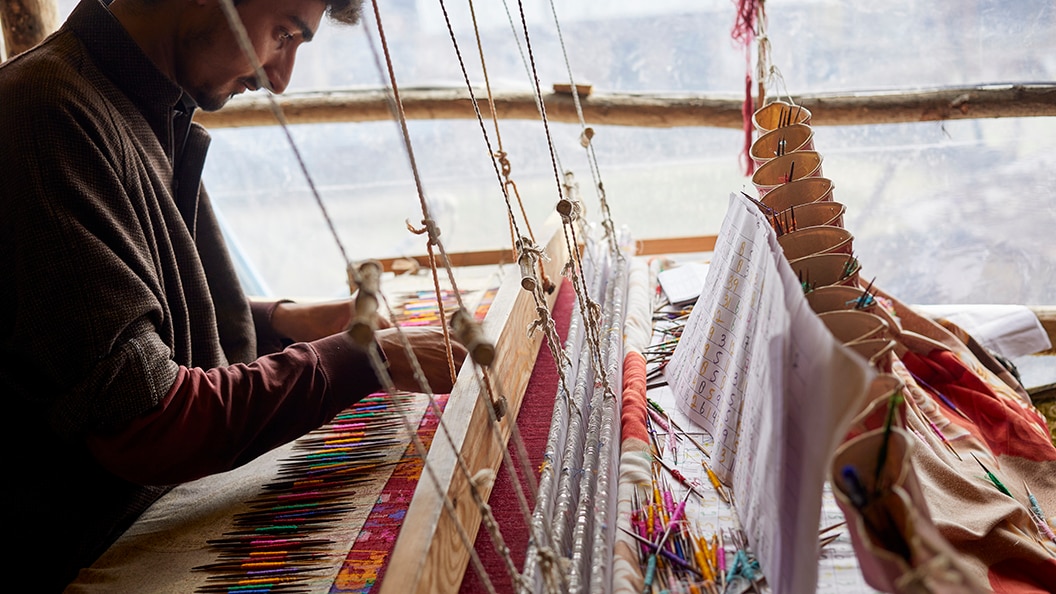
Sozni is a refined hand embroidery technique from Kashmir in which both sides of the fabric are embroidered. With its origins in 12th century Central Asia, Sozni embroidery predominantly adorned shawls, large carpets and throws.
The Making
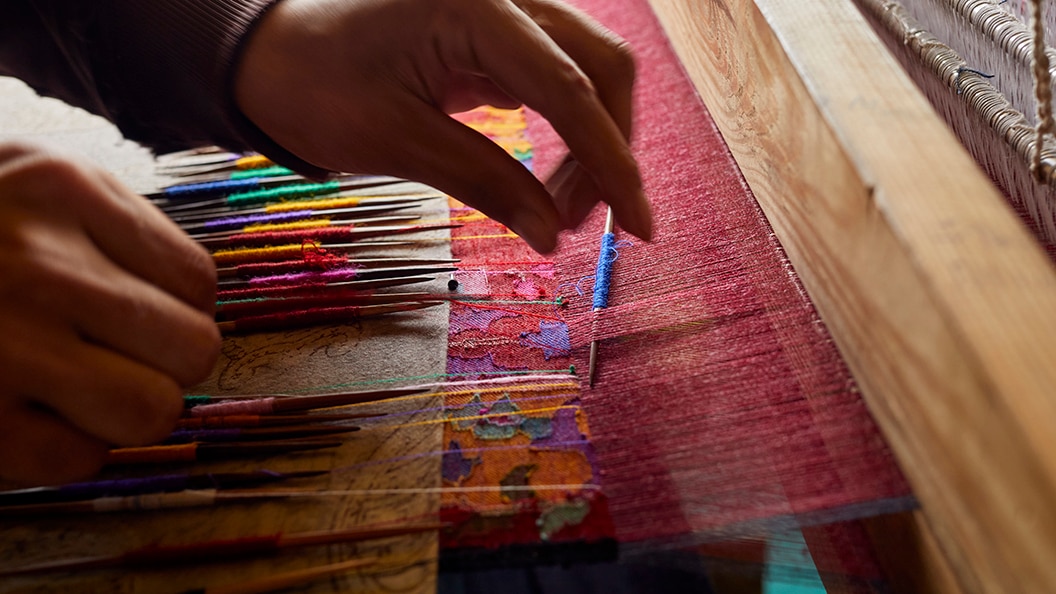
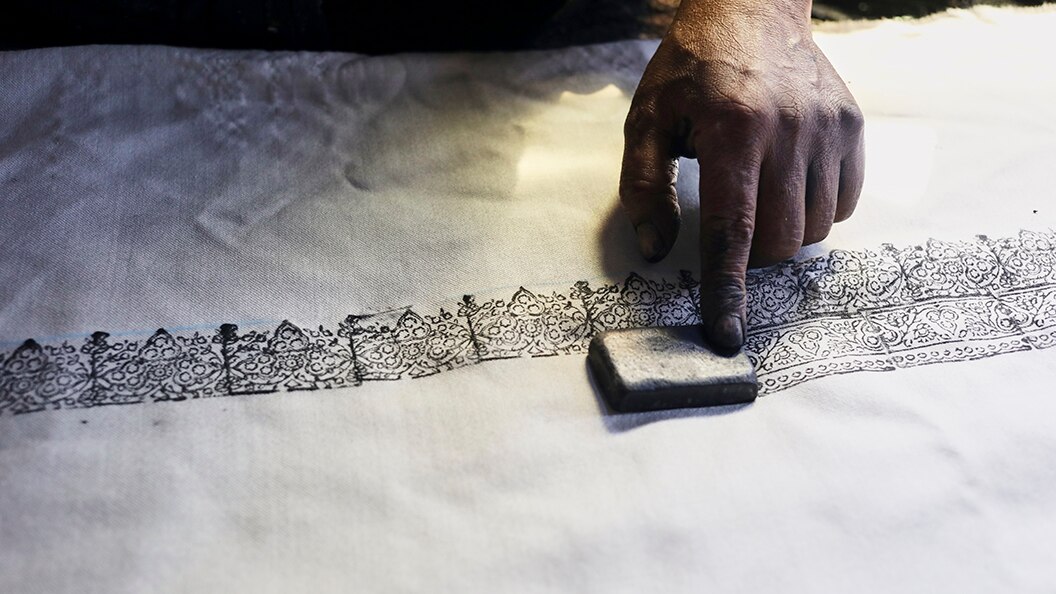
Once a design is conceptualised, a naqash (pattern maker) draws it onto graph paper using geometric techniques. Then, a wooden block (made of walnut wood), is immersed in chemical ink and carefully stamped over the shawl. The stamped shawl is then entrusted to a master artisan, who approves the design and selects colours for the embroidery.
The Legacy
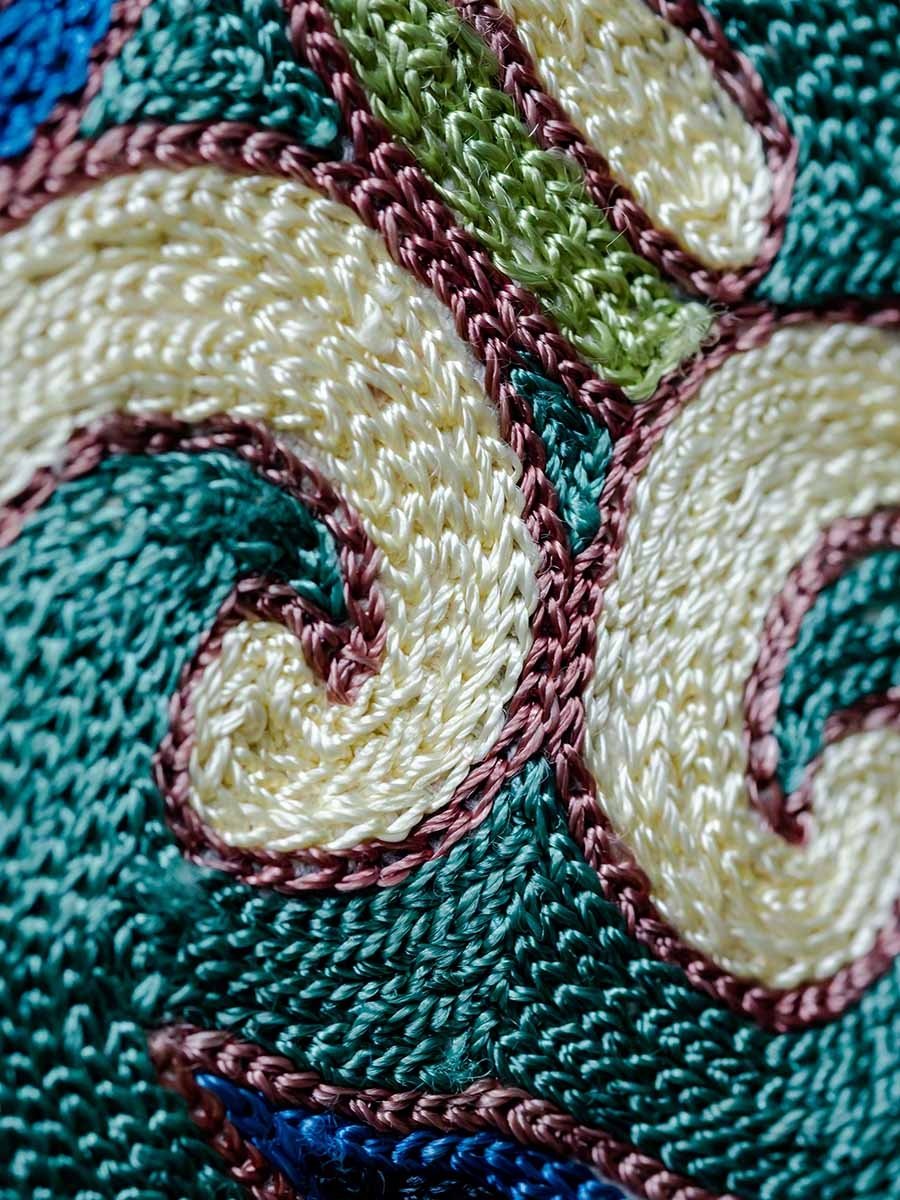
The delicate needlework uses a lot of herringbone stitch, famous as the Kashmiri stitch. Besides this, open chain, couching and buttonhole stitches are also used to render the motifs that are usually flowers, vines, paisleys, and chinar leaves. Sozni art was certified with a Geographical Indication (GI) tag in 2008.
Memory Vault
In 2023, David Housego and Mandeep Nagi, co-founders of design house Shades of India, displayed Bukhara: A Journey on The Silk Route at the National Crafts Museum in Delhi. This included their private collection of ancient textiles. Soznis from the mid-19th century were highlights among the exhibits. The extraordinary pieces showed the impact of Indian sensibilities on Central Asian textiles.
Featured
More from India
INDIA'S CRAFTS
Discover More
Kashmir Chain Stitch Hand Embroidery
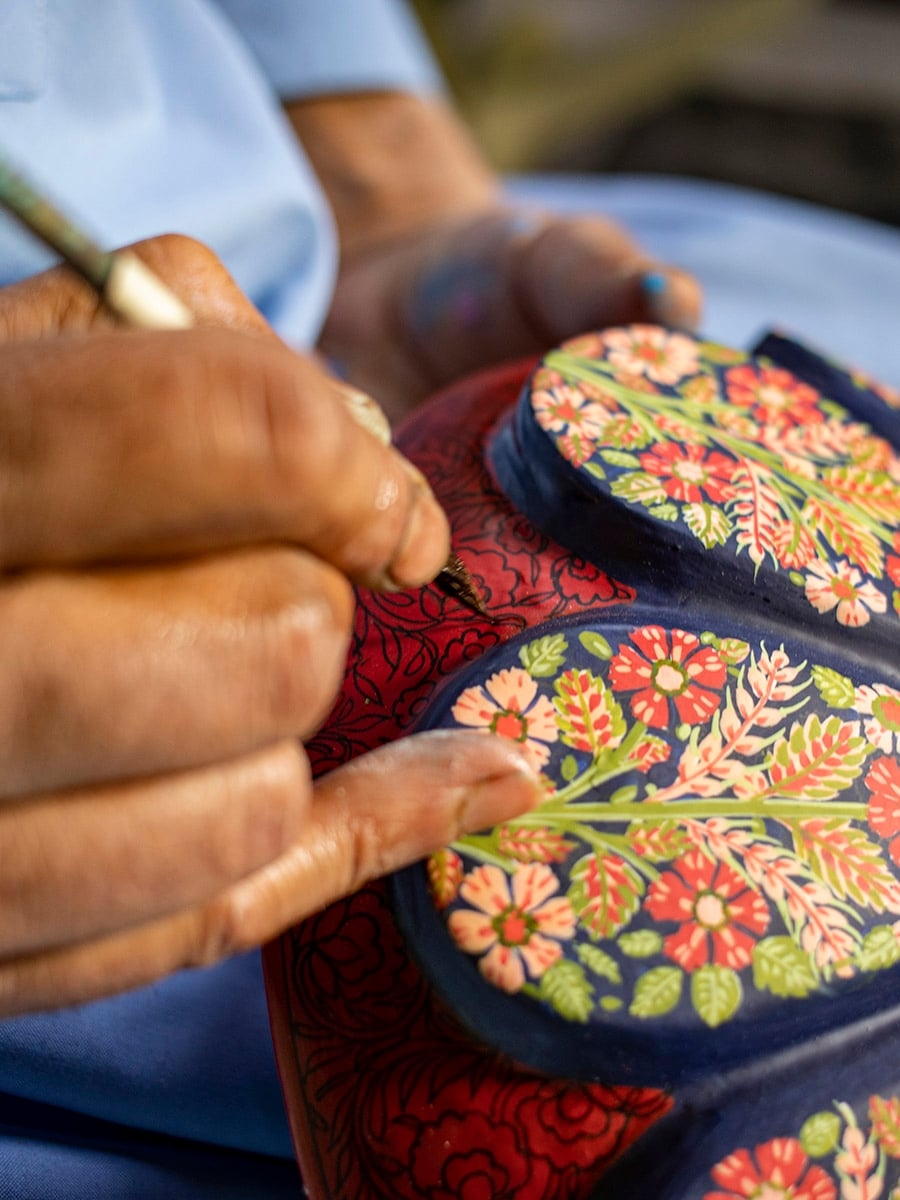
Papier-mache-Srinagar
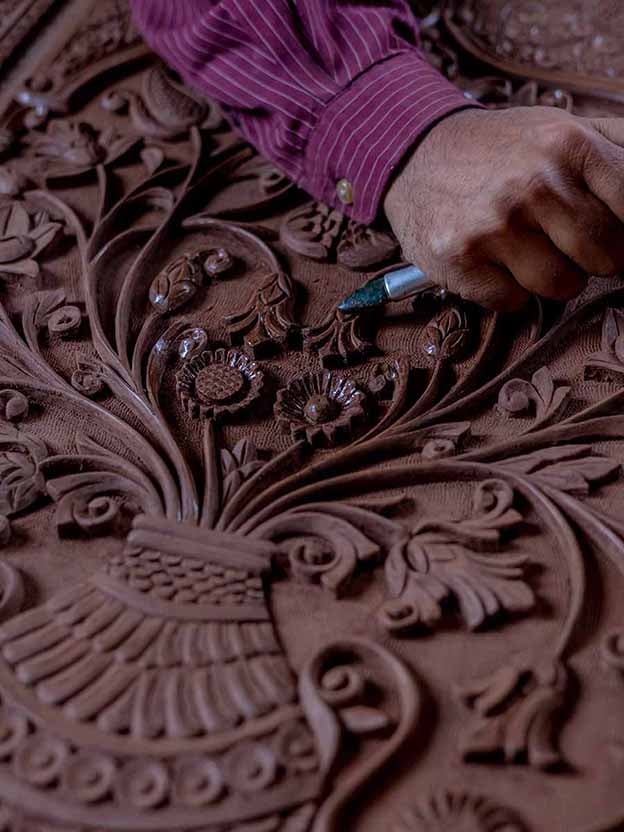
Walnut Wood Carving
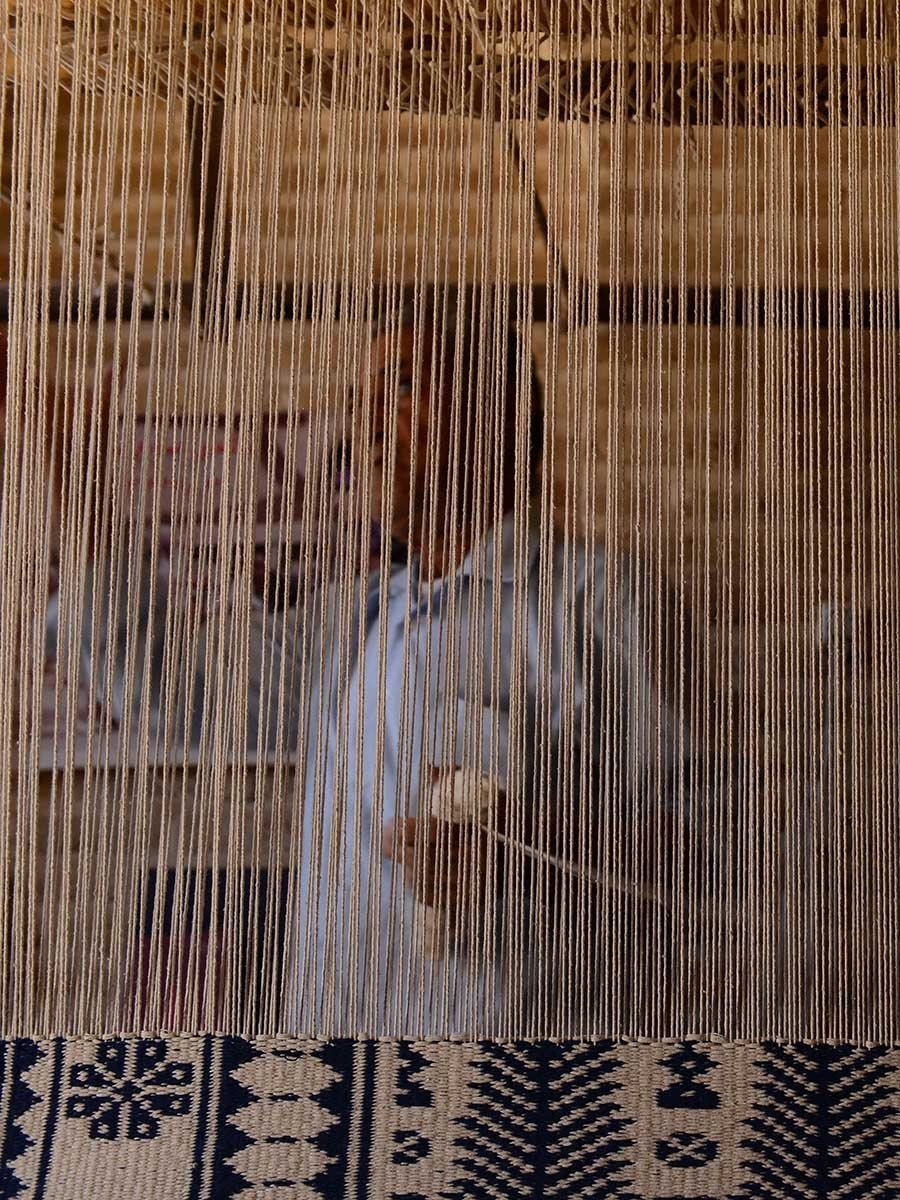
Kashmir Hand Knotted Carpet