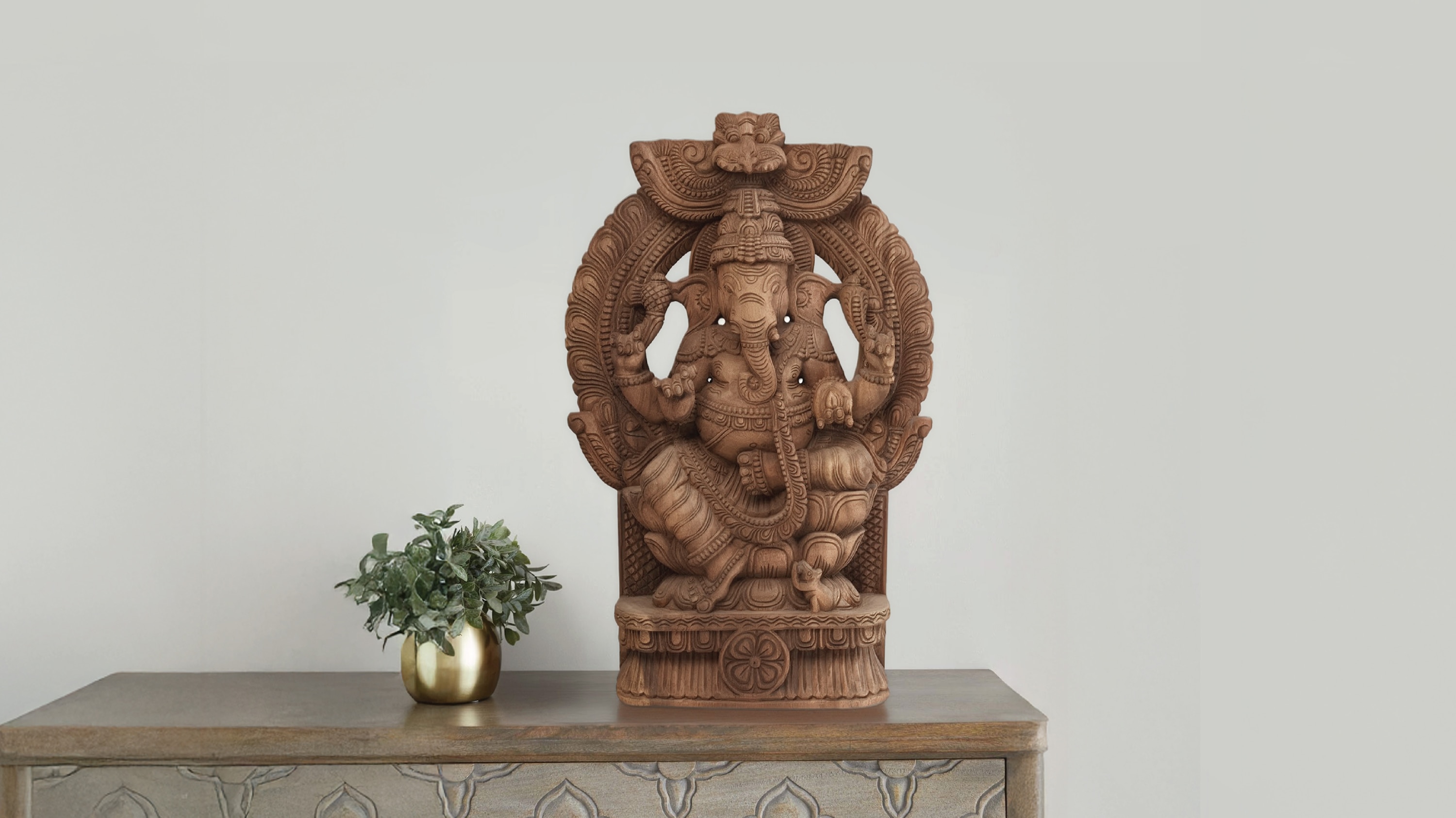
Prithvi is the last of the five elements to condense from the cosmos. In that last condensing, it carries within itself the memory of everything that came before it. The oldest craft traditions of the Indian home are earth traditions. Clay fired into form. Stone shaped by hand. Objects that do not age so much as deepen.

The Ground Beneath Everything

There is a particular quality to an object made from earth. A gravity. A refusal to be hurried. You pick it up and it has opinions about being picked up. It has weight that is not just physical. A terracotta panel from Molela does not sit lightly on a shelf. It sits the way something sits when it knows it belongs there. Unhurried. Certain. Already home.

The Indian potter's tradition reaches back further than any other craft in the home. Long before brass was cast or stone was carved into its final refinement, potters were working the soil into form. The continuity of that practice is itself part of what an earthen object carries into a home. The same river clay. The same kiln fire. The same turning of the wheel.

What Earth Makes

At Molela in Rajasthan, votive panels have been shaped from local river clay for generations. The technique is largely unchanged. The forms evolve slowly with each pair of hands that learns them. The horses, deities and processional scenes that emerge from Molela kilns are records as much as they are objects. Each one carries the imprint of the hand that made it, the soil it came from, the occasion it was shaped for.

At Nizamabad in Uttar Pradesh, a black pottery tradition produces vessels so finely burnished they read as cast metal. The blackening is not glaze. It arrives through a precise firing process, the clay burnished with mustard oil, the kiln sealed at the critical moment. The darkness comes from within the object itself. No surface treatment achieves what only fire and earth together can make.

The same hands that shape a votive panel shape the vessels that hold a home's living things. A hand-thrown terracotta planter, a black clay vase with a single stem. These are not additions to the earth tradition. They are the earth tradition, continued.

In Bishnupur, Bengal, temple walls carry terracotta panels depicting scenes from the Puranas, the same clay tradition translated into devotional architecture. The material is constant. What changes is the scale of the ambition.

The Longer It Lives

What distinguishes an object made from earth is that time does not diminish it. Time develops it. A terracotta vessel does not wear out. It deepens. The surface acquires something no new object can possess. The evidence of its own life. Handling changes it. Light changes it. The particular air of a room changes it across years.

Stone works by the same logic. The carved sandstone panel, the soapstone bowl. These were always going to outlast whoever made them. The craftsman who cuts stone understands this without being told. He is not making something for now. He is making something that will still be here when now is a very long time ago.

To bring a Prithvi object into a home is to bring in a specific quality of patience. The quality of something that has waited before and will wait again. A home grounded in earth objects carries that quality into every room it settles in.

A Final Thought

The earth does not ask to be noticed. It holds the home above it, the objects within it and the people who move through both.