The Craft
Mysore Paintings
Karnataka
Mysore Paintings and Their Brush with Gold
A distinguished classical South Indian art form, Mysore paintings flourished under royal patronage in and around the town of Mysuru in Karnataka. They are known for softer colours, finer brushwork, and intricate gesso work.
The Making
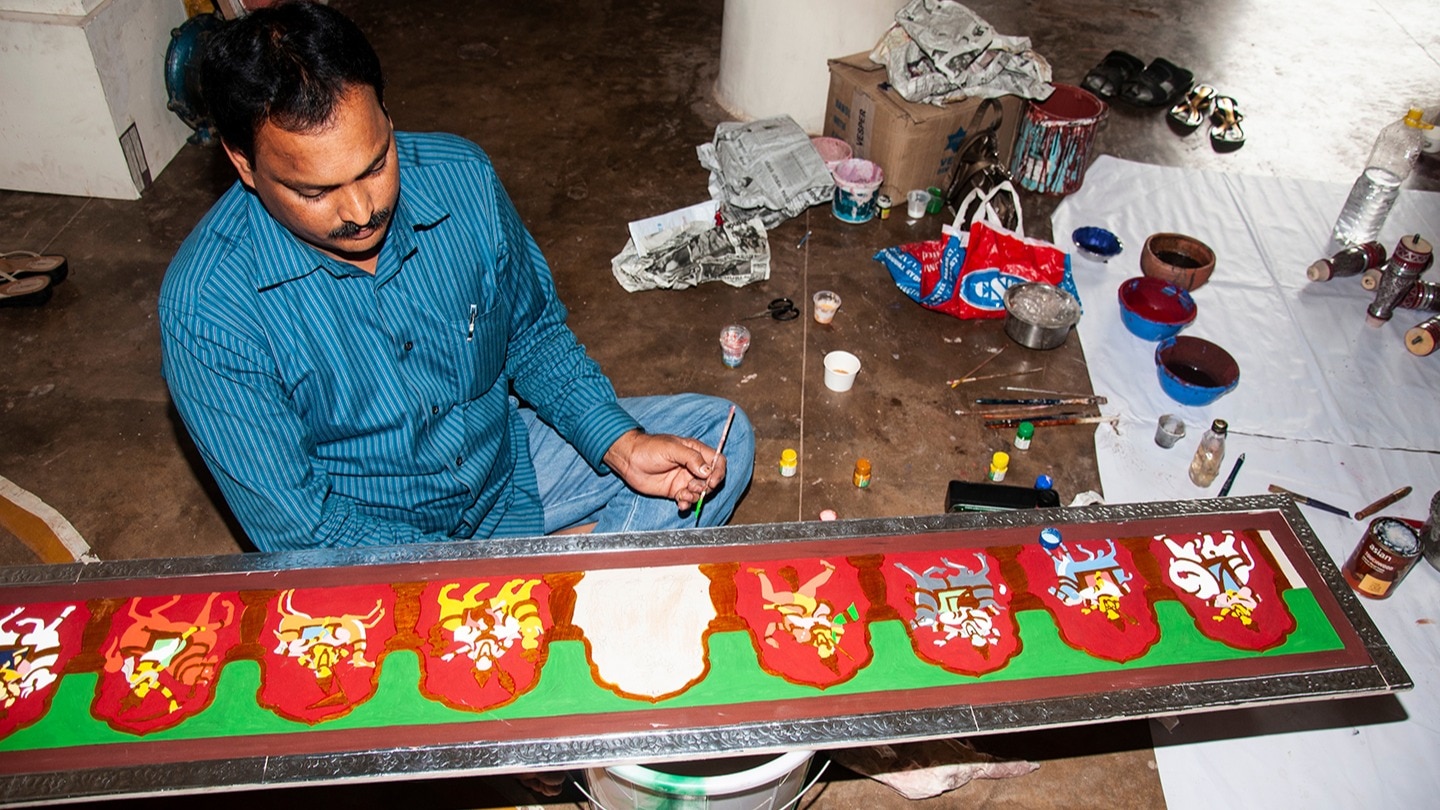
Mysore paintings are known for their graceful figures and lush scenes, illustrated on paper, wood or cloth. First, the artists make a sketch with a tamarind twig, then add details and colour with natural pigments. After colouring the figures, they fill out the faces, dresses and ornaments with intricate low-relief gesso work, made from white lead, gamboge and glue. Once the painting is dry, it is glazed by covering it with thin paper and rubbing it softly with a glazing stone called kaslupada kallu. Gold leaf application adds the finishing touch.
The Legacy
The first school of Mysore painting style originated during the Vijayanagar Empire (1336-1565 CE). These mostly depicted mythological subjects and stories. After the empire’s dissolution, migrating artists, known as chitrakars, absorbed local techniques and spread across the empire’s erstwhile territory. The medieval Wadiyar dynasty commissioned murals for palaces and temples. This played a pivotal role in keeping the art form alive.
Memory Vault
The Battle of Pollilur, commissioned by Tipu Sultan in the 19th century, is one of the more notable works in Mysore style. This 32-feet-long artwork depicts the victory of the Mysore Army against the East India Company in 1780. It was originally meant to be part of a large mural for the Daria Daulat Bagh Palace in Seringapatam. In 2022, the painting was sold at a Sotheby’s auction for US$ 658,000 (more than Rs 6.25 crore).
Featured
More from India
INDIA'S CRAFTS
Discover More