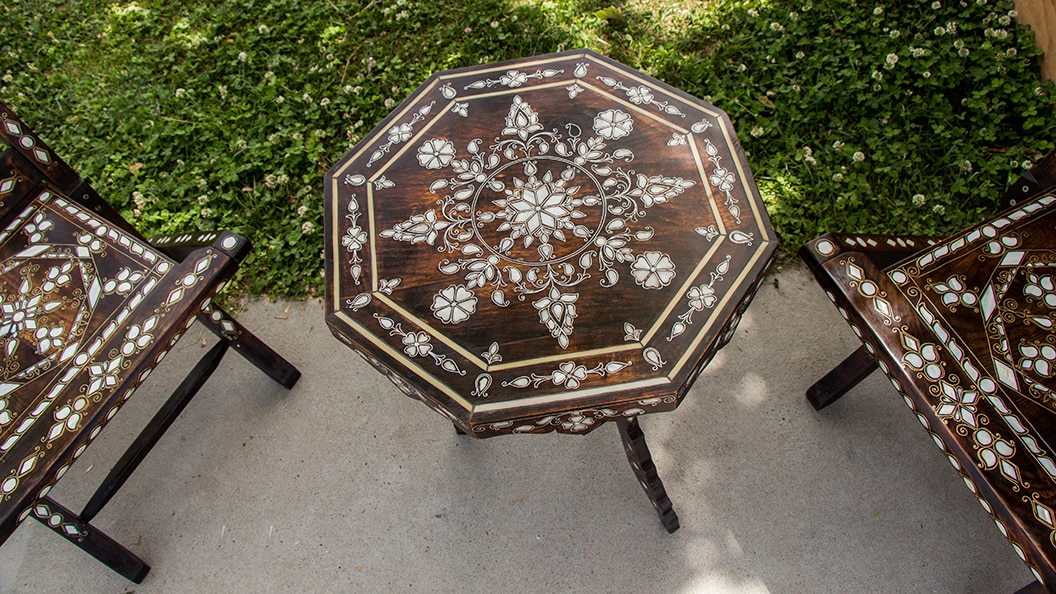
The Craft
Mother-of-Pearl Inlay
Rajasthan and Gujarat
An iridescent craft inspired by the marine world
The shimmer of mother-of-pearl, found in the shells of oysters, mussels, abalone and snails, makes it popular for decorating furniture and jewellery. Since the shells are delicate, it takes great skill to cut and shape them into desired forms. In India, artisans from Rajasthan and Gujarat are masters of this craft.
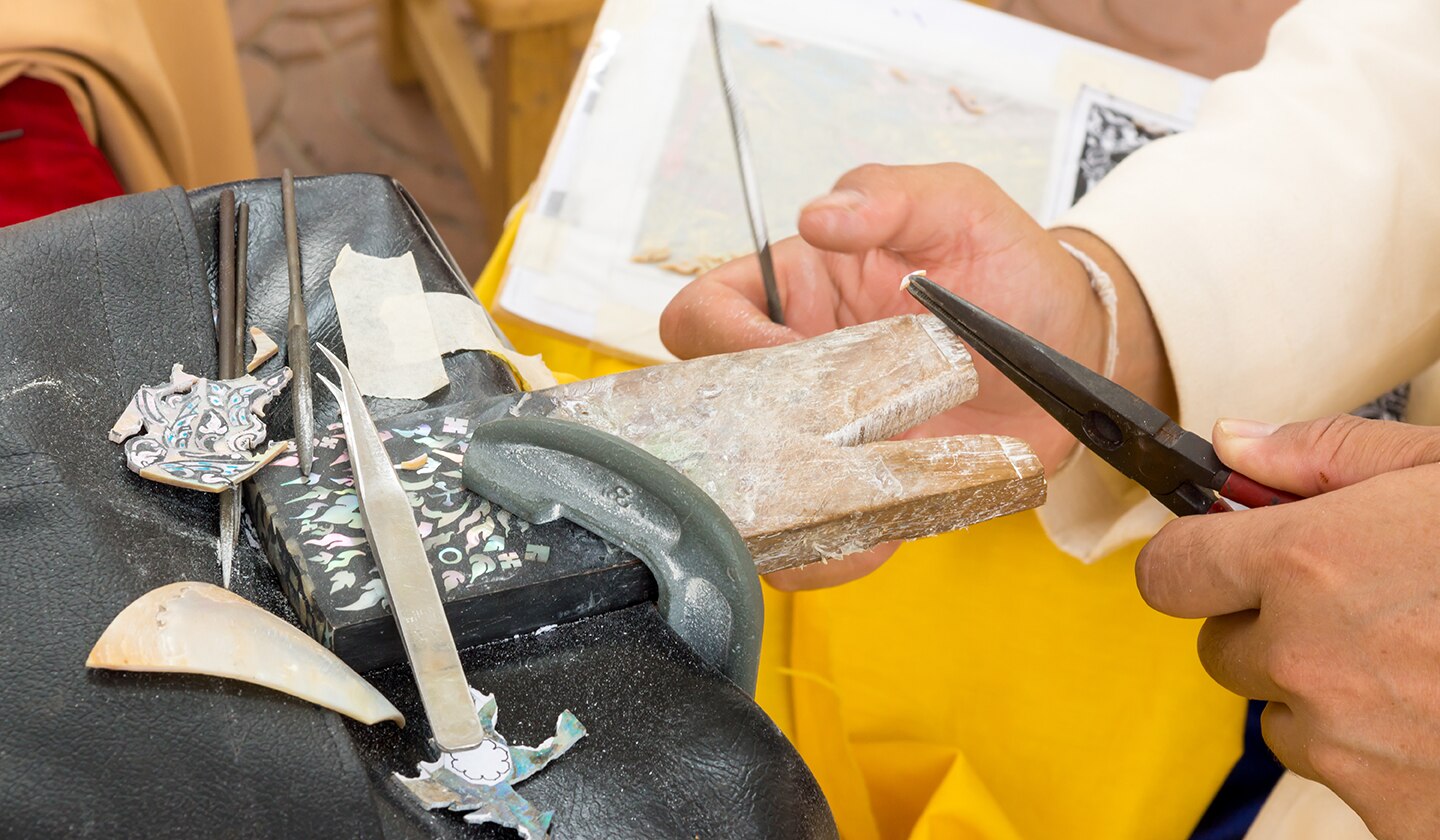
The Making
Artisans first remove the outer dark layer of the shell and thin it. The shell pieces are then cut to the desired size, using a metal cutter and attached to wooden objects. Slim brass strips are added, and a circular plate is fixed at the base. Sometimes, shells are embedded into brass items. The surfaces are levelled and polished for a glossy finish. Floral patterns are painted with enamel, outlined in black and highlighted with gold paint. Finally, a protective varnish layer is applied.
The Legacy
It is believed that the art form was influenced by East Asian artefacts from the 12th century. Over time, craftsmen in Western India emulated these techniques, creating a variety of items that made Gujarat famous as its centre. Portuguese explorer Vasco da Gama reportedly received a mother-of-pearl and gold bedstead from erstwhile Cambay.
Memory Vault
Examples of mother-of-pearl art include a detailed door mounted with gilt-metal pins securing mother-of-pearl pieces at the Asian Civilizations Museum in Singapore, and a mace at the Victoria & Albert Museum in London.
Featured
More from India
INDIA'S CRAFTS
Discover More
Patan Patola Handloom
Aari Embroidery
Warli Painting
Pithora Painting