The Craft
Mara Silai Wood Carving
Tamil Nadu
Mythology in Wood
The centuries-old tradition of wood carving is integral to the crafts cultures of Arumbavur, Kallakurichi, Chinnasalem and Thammampatti in Tamil Nadu. While each place has its distinctive style of carving, all the carvers uphold traditional iconography guidelines from the ancient scripture, Shilpa Shastra.

The Making
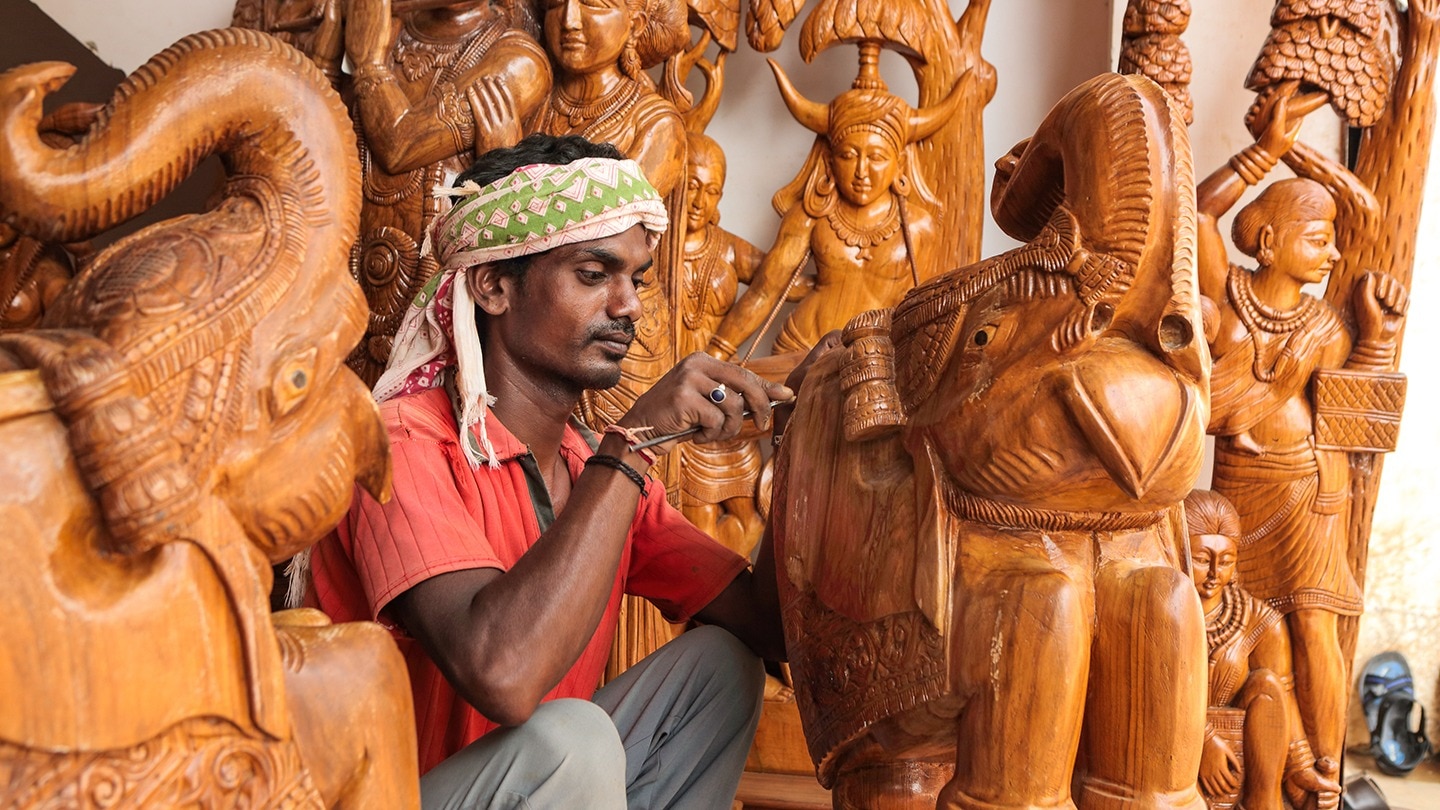
Local wood carvers favour rosewood for its flexibility and smoothness, but they also use vengai, mango, maavalingai and athi wood. The artisans first sketch a design on the wooden surface, and then use a chisel to carve out an outline. The craftsmen use hammers on chisels of various shapes and sizes to carve out the intricate details. They use U-shaped chisels for deep cuts, and V-shaped chisels for narrow grooves, and a flat chisel for thin, level cuts. Lastly, after cleaning the surface, they apply a polish for a glossy finish.
The Legacy
Mara Silai carving mainly includes idols of gods, mythological symbols and creatures in varying sizes. They are seen on temple doors and the puja mandapam, the sanctum sanctorum. The Thammampatti wood carving practice of Salem was certified with the Geographical Indication (GI) tag in 2021.


This is a caption explaining what is happening in the image. Clearly depicting the process of this beautiful craft.
Memory Vault
The Chennai airport has a remarkable Burmese teak wood-carved chariot what was crafted by master carver Appar Lakshmanan. Instead of creating a carving of the conventional deity, he has depicted Thiruvalluvar as the charioteer. The chariot showcases Tamil culture, with carvings of sacred verses from Thirukkural.
Featured
More from India