The Craft
Madhubani Painting
Bihar
Red and white: The story of Assam’s heritage
The Gamosa, or Gamusa, is a rectangular piece of white or cream cloth with red thread works along the sides. Though its name, combining ga (body) and mosa (to wipe), literally means a cloth for wiping the body, the textile is a lot more than that to the people of Assam. The piece of cloth holds within its fold considerable significance.

The Making
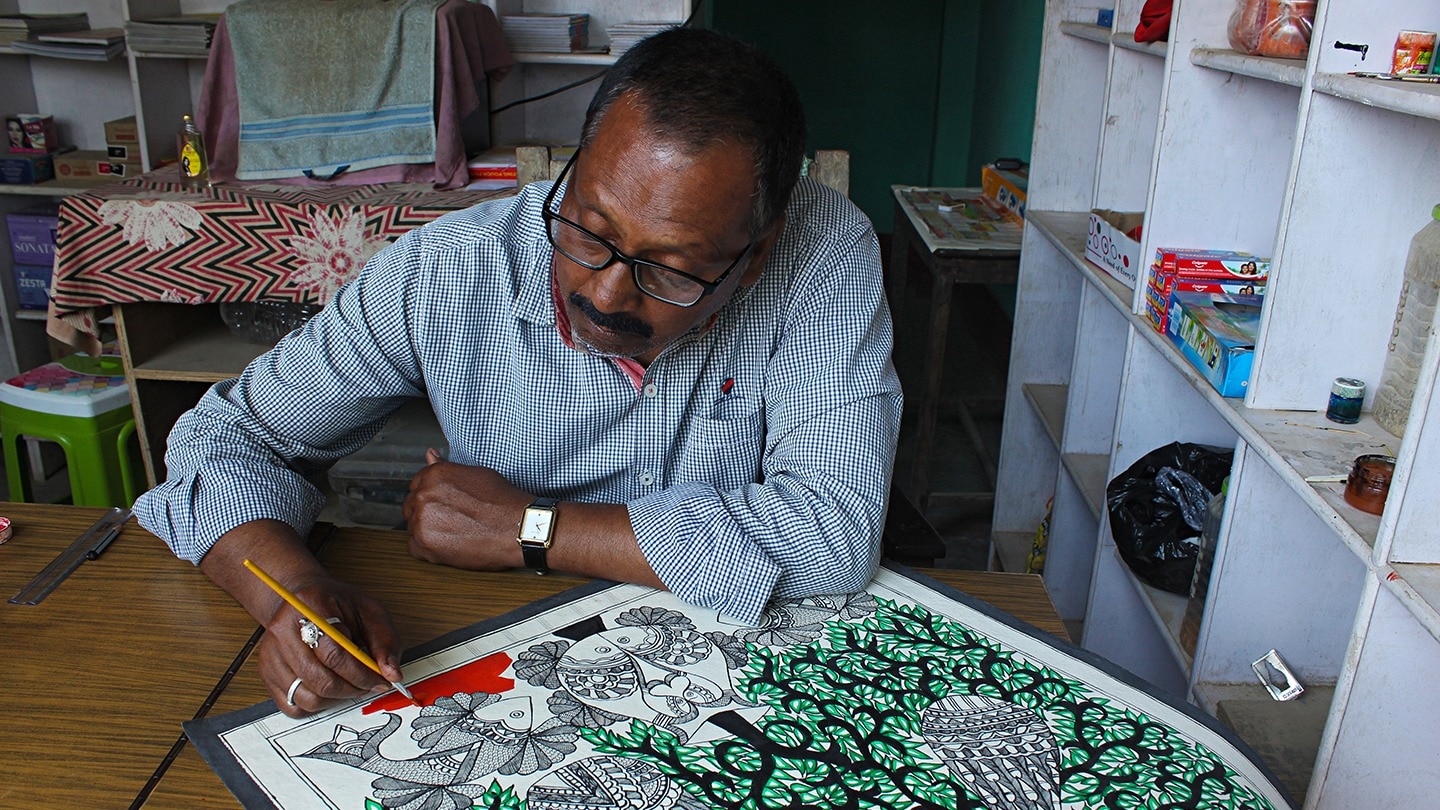
Madhubani was traditionally done on the walls of homes. In contemporary times, artists also use handmade paper as a canvas for the mythical figures, flora and fauna. First, they create outlines with nib pens. Colours are applied with brushes, twigs, matchsticks and even fingers. The colours come from natural ingredients, like soot, turmeric, rice powder, leaves, and indigo, as well as kusum and tesu flowers.
The Legacy
Madhubani art remains an integral part of rituals, weddings, and festivals in Bihar. In 1966, this age-old art form experienced a revival. Both non-profit platforms as well as government units encouraged women to paint on paper (instead of fabric). This was meant to help combat the impact of a severe drought and provide them with a source of livelihood. As Madhubani art embraced canvas, paper and textiles, its acclaim spread both nationally and globally. Madhubani was certified with the Geographical Indication (GI) tag in 2005.

Memory Vault
In 2015, during his visit to Germany, Prime Minister Narendra Modi presented a Madhubani painting to the Mayor of Hannover, Steven Schostok. This was by none other than National Award-winning artist Baua Devi. In 2021, Dulari Devi, a Madhubani artist, was awarded
Featured
More from India