The Craft
Longpi Pottery
Manipur
The black pottery of Manipur carries cultural significance
Longpi Pottery, commonly referred to as black pottery, is an age-old artistic tradition in the village of Longpi Kajui, in Manipur’s Ukhrul district. Masterfully crafted by the Tangkhul Naga tribe, the art of Longpi carries cultural and religious significance.

The Making
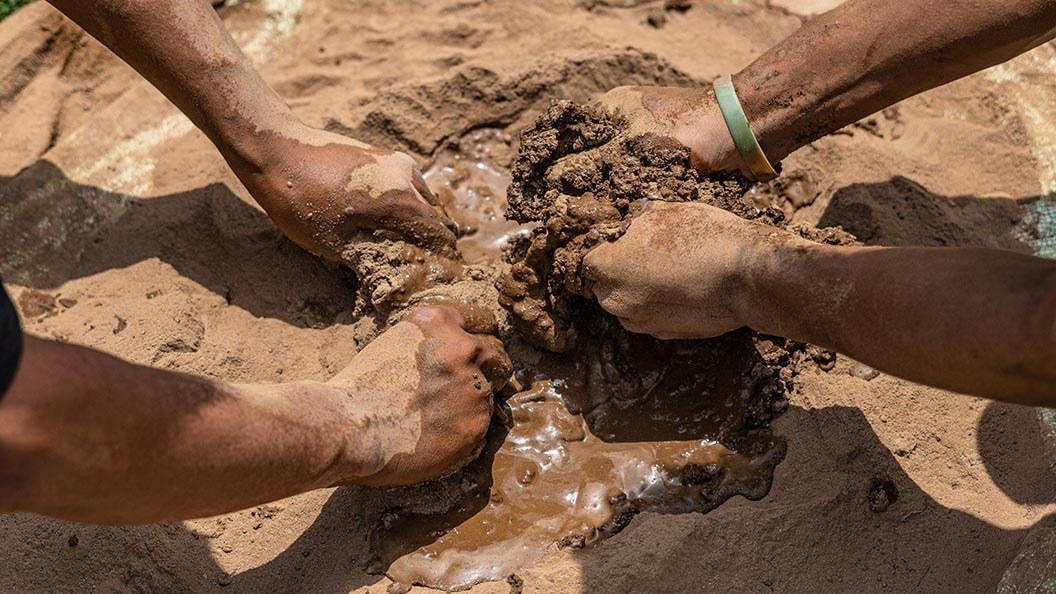
Interestingly, the common potter’s wheel is not used at all in this art form. The craftsmen and women manually shape a mixture of serpentinite stone and black clay into different forms. After shaping, these are dried first in the shade and then in the sun. The pieces are then meticulously burnished to achieve a flawless finish. During this phase, craftsmen also punch holes for cane accents to be added later. The final products are bisque fired at 900°C for the distinct deep black hue, durability and a metal-like sheen. The potters make a variety of artefacts, such as the chamkha and khoram (water pots), phampai (cooker), tengot (a kind of pot), and cups. These are not only beautiful, but are also revered as part of the cultural identity of Manipur.
The Legacy
Local legends say that Goddess Panthoibi, the mother of craft in Manipur, birthed this art form. The craft has strong ritualistic connections with childbirth and wedding ceremonies. The intergenerational technique can be traced as far back as the Neolithic period. Longpi pots and pans are devoid of any chemical additives and artificial paint. They can be used on gas stoves, open fires and even in ovens, adding to the versatility.