The Craft
Loinloom
Nagaland
Tribal identity in every warp and weft
Customs, dialects as well as the motifs on the clothing distinguishes the 16 primary tribes in Nagaland. Tribal garments are significant indicators of family and hometown. Some designs are crafted to commemorate special occasions.

The Making
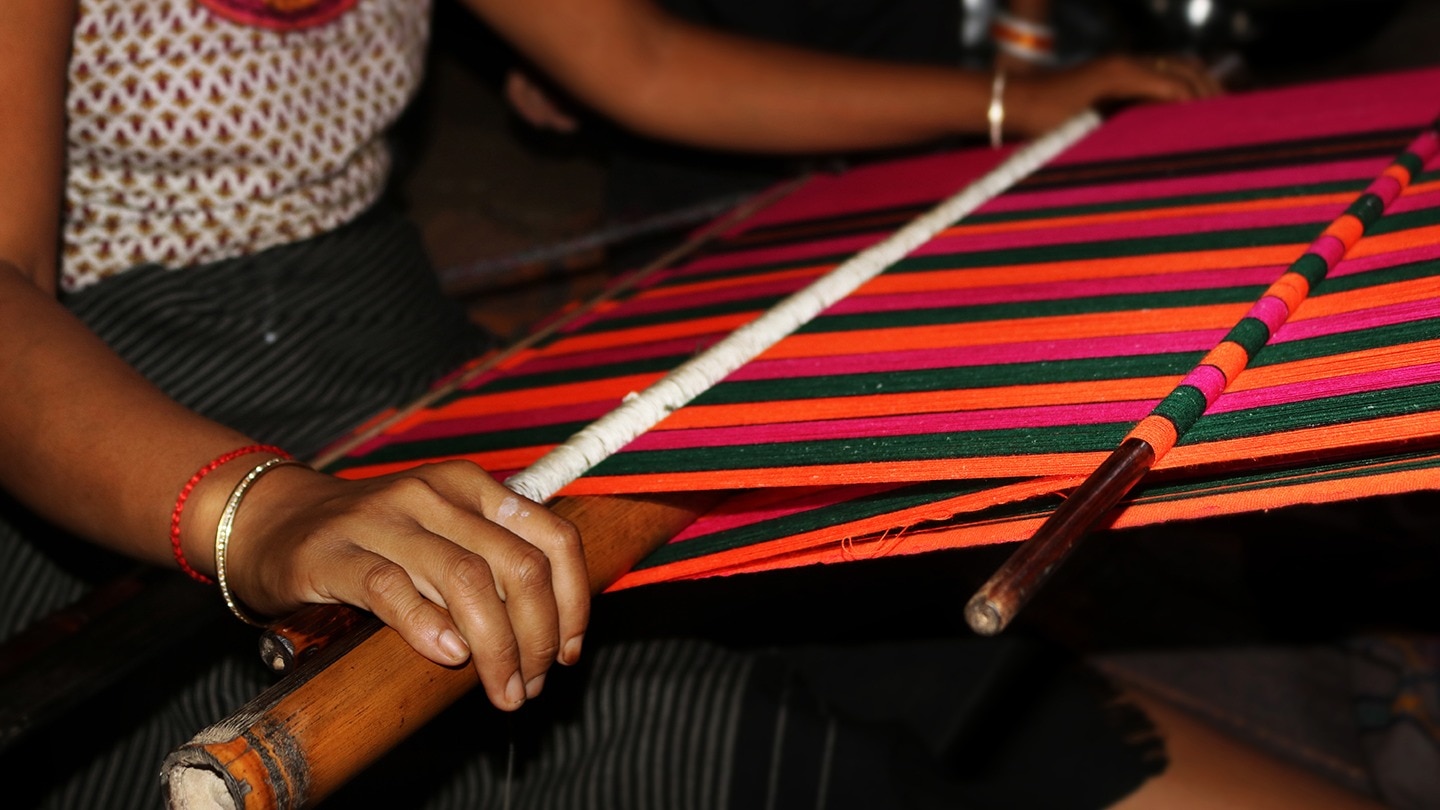
The weavers use a loom with a backstrap, supporting a continuous horizontal warp. The warp beam, made of six sticks called kotong, is secured to a wall with loops. The lower cloth beam connects to the weaving belt that the weaver wears around her lower back, to maintain warp tension.
The finished cloth has a ribbed texture and black or red stripes on white. To make longer fabrics, multiple pieces are stitched together.
The Legacy
It falls to the women weavers in the state to keep alive the tradition of loinlooms or the backstrap looms. In the past, weaving, spinning cotton yarn, and dyeing fabric were highly valued skills for a prospective bride. It was customary for girls to learn the craft, and even today, they are encouraged to learn the skills.
Memory Vault
This ancient skill is deeply rooted in the lives of Naga tribes. It shares similarities with weaving techniques in Mexico, Peru and Guatemala where weavers also weave on backstrap looms. Nagaland’s crafts industry has survived because of self-reliance and well-managed raw materials.
Discover
The Collection
Featured
More from India