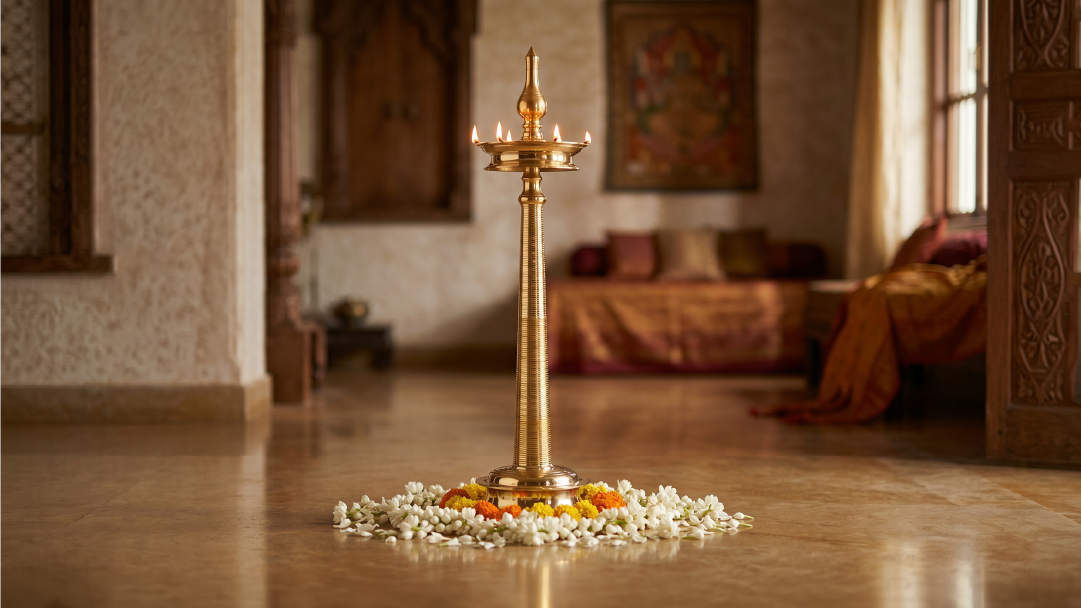
A handcrafted brass diya is among the most auspicious housewarming gifts in Indian tradition, honouring the fire element, the ritual of first light and the beauty of an object made by hand.

Light Before Anything Else

Across India, the lighting of a lamp is the first act in a new home. Before the rooms are curated, before the first guests arrive, a diya is lit. It is, in the most literal sense, how a home begins.

Among housewarming gifts rooted in Vastu Shastra, a brass diya carries rare meaning. It honours the fire element, the southeast zone of a home, and the oldest ritual in Indian households - all in an object shaped by centuries of craft.

Light as a Daily Ritual

There is a particular quality to lamplight in an Indian home at dusk. The way it pools on a brass surface. The way it softens a room without filling it entirely. The way a simple act, the touching of flame to wick, becomes when done with a beautiful object something close to ceremony.

A handcrafted brass diya brings this quality into the everyday of a new home. Set beside the puja corner, placed at the entrance or arranged on a console that catches the evening light, it is made for use, for daily lighting, for the rhythm of every evening. The patina that develops over months of lighting, the slight darkening around the wick, the way the brass warms with use, each one a sign of a home being lived in beautifully.

The making of a brass diya is itself a tradition, one that has understood fire, metal and ritual across centuries. The Dhokra diyas of Eastern India, cast by the ancient lost-wax technique, carry a raw, textured warmth. The standing Vilakku and Samai lamps of South Indian temple tradition bring a ceremonial formality to the home, their tiered forms designed to hold multiple flames and fill a room with a quality of light that feels both devotional and deeply beautiful.

When the Lamp Transforms the Room

A standing brass oil lamp carries a different quality of presence entirely. Each form has evolved over centuries of devotional use, shaped by communities who understood that light in a home is not merely functional. It is ceremonial. It is Vastu. It is the fire element made visible, warming the southeast corner of a home with both physical and spiritual energy.

As a house inauguration gift of rare presence, a lamp of this lineage is never just a gift for one occasion. It settles into the home and stays, present at Diwali, at daily puja, at every evening that calls for the particular warmth of flame.

A Final Thought

A diya is the smallest lamp and the most enduring gesture. It asks only to be lit and in return, it changes everything about a room.