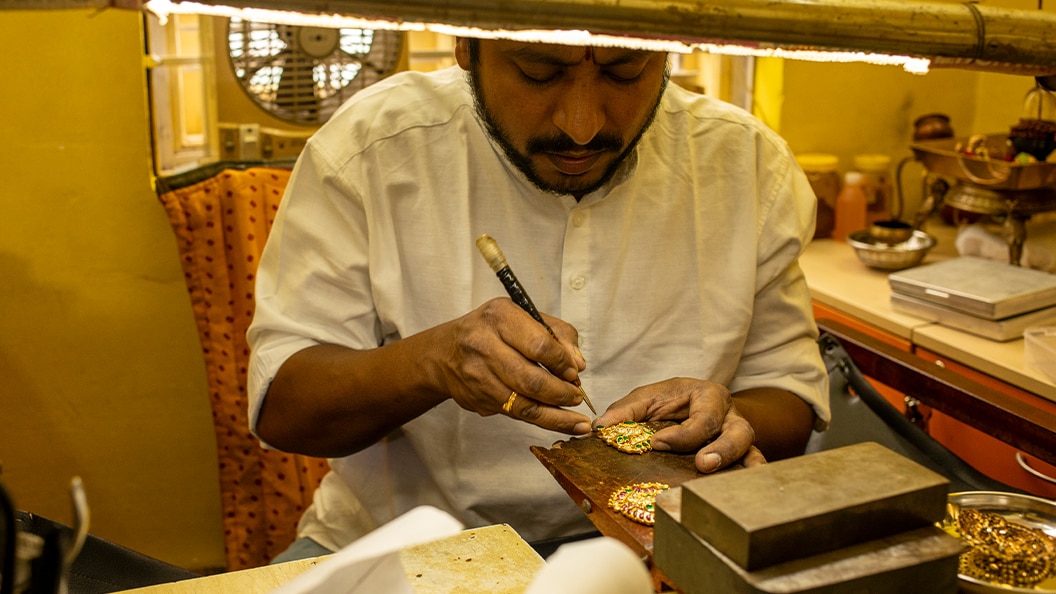
Jewellery for the Gods
The grand architectural style of South Indian temples inspired a corresponding art form, the Kundala Velai. In this tradition, craftsmen create jewellery with close-set gemstones. The style flourished under royal patronage.
The Making
One distinct feature of Kundala Velai jewellery is how the back of each piece is also engraved beautifully. Uncut diamonds, rubies, emeralds and pearls are used in the jewellery that are offered to deities. The making of Kundala Velai jewellery is a rigorous process. Artists first emboss designs on small pieces of gold. Then, these are decorated with granules and wirework. Artisans use a variety of techniques to create geometric motifs and nature-inspired designs. These techniques include repoussé, chasing, and soldering. The round or fan-shaped central pendant is the focal point of a piece, often decorated with dainty pearls along the edges.
The Legacy
Many specialists are involved in crafting Kundala Velai jewellery. The process includes designers, goldsmiths, engravers, enamellers, gem-setters and expert stringers of pearls or beads. One of the common design elements is the intricate creeper pattern of the necklace, which is soldered with faceted gold beads. Precious and semi-precious stones are set carefully within the golden framework.
Memory Vault
While it’s unclear when Kundala Velai jewellery tradition first began, it is believed the skill has been passed down generations since the 17th century. Vadassery, a small fishing hamlet in Kanyakumari still boasts over a hundred artisans practicing the original craft. Many jewellery houses across South India have created their own versions of traditional temple jewellery. They still use rubies and uncut diamonds in the primary motifs. Director Mani Ratnam’s two-part epic, Ponniyin Selvan, shows this form of ancient jewellery on actors like Aishwarya Rai Bachchan.
Discover
The Collection
Featured
More from India
INDIA'S CRAFTS
Discover More
Rosewood Carving
Channapatna Toys
Bidri
Mysore Rosewood Inlay