The Craft
Kantha Embroidery
West Bengal
Of running stitches and a history of upcycling
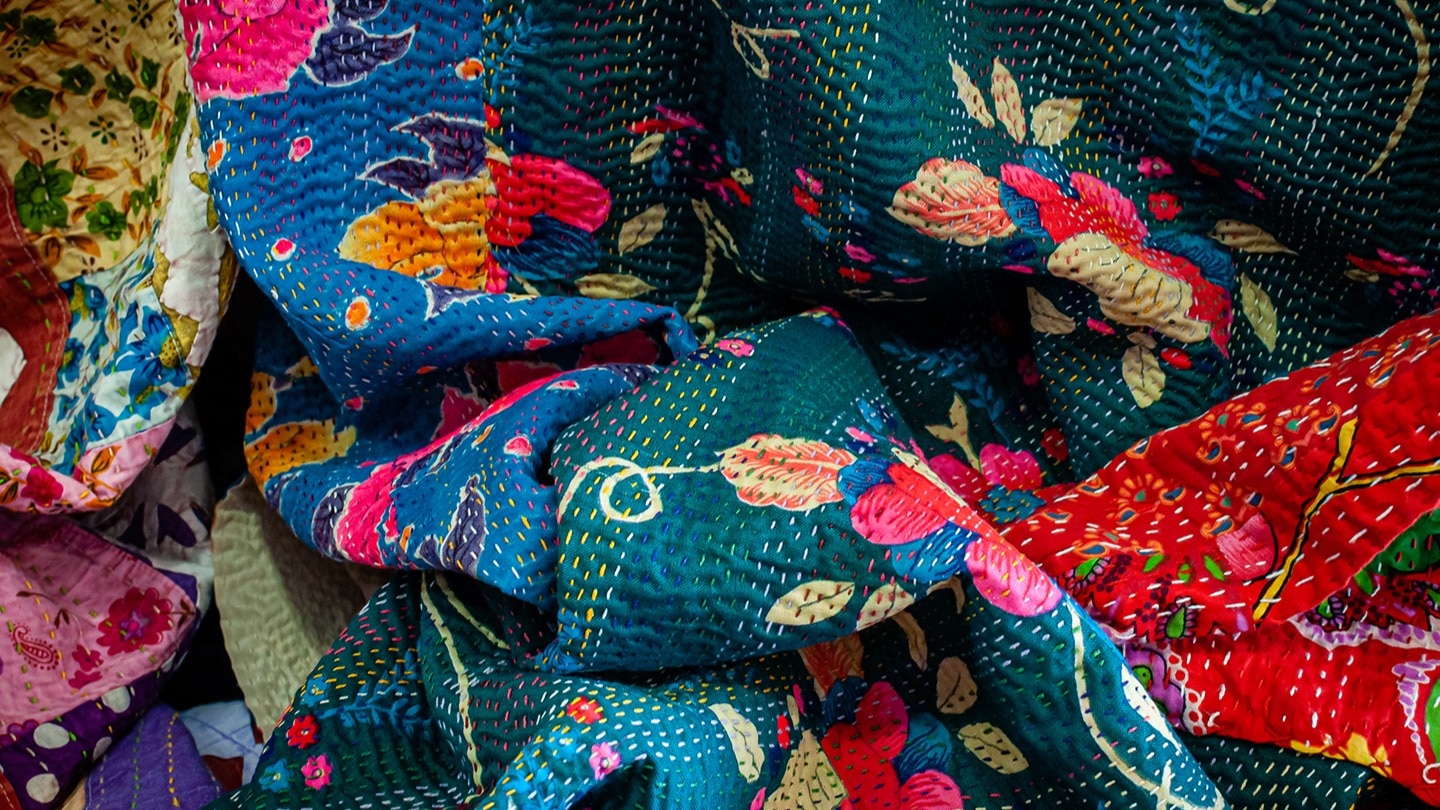
Kantha hand embroidery is a heavyweight in India’s textile tradition. It’s believed to have emerged in 18th century West Bengal, but it is probably, much older than that. Kantha, which is a running stitch, stands for quilting and keeping things together. This includes pieces of new or recycled cloth. It’s closely connected to the livelihoods of rural women, traditions as well as upcycling and reuse.
The Making
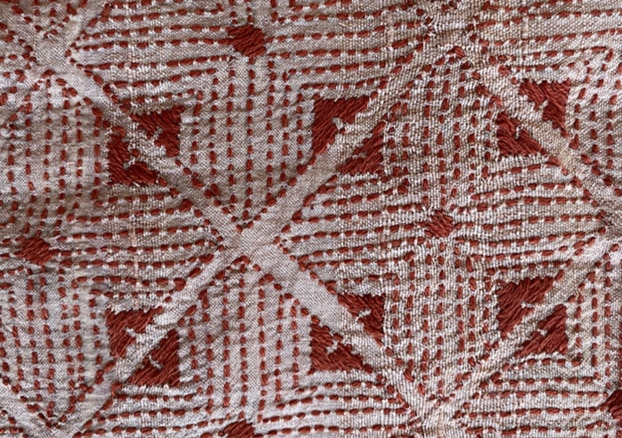
The original Kantha stitch has been experimented with, for intricate patterns. These include nakshi (figures), par tola (geometric) and sujni (floral). Its motifs draw inspiration from religion, culture and the daily lives of the women who craft them. Rural women have played a pivotal role in preserving the labour-intensive tradition. They stitch together layers of worn-out clothes, old saris, or dhotis, to repurpose them with embroidery.
The Legacy
A written record of Kantha is found in Krishnadas Kaviraj’s book, Sri Chaitanya Charitamrita, authored half a millennium ago. In contemporary times, writer-photographer Patrick J Finn’s coffee table book, Quilts of India: Timeless Textiles, narrates valuable stories about this craft. Over time, Kantha evolved from being a household technique to adorning exquisite saris, panels and dhurries. Now it is found on handbags, dresses, jackets and appliquéd Kantha shawls.
Memory Vault
Pratima Devi, daughter-in-law of late Nobel laureate Rabindranath Tagore, became a patron of Kantha artisans. Revivalists Sreelata Sirkar and Shamlu Dudeja later elevated this domestic craft into a sought-after art form. Original Kanthas reflected personal lives, especially of women. A daughter would make a Kantha for her father, a wife for her husband and a mother for her baby. These remained dedicated personal pieces, until trade changed the narrative.
The Legacy
A written record of Kantha is found in Krishnadas Kaviraj’s book, Sri Chaitanya Charitamrita, authored half a millennium ago. In contemporary times, writer-photographer Patrick J Finn’s coffee table book, Quilts of India: Timeless Textiles, narrates valuable stories about this craft. Over time, Kantha evolved from being a household technique to adorning exquisite saris, panels and dhurries. Now it is found on handbags, dresses, jackets and appliquéd Kantha shawls.
Discover
The Collection
Featured
More from India