The Craft
Guttapusalu Jewellery
Andhra Pradesh
A tribute to nature in a string of pearls
Guttapusalu jewellery took birth in the fishing towns of Andhra Pradesh. Cultured pearls are strung together to look like a shoal of small fish. The name comes from the Telugu words gutta, meaning a school of fish, and pusalu, meaning beads.
The Making
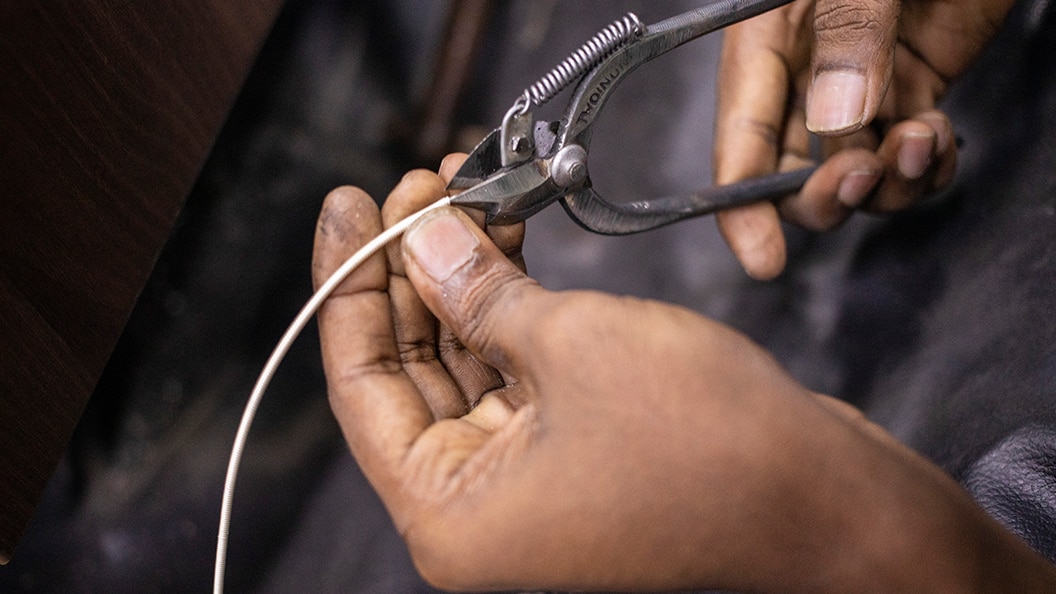
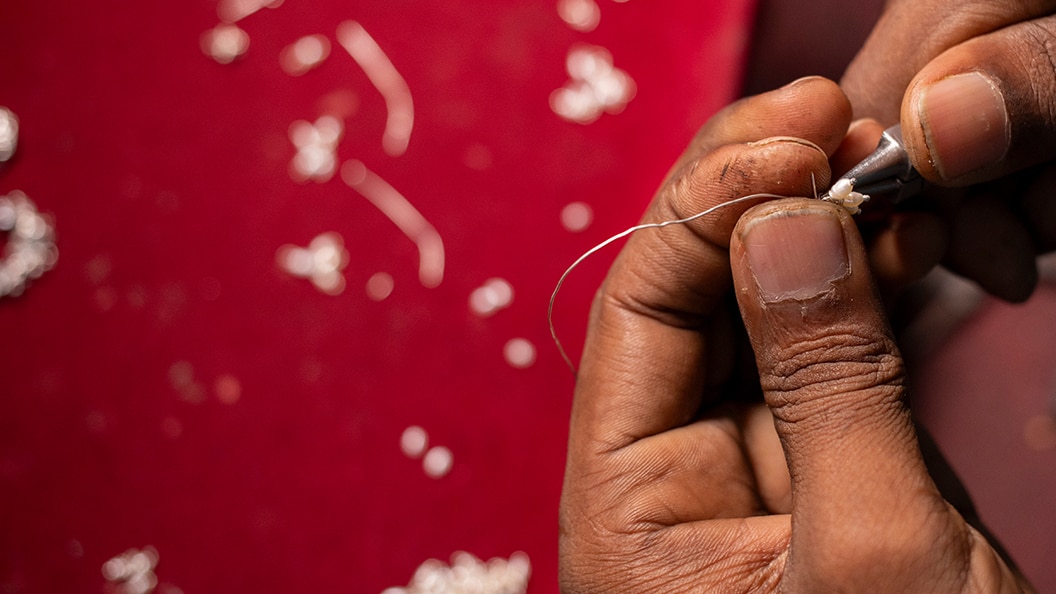
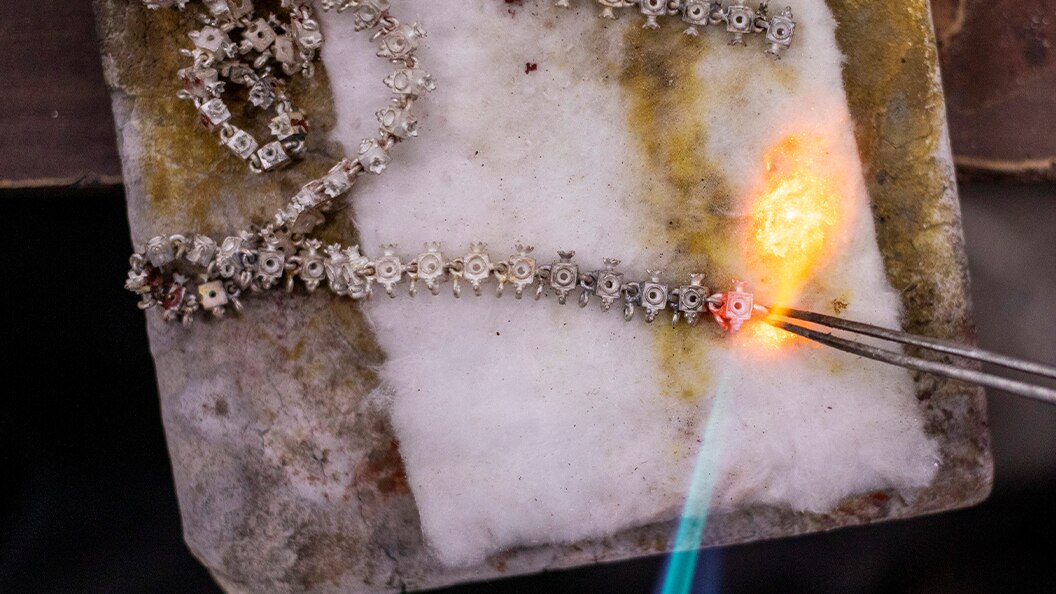
The process begins by sketching the design. The artisans then follow the sketch by weaving the clusters of pearls, beads and stones together. The patterns are all symbolic. For example, a pattern of alternating pearls and gold beads shows balance between spirituality and wealth. The central pendant of the artefact is usually grand. It is often studded with precious gemstones like rubies, emeralds, or diamonds. Necklaces may also feature motifs of a peacock and Goddess Lakshmi, the deity of wealth.
There is another opulent variation with temple designs. Matching earrings and waistbands are also crafted. This craftsmanship thrived in the 16th century, under the patronage of the Vijayanagara Empire. These ornaments were traditionally crafted from gold, coloured gemstones and pearls. They were worn by brides on their wedding day.
The Legacy
Traditional Guttapusalu designs remain popular even today. Modern interpretations incorporate coloured stones, crystals, and fabrics. Some famous fashion designers use this technique to embellish clothing as well.
Memory Vault
On her wedding day, Bollywood actor Sonam Kapoor Ahuja wore a traditional Guttapusalu necklace. She paired it with a red lehenga (skirt) designed by textile revivalist Anuradha Vakil. This led to an overnight interest in Guttapusalu craftsmanship.
Discover
The Collection
Featured
More from India