The Craft
Embroidery
Gujarat
The diverse threads of Gujarat’s crafts
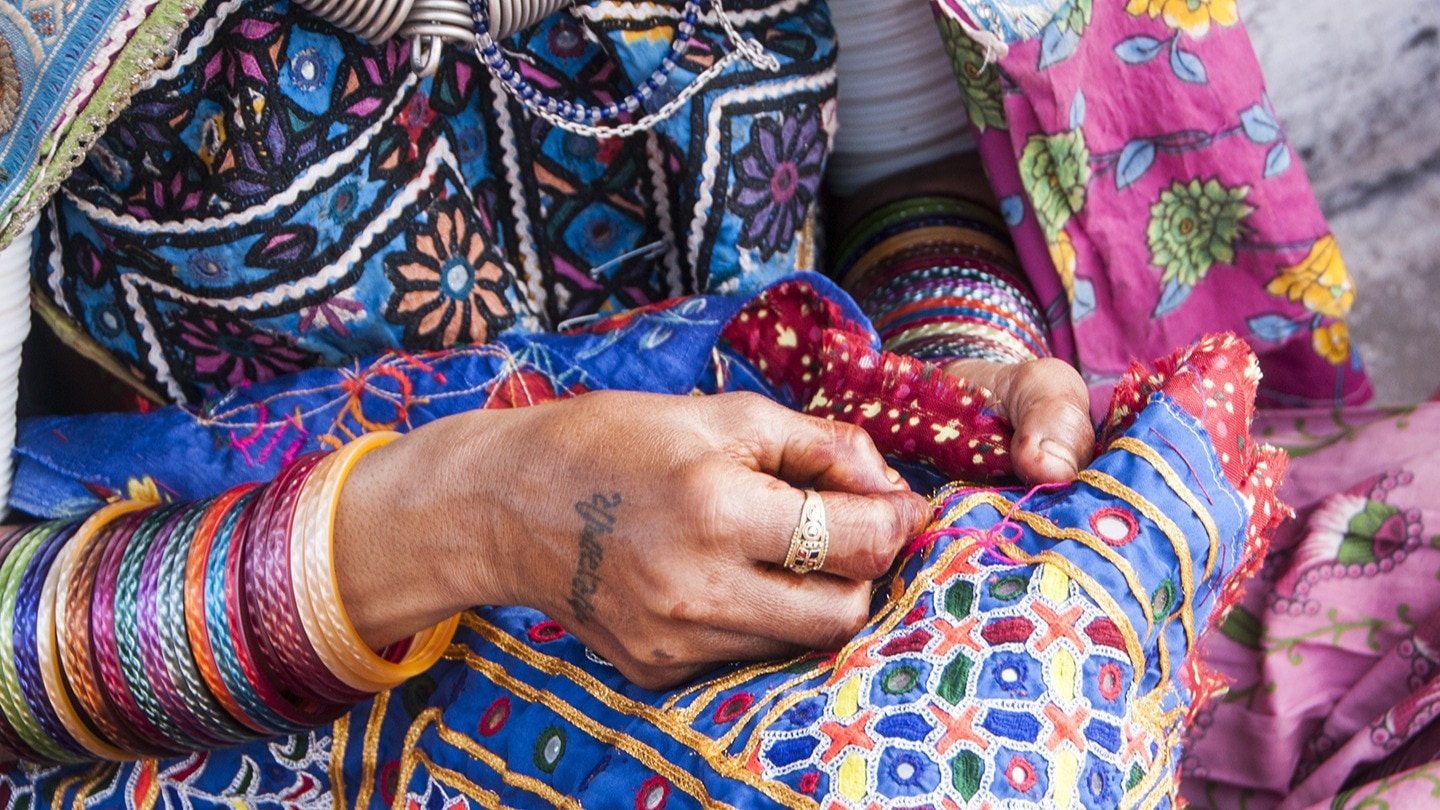
The textile legacy of Gujarat, especially those popularised by the Mochi community of Kutch, is well known. Gujarati embroidery is characterised by unique patterns, techniques, vibrant colours and embellishments, and is often the front and centre of global fashion shows.
The Making
An influx of artisans in the late 17th century from Afghanistan, Greece and Iran saw unique embroidery techniques introduced in Gujarat. The skilled Mochi community adopted the art form using an awl-like tool with a sharp tip called ari. Over time, they developed distinctive embroidery techniques to decorate fabrics. The chain stitch patterns were popular. They began to do silk-on-silk embroideries, and added mirrors, beads and sequin embellishments to their craft.
The many communities in the region, including the Mochi, Meghwal, Ahir, Bhanushali, Rabari, Jat, and Mutwa, are recognisable by the kind of motifs and embroidery techniques they use. The Meghwals of Kutch use delicate motifs on patchwork and appliquéd mashru fabric. The Jat community adorns plain fabric with intricate embroidery. Mutwas embellish with mirrors and geometric motifs while the Rabari artisans embroider their tie-dyed wool skirts and shawls.
What initially signified marital status or affiliation transformed into a symbol of an artisan’s skill. In the 19th century, the craft gained royal favour, with the rulers of Kutch and Kathiawad. Embroidered pieces were crafted as gifts for European court visitors. These would showcase indigenous designs of foliage and hounds. The most popular is a square cloth called chakla.
The Legacy
What initially signified marital status or affiliation transformed into a symbol of an artisan’s skill. In the 19th Century, the craft gained royal favour, with the rulers of Kutch and Kathiawad. Embroidered pieces were crafted as gifts for European court visitors. These would showcase indigenous designs of foliage and hounds. The most popular is a square cloth called chakla.
Memory Vault
On India’s 77th Independence Day, in 2023, Google featured a digital collage of intertwined fabrics, highlighting ari embroidery from Gujarat. The Living and Learning Design Centre (LLDC) institute near Kutch, founded by activist, reformer and artisan expert, the late Chandaben Shroff, has a permanent museum showing all the embroideries of Kutch. The displays narrate the living traditions of the different communities.
Discover
The Collection
Featured
More from India
INDIA'S CRAFTS
Discover More
Aari Embroidery
Patan Patola Handloom
Warli Painting

Pithora Painting