Of dots and dashes and stories of nature
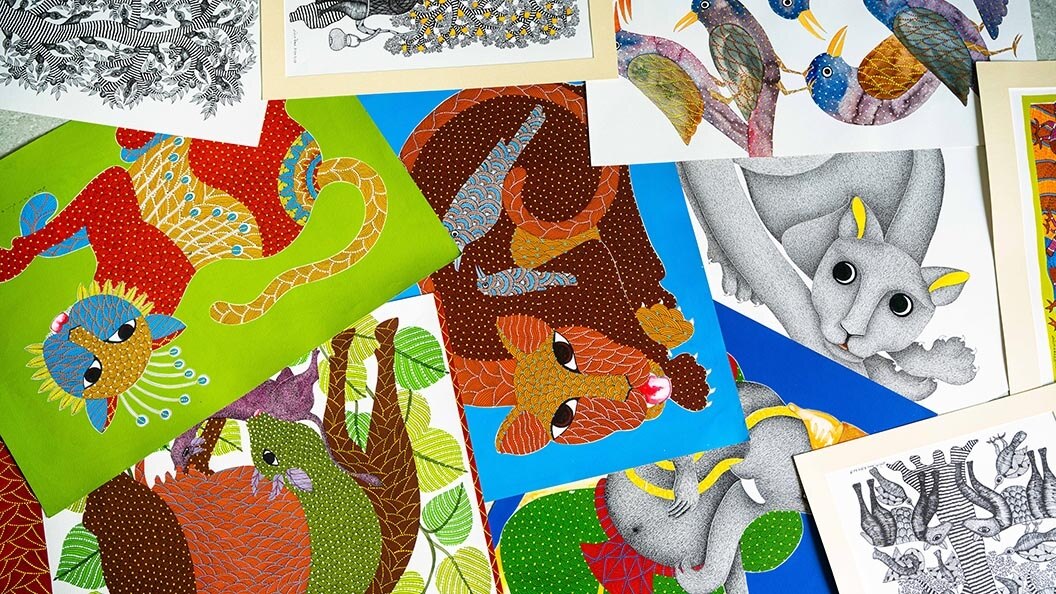
Gond is a form of folk painting and tribal art practised by the Gondi people living mainly in Madhya Pradesh and some parts of Andhra Pradesh, Chhattisgarh, Odisha and Maharashtra. The art originated more than 14,000 years ago.
The Making
Butterflies, elephants, lions, birds, fish and folklore fill Gond artworks. The artists use dots and dashes, and naturally extracted colours such as vivid oranges, blues, yellows, and reds. Nature is deeply etched into the art. The word ‘Gond’ comes from the Dravidian ‘kond,’ referring to green mountains. Over the years, the wall art moved on to canvas as Pardhans, the artists, who are also gifted storytellers, kept up with the times.
The Legacy
Gond art shares kinship with the indigenous aboriginal art of Australia. Both depict stories of the creation of the universe and use similar motifs, dashes and dots. This reflects the odd-evenness of the art-crafts universe, its commonalities and contrasts that exist across the world.
Memory Vault
Jangarh Singh Shyam of Madhya Pradesh is believed to be responsible for the modern renaissance of Gond art in the 20th century. A Pardhan artist himself, Shyam modernised the art form. He later adopted poster colours and new printmaking techniques influenced by artists at Bharat Bhavan, a multidisciplinary art centre set up in Madhya Pradesh in the ’80s.
Featured
More from India
INDIA'S CRAFT
Discover More
Chanderi Handloom
Glass Beads-Neemuch
Gwalior Hand Knotted Carpet
Maheshwari Handloom