The Craft
Gamosa
Assam
Red and White: The State of Gamosa
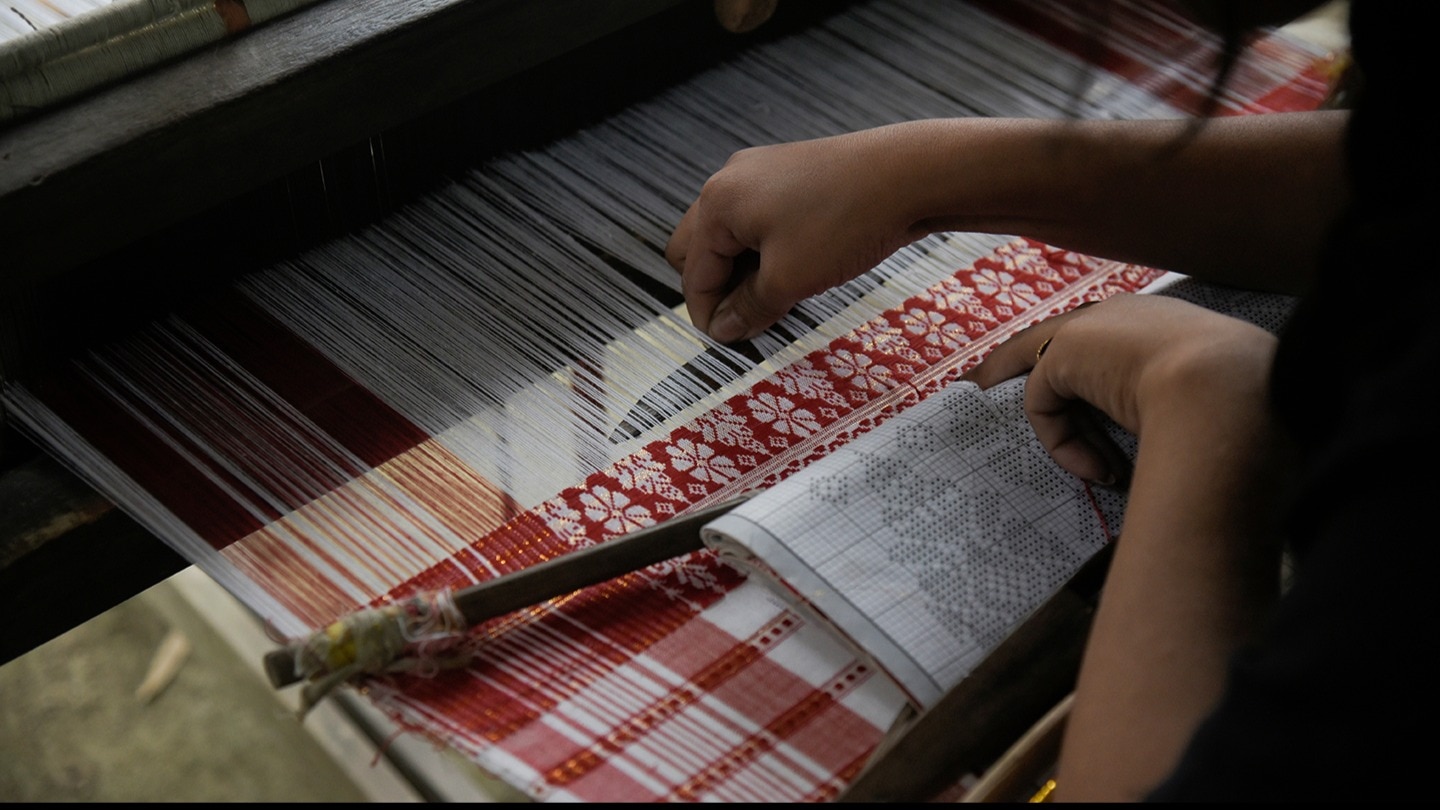
The Gamosa, or Gamusa, is a rectangular piece of white or cream cloth with red
thread works along the sides. Though its name, combining ga (body) and mosa
(to wipe), literally means a cloth for wiping the body, the textile is a lot more than that to the people of Assam. The piece of cloth holds within its fold considerable significance.

The Making
While cotton is the most used material, the Gamosa is also crafted from mulberry silk, muga and tussar. There are up to nine types of Gamosa that are used for various purposes. The Xadharon (ordinary) Gamosa, with its simple motifs, is meant for daily use. The Phulam Gamosa (with flowers) is more elaborate with dancing figurines and scenes from Nature. It is ceremonial and used as headgear for men during Assamese festivals such as Bihu.
The Legacy
Gamosa Handloom is said to have been in use since the 15th and 16th centuries
under the Ahom dynasty. While the white-and-red colour scheme remains
the same, the motifs change. Motifs of the gutimala (jasmine), parijat lata (celestial flower) and the saptamukhi (seven-faced diamond), abound. The style was certified with a Geographical Indication (GI) tag in 2022.

Memory Vault
In 2013, a 1455.3 metre silk Gamosa was recognised as the world’s longest
piece of woven cloth by the Guinness World Records. Twelve artisans wove the Gamosa over a period of six months. It weighed over 100 kilograms and the motifs on it included the state-icons such as the one-horned rhino, the river island of Majuli, the revered seer Sankardeva and the late singer, Bhupen Hazarika.
Featured
More from India