The Craft
Dhokra
Chhattisgarh, Odisha and West Bengal
Bronze beauties from the Indus Valley
Dhokra is an old metal tradition dating back to the Indus Valley Civilisation. It uses a unique technique called lost-wax casting to fashion objects from bronze or bell metal. The craft derives its name from the Dhokra Damar tribe spread across communities in Nayagarh and Kolkata in West Bengal, Dhenkanal in Odisha, and Bastar in Chhattisgarh. One also finds examples of Dhokra art in Jharkhand and Telangana.

The Making
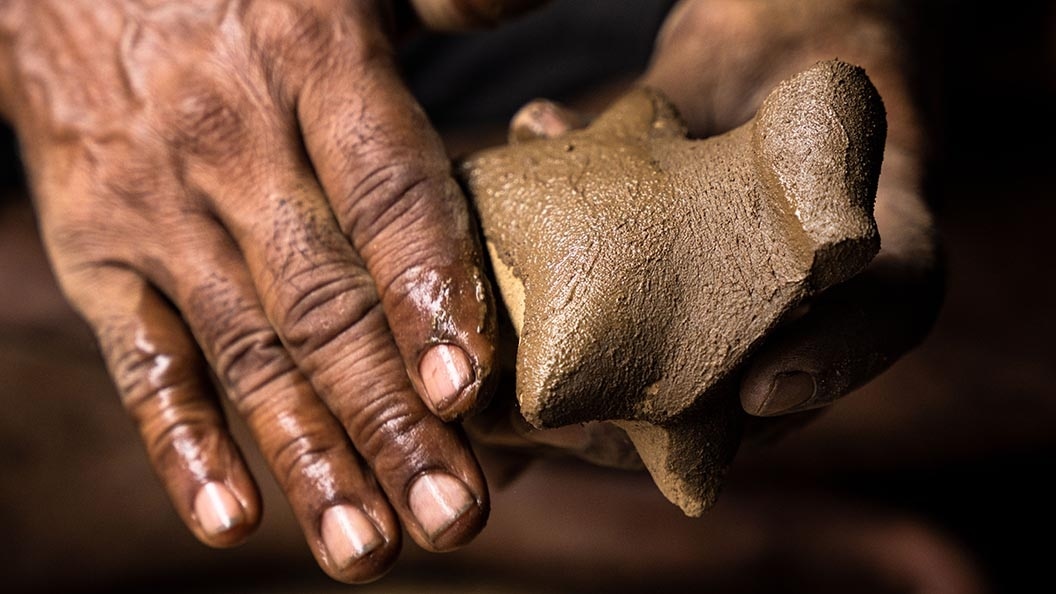
To make a Dhokra sculpture, artisans create a clay core, over which they wrap threads made of beeswax, tree resin and oil. This gives the Dhokra sculpture its distinctive threaded texture. After covering it with another layer of clay, the artwork is baked and molten metal is poured into the mould. The wax melts, and the clay is chipped away to reveal the metalwork. Popular Dhokra metalworks include figures of deities, animals, birds, and jewellery.
The Legacy
Aditi Ranjan, a textile designer, educator, and author of the book Handmade in
India: Crafts of India traces the history of Dhokra to nearly 5,000 years ago, to
the Indus Valley Civilisation. An early example of the metal work is the iconic statue of the Dancing Girl, excavated from Mohenjo-Daro. Dhokra craft from Bastar and Adilabad is certified with a Geographical Indication (GI). This means that only Dhokra craft made in these two regions can be called
Bastar Dhokra and Adilabad Dhokra, respectively.

This is a caption explaining what is happening in the image. Clearly depicting the process of this beautiful craft.

Memory Vault
During the G7 Summit in 2022, Prime Minister Shri Narendra Modi presented
Dhokra artefacts as gifts to various world leaders. He gifted the South African
President, Cyril Ramaphosa, artwork based on the Ramayana, while the
Argentinian President, Alberto Fernández, received a figurine of Nandi – the
meditative bull.
Discover
The Collection
Featured
More from India
INDIA'S CRAFT
Discover More