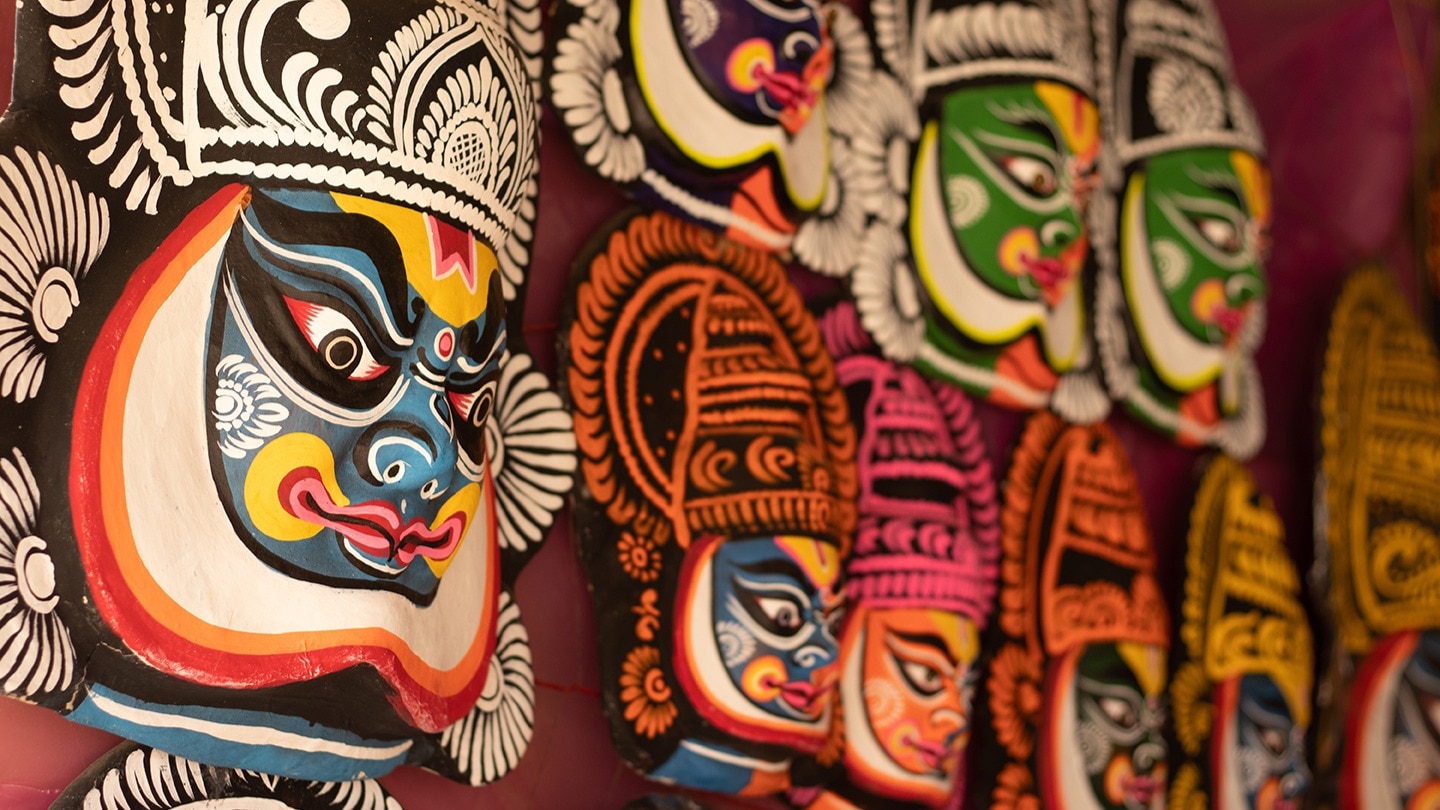
Masks That Wear Magic and Myth
The ceremonial Chhau dance would not be the same without the vibrant masks that are integral to the performance. The dance and the art form are native to Purulia in West Bengal. The dance originated in present-day Jharkhand and thrived under royal patronage. It gradually evolved into other dance forms such as the Mayurbhanj Chhau and the Purulia Chhau. The style flourished in Charida village in Bengal’s Purulia district.
The Making
Chhau masks were made by woodcarvers in the winter months. Layers of pulped paper are immersed in glue and pasted onto moulds. Clay and cloth are then applied and the mask is left to dry in the sun. The artists hand-sculpt the features on the face, add colours, and embellish with ribbons, beads, and other decorations. Some Chhau masks are finished with jute, artificial hair, and fur as well as an elaborate headgear. These masks are of animals, demons, and deities, worn with shimmering costumes for the Chhau dance.
The Legacy
This dance form narrates folk and tribal stories or martial-art, borrowing from mythology and reality. The dancers believe that once they don the masks, they turn into super humans who vanquish evil. Today, the Chhau masks are sold as home décor items and souvenirs. Talented craftsmen also travel abroad to popularise the craft.