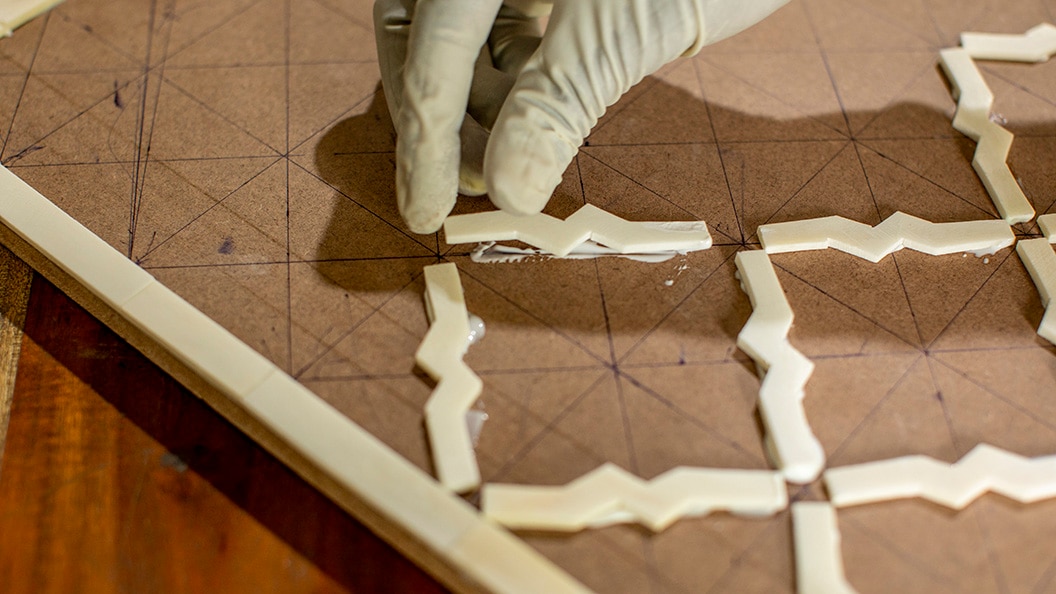
Jodhpur inlay work is among the finest crafts of India
After the international ban on ivory, Rajasthani craftsmen shifted to creating equally beautiful inlay work using discarded camel bones. Craftsmen from Jodhpur use their exceptional artistry and skill to keep alive the centuries-old inlay art.
The making
Camel bones are sourced by cruelty-free means, from carcasses where animals die of natural causes. The bones are first processed by being exposed to heat. They are then chemically bleached and rendered into narrow strips. The processing of the bones is usually done at Sambhal in Uttar Pradesh. Skilled artisans carve the bones using both traditional and modern motifs. The carved bones are then incorporated into pieces of furniture or made into decorative items. Any gaps are filled in with coloured resin. The surface of the piece is buffed to a smooth, polished finish. Bone inlay work is similar to another regional craft form, seep ka kaam, or mother-of-pearl inlaying. However, camel-bone inlay work is hardier and less likely to break.
The legacy
As with all handicrafts like bronze sculpting, woodcarving, weaving, jewellery enamelling, bone inlay pieces reflect the cultural identity of the people who create them. Intergenerational crafts give legacy narratives to them often imbibing both the continuity and differences that resonate as the craft passes from one generation to another; one artisan to another.
Memory vault
There is a pair of wooden mugdar or clubs with intricate ivory inlay work at the Mehrangarh Museum in Jodhpur. They date back to the 19th Century. These clubs were used by royal women for physical training in akhadas (gymnasiums).
Discover
The Collection
featured
More from India
INDIA'S CRAFTS
Discover More
Gemstone Strings
Lapidary
Jaipur Hand Knotted Carpet
Phad Painting