The Craft
Bidri
Karnataka
Poetry in Hard Metal
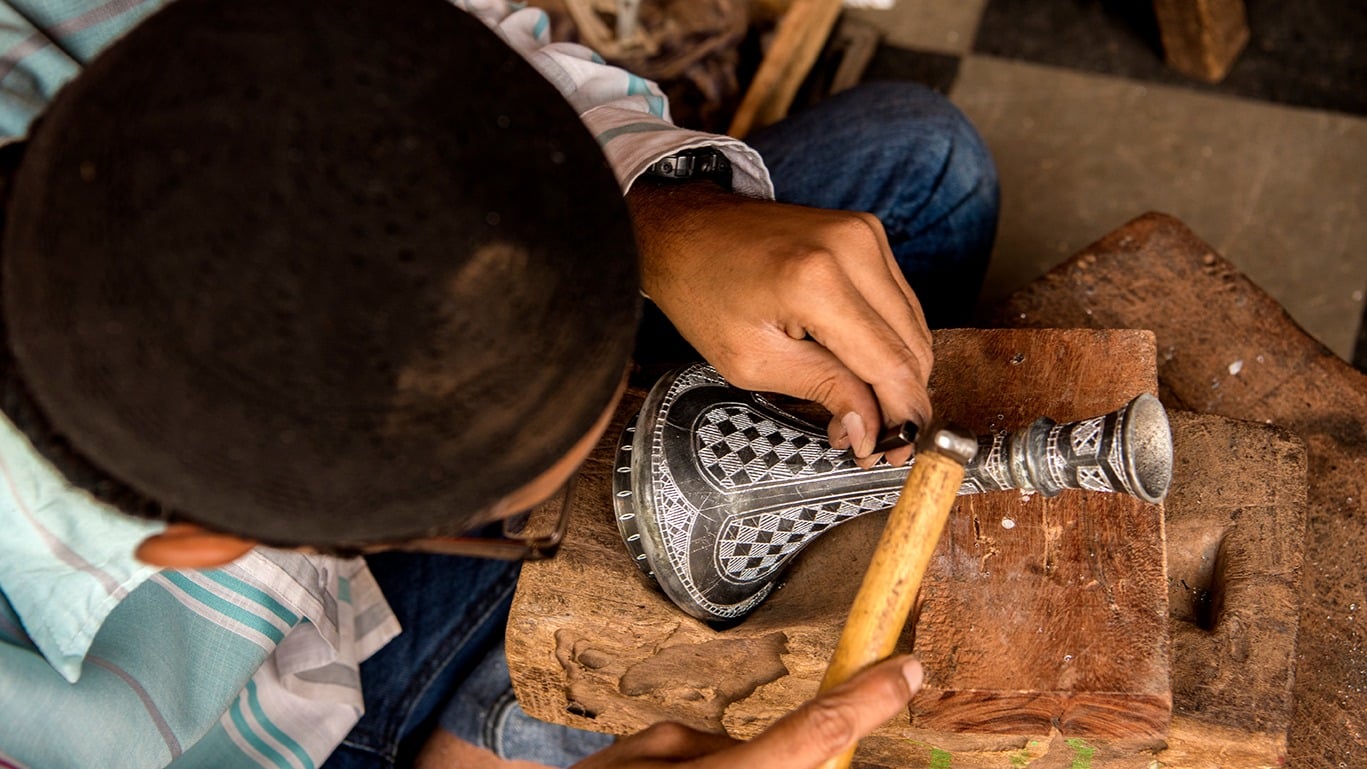
Originally inlaid with precious gold, silver and copper on a base of zinc and tin, Bidri art now uses rust-proof metals instead. Artisans from Bidri in Karnataka are keeping alive this iconic craft that has its origins in ancient Persia and later thrived under the patronage of the Deccan Sultanate in the Indian sub-continent in the 1500s.
The Making
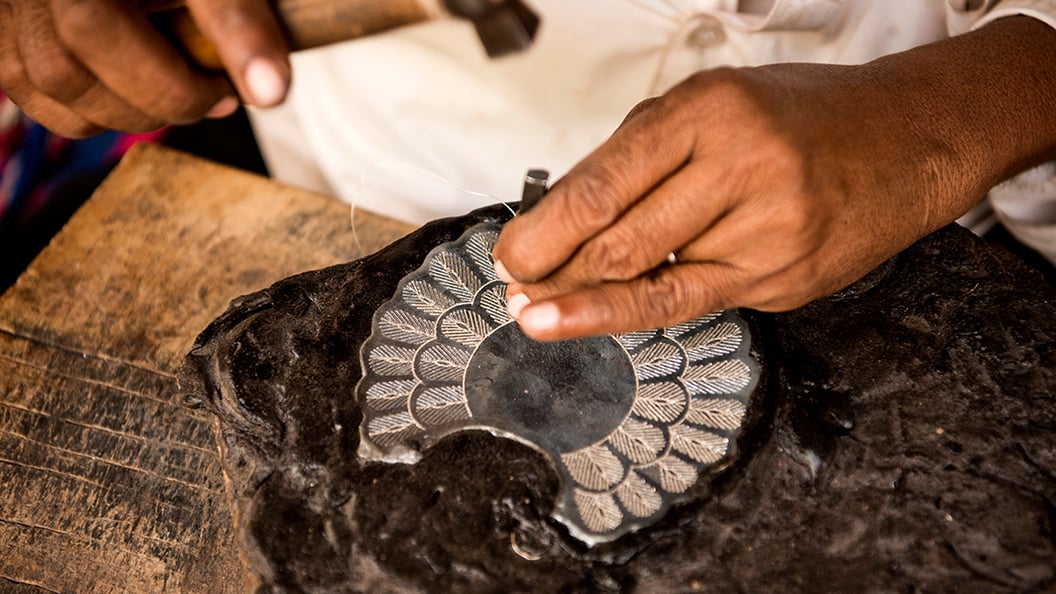
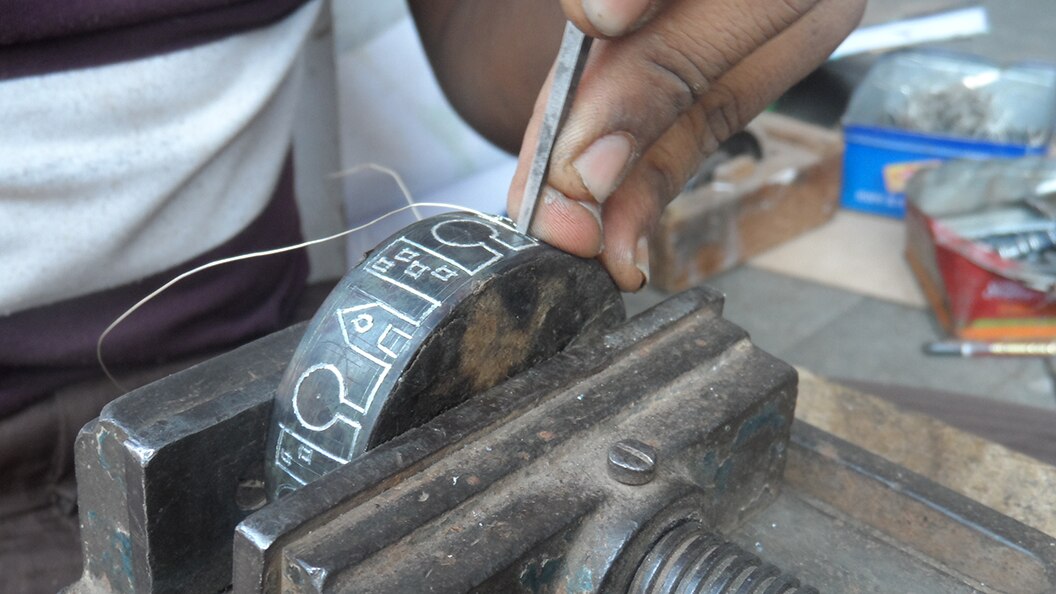
First, the alloy of zinc and tin is melted and cast into moulds. These could be to make hookahs, surahis (pitchers), ashtrays, boxes, vases, bangles, and pandaans (boxes for betel leaves) … Once the molten alloy cools down and has solidified, designs are etched into it using hammers and chisels. Then metal wires or sheets are inlaid into the engravings and the surface is buffed and oxidised.
The Legacy
The Persian heritage is front and centre of the motifs with the five-pointed leaf (ashrafi ki booti), the three-pointed leaf (teenpatti ki booti), and the raw mango (kairi) being very popular. The distinctive sheen and colour of the Bidri handicraft comes from a polish of bidari mitti (soil) taken from the 15th century Bidar Fort. This soil is said to contain saltpetre or potassium/sodium nitrate, which helps in oxidation and gives the Bidri work its black sheen.
Memory Vault
Master craftsman Mohammad Abdul Rauf a third-generation Bidri artisan and recipient of the Shilp Guru Award has promoted the art form in international platforms. He crafted medals for the 2010 Commonwealth Games in India. His Bidri figure of Queen Channamma (1778-1829) of Kittur in present day Karnataka, and fought the British, was presented as a souvenir to Prime Minister Shri Narendra Modi in 2017.
Featured
More from India
INDIA'S CRAFTS
Discover More
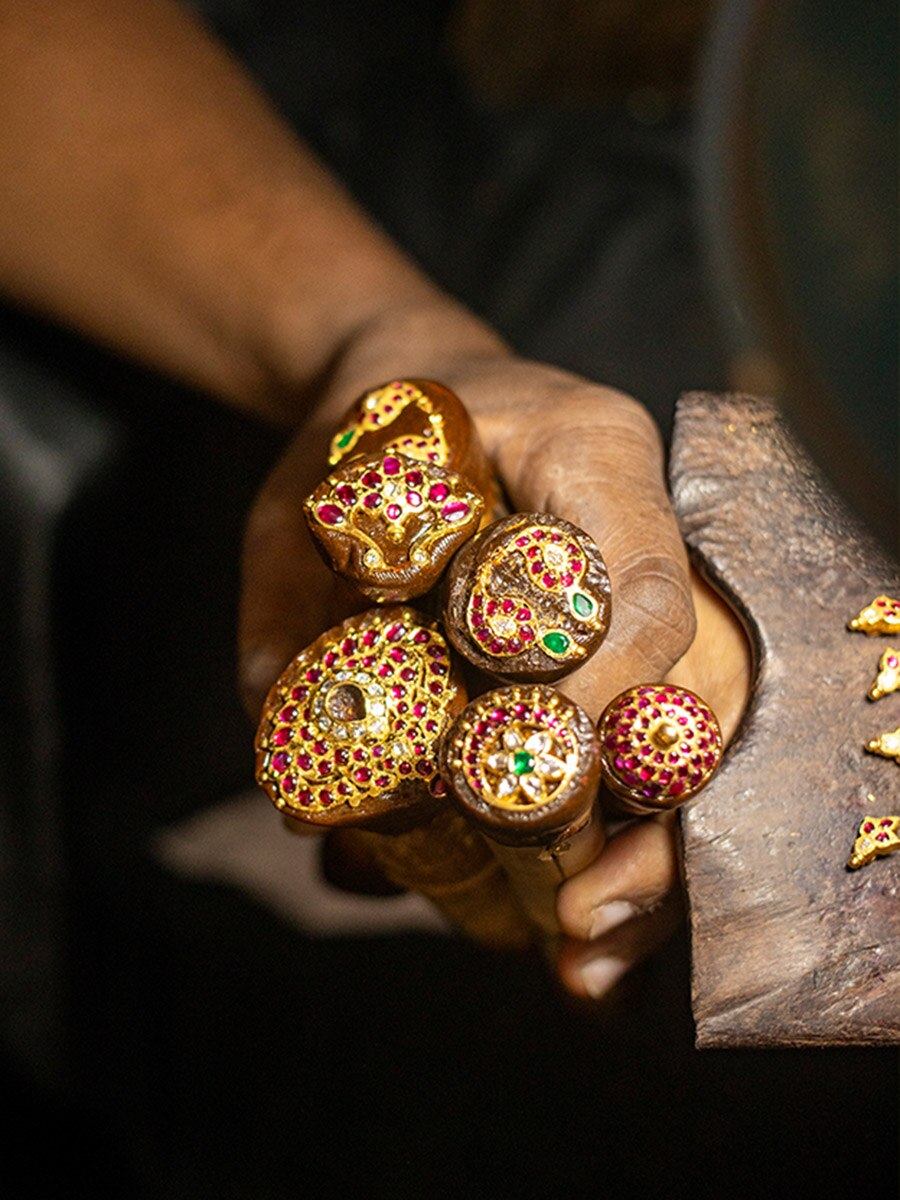
Kundala Velai
Channapatna Toys
Rosewood Carving
Mysore Rosewood Inlay