The Craft
Bandhani Tie and Dye
Kachchh and Rajasthan
Tying Life and Legacy with Bandhani
The earliest examples of tie and dye have come to light from the excavations of the Indus Valley Civilization. Today, the centuries-old craft is still being practised in Gujarat and Rajasthan. Traditional dyers called the Khatris, it is believed, were invited to Kachchh by its ruler Maharao Khengarji in the 1500s. Even today, Kachchh is seen as the primary centre of Bandhani.
The Making
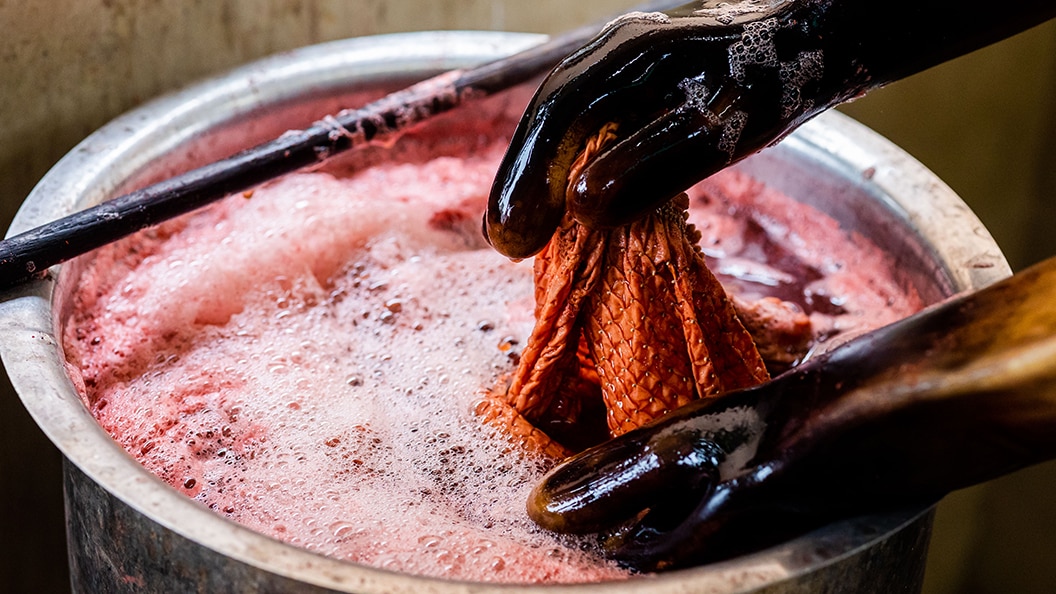
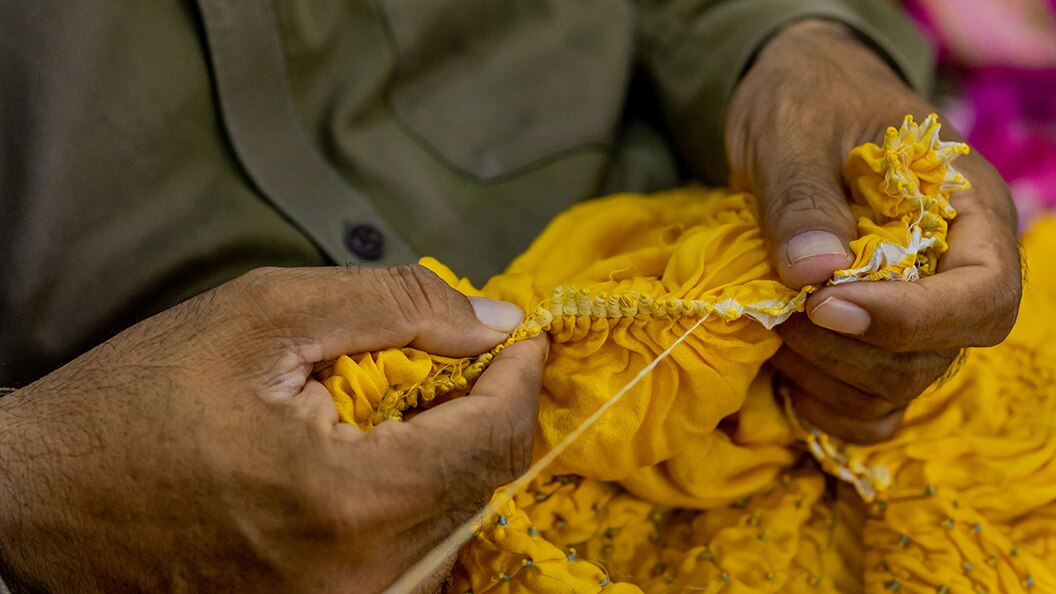
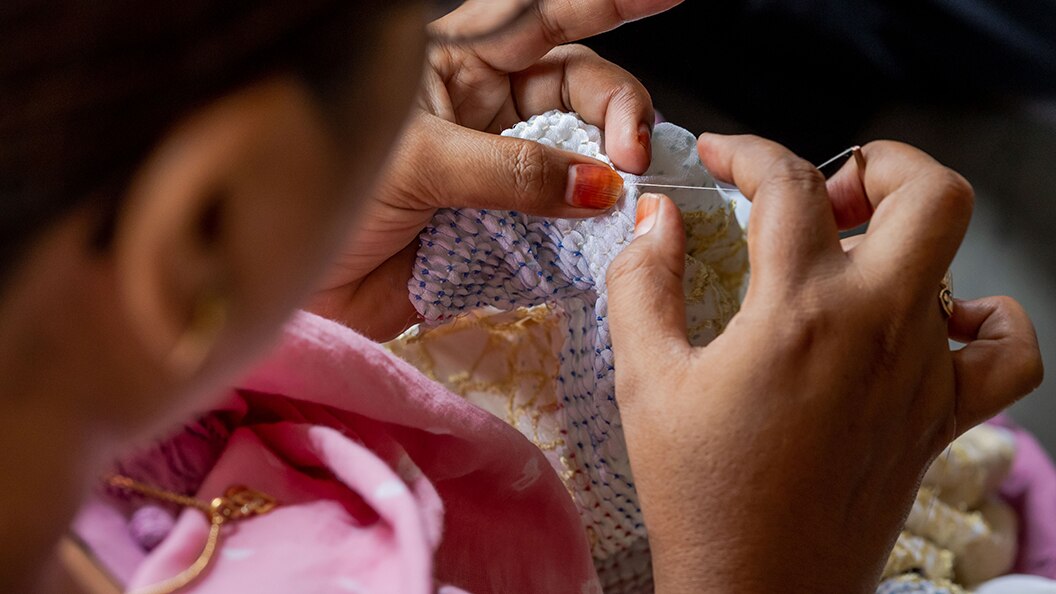
The Bandhani process is long and painstaking. It involves the tying of small pinches of cloth and then dyeing them to create a pattern of tiny dots. Before the tying and dyeing is done, the fabric is washed and folded two to four times. The more the number of dots or knots, the more intricate, complex the pattern and the more expensive the finished product.
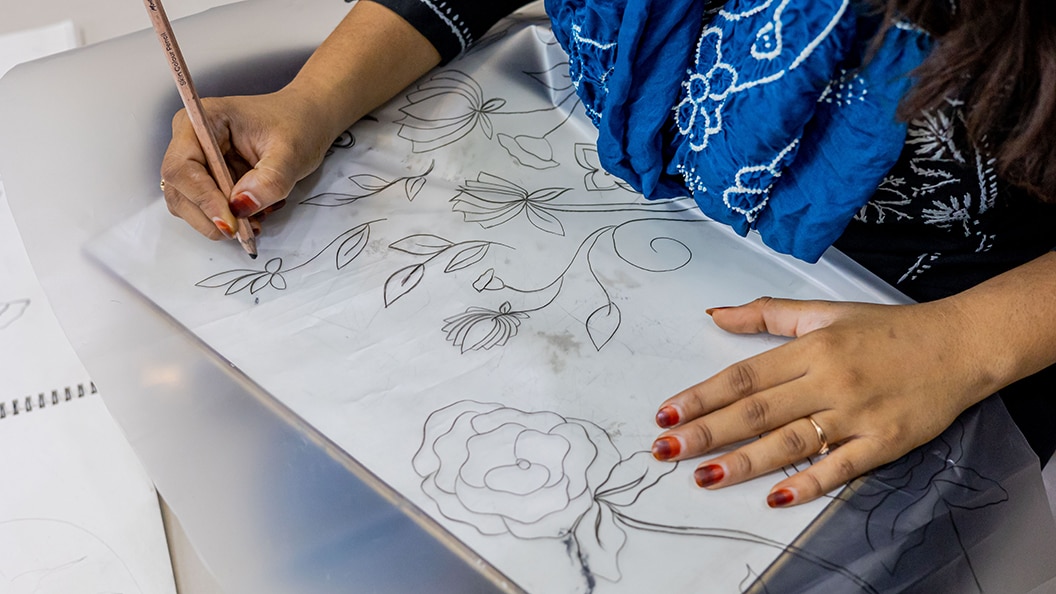
Sometimes, for certain patterns such as the ambadal (a gateway-like structure), the arches are first drawn by hand.
The Legacy
In Kachchh, the centres for Bandhani weaving include Bhuj, Mandvi, and
Mundhra. In Rajasthan, Bandhani is done in Jaipur and Jodhpur that are are also prominent weaving centres. It requires the craftsperson to have not one but two extraordinary skills - to tie the knots and then precisely dye those. Some of
the finest tying done on silk fabric, is to be found in the Kachchh villages of
Abdasa and Nakhatrana.
Wearing the colourful Bandhani is part and parcel of the communities that practise the craft. The base fabric of the Bandhani is usually gajji silk, fine cotton, muslin, and wool. The gharchola, worn by Gujarati brides is special as is the peele ki sari that is gifted to pregnant women in Rajasthan. These are yellow saris with a broad red border and Bandhani patterns on them.
Memory Vault
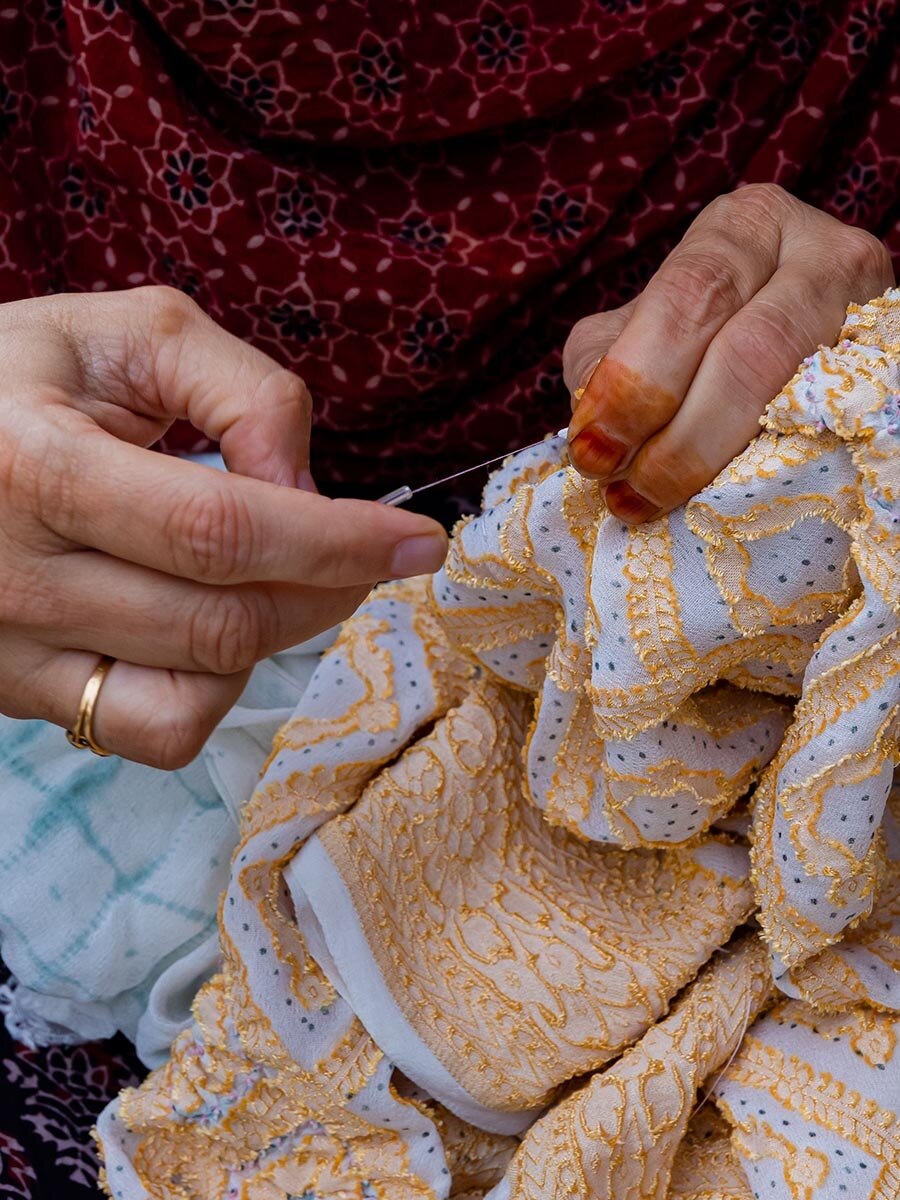
Many communities adopt certain colours of Bandhini as their own. For example, people of Nakhatrana wear a typical Bandhani on wool. The Dhebaria and Kutchi Rabaris wear a black ludi (shawl-like garment) with red dots, while the Vaghadia Rabaris wear orange Bandhani dots on black. The special bridal lugdi of the Rabaris is called the suhagadi neelakwali, also a woollen garment with Bandhani work in orange and green.
Discover
The Collection
Featured
More from India
INDIA'S CRAFTS
Discover More
Patola Handloom
Rogan Art
Bagru Hand Block Print
Rajasthan Hand Embroidery