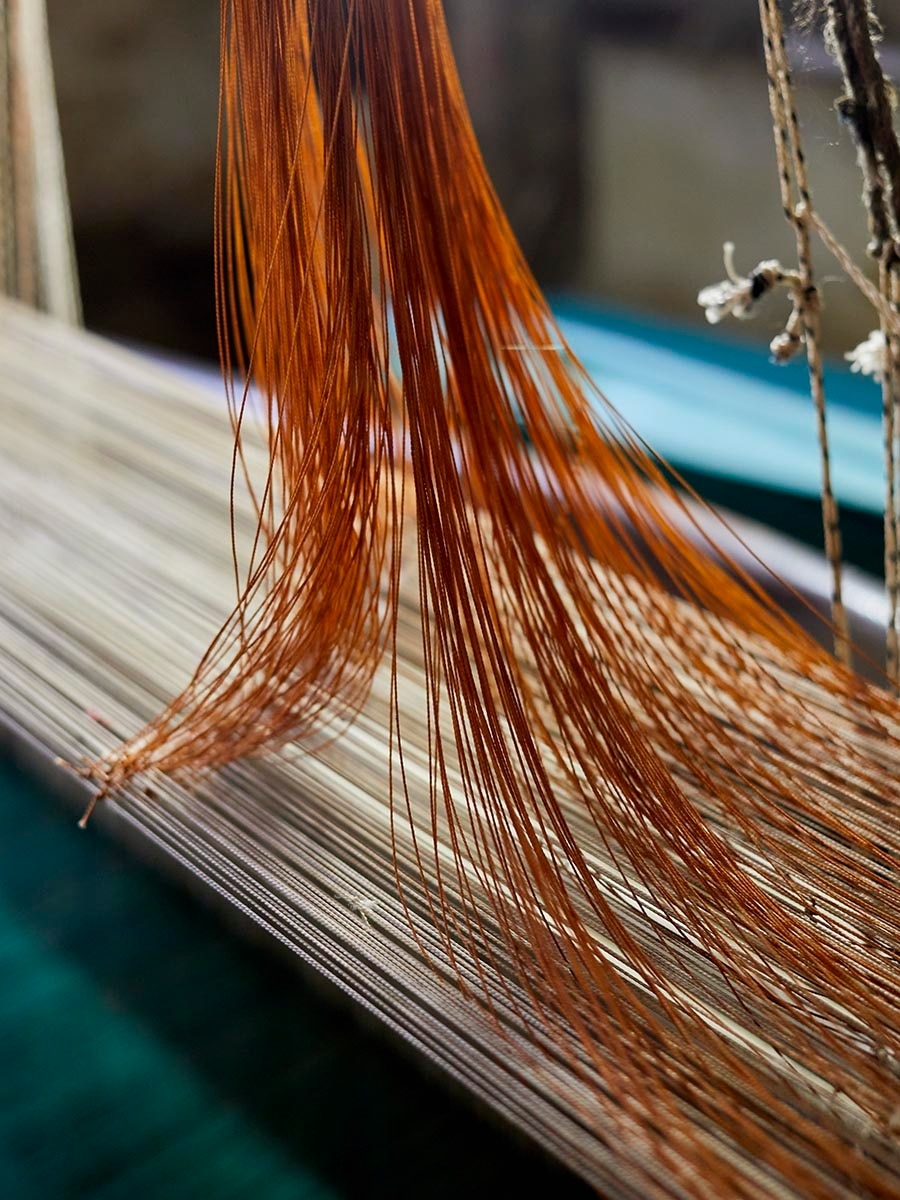
Most complex, most resplendent Indian weave
The Banarasi handloom refers to the textile weaving tradition of Kamkhwaab or Kinkhwaab, where silk is woven with metal-wrapped thread. While said to be prevalent since Vedic times, the Banarasi silk tradition reached the heights of splendour during the Mughal era (1526-1717).
The Making
Several craftspeople are involved in the birth of the Banarasi fabric. The karigar or weaver works under the direction of the grihast or the master craftsman. Before weaving, the first step is the Naqshbandhi or pattern making on paper. Then the patthakathi, another artisan, punches cards as per the designs. Finally, the threads are adjusted accordingly on the pit loom and the weaving begins. Authentic Banarasi saris can have around 5600 thread wires with a width of 45 inches. More than two weavers are required to work on each piece. The saris usually have floral motifs, birds, Mughal inspired jaals, paisleys, as well as checks and stripes. The Shikargah, or the elaborate hunting scene is one of the tradition’s most famous designs.
The Legacy
Skilled Sufi weavers migrated to Varanasi in the late 18th Century and took the weaving to new heights. While earlier, the weaving techniques were used to make large tents and royal costumes, craftspeople soon started weaving carpets, wall hangings, throws and finally the fine saris, stoles and dupattas.
Memory Vault
Swatches of Banarasi brocade were woven and displayed at the Great Exhibition of 1851 in London. In her book, Woven Textiles of Varanasi, Jaya Jaitly reminds us about Sant Kabir, the weaver poet. Kabir believed in communal harmony, and the history of Banarasi handloom is incomplete without him being a part of it.
Discover
The Collection
Featured
More from India
INDIA'S CRAFTS
Discover More
Bhadohi Hand Knotted Carpet
Chikankari Hand Embroidery
Marble Carving - Uttar Pradesh
Wood Carving-Bahadurgarh