The Craft
Awadhi Jamdani
Varanasi, Uttar Pradesh
The woven resplendence of Awadhi Jamdani
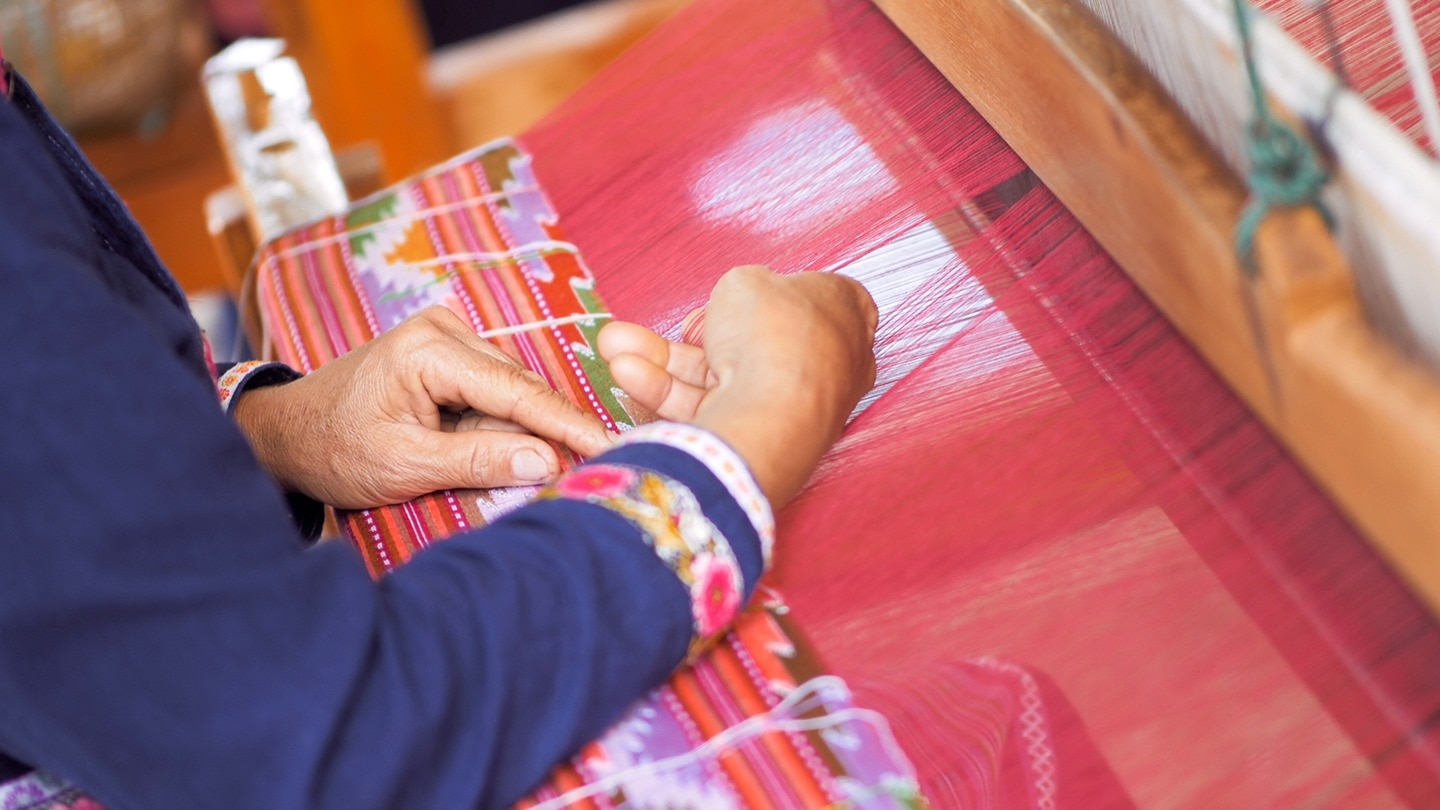
The Awadhi Jamdani is an intricate and fine weaving technique, honed for centuries in the ancient city of Varanasi to become a sought after craft the world over. The weave is particularly well known for how it allows light and shadow to interact with the fabric, giving it its unique appearance.
The Making
Artisans skilfully weave the fabric from cotton threads to create the beautiful, subtle and distinctive patterns. Motifs of the Awadhi Jamdani include human figures, flowers, and geometric shapes. They can be found on saris, angarakhas, caps, coats, and tunics.
The Legacy
The word Jamdani originates from the Persian words jama (rope) and dan (receptacle). The jamdani weave migrated from Bengal, travelled to Varanasi and Tanda in Uttar Pradesh where it assumed its present form as we know it today.
The Awadhi Jamdani became popular among the royal families of Varanasi and
the Nawabs of Awadh. The craft particularly flourished under the reign of Nawab
Wajid Ali Shah before becoming the preserve of the king of Ayodhya.