THE CRAFT
Aari Embroidery
Kachchh, Gujarat
Fables of The Famous Shoemaker Stitch
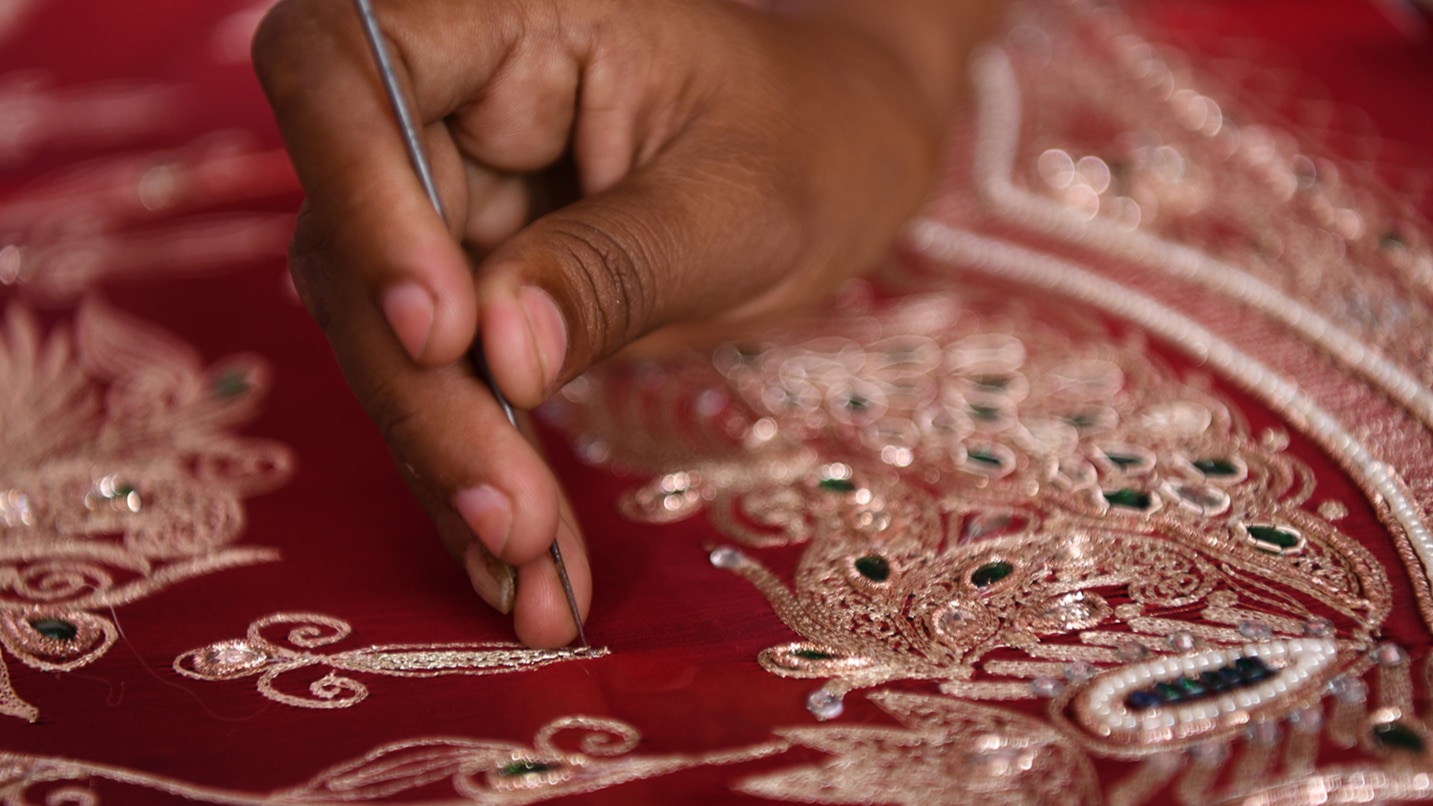
Aari work originated in Sindh somewhere in the 14th Century. The embroidery technique was used on leather footwear as embellishments. Cobblers or mochis used silk threads to create unbroken chain-stitched designs on leather slippers with silk threads. Over time, the mochis travelled from Sindh to Halvad (in Gujarat's Morbi district), before moving on to Kachchh. Aari work came to be used by saddlers too and it decorated saddles, shoes as well as mats for royalty. It continued to find work in the Mughal courts in the 17th and 18th Centuries.
The Making
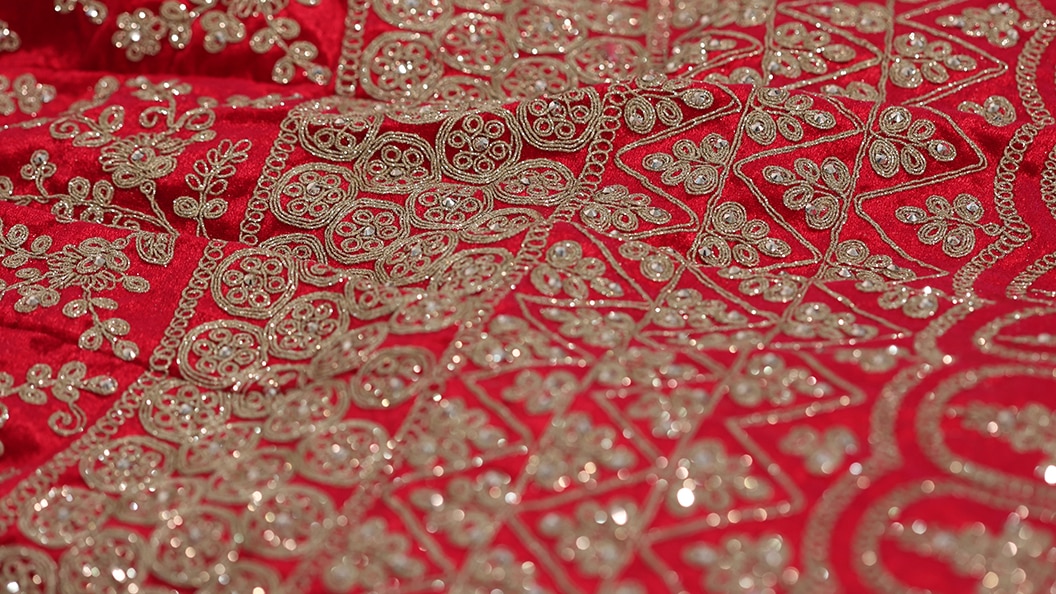
The word Aari, originates from Aar or the needle used by the craftsmen. The work also came to be known as Aari Bharat or Mochi Bharat.
The Aari craftspeople first used a cobbler’s awl with a thick wooden handle to help push the hooked metal embroidery and spike it through the leather. When they adapted the technique to make fine embroidery on silks and muslin, they moved to more delicate tools with which they covered the fine fabrics with motifs of flowers, fruits, trees and birds, all done with the distinctive chain-stitches. Aari-style work has also appeared on Pichhwai-inspired paintings,
indicating the inter-craft influences in India. Motifs also came to include conches, boats and religious imagery.
The Legacy
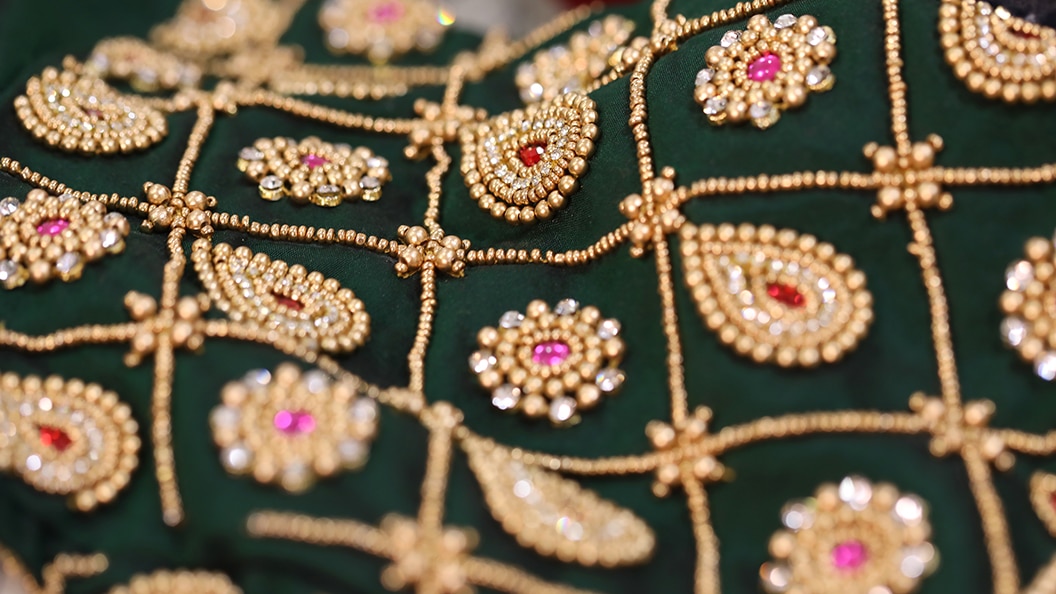
Aari embellishments soon began to appear on royal ceremonial tents, traditional Kachchi costumes such as the ghaghra-choli and on palampores or the 18th century chintz wall hangings and bed covers that were traded to Europe.
Memory Vault
The history of Mochi-Aari embroidery is presented in The Shoemaker’s Stitch, a book by Shilpa Shah & Rosemary Crill, drawn from the embroideries from the Textiles and Art from the People of India (TAPI) collection. This has over 4,000 historic textiles, including a wide range of techniques, materials and motifs. The book also talks about the current state of Aari art and what its future holds.
Discover
The Collection
Featured
More from India
INDIA'S CRAFTS
Discover More
Patan Patola Handloom
Warli Painting

Gujarat Embroidery
Pithora Painting