THE CRAFT
Wrought Iron Craft

From the state of Chattisgarh
Chattisgarh
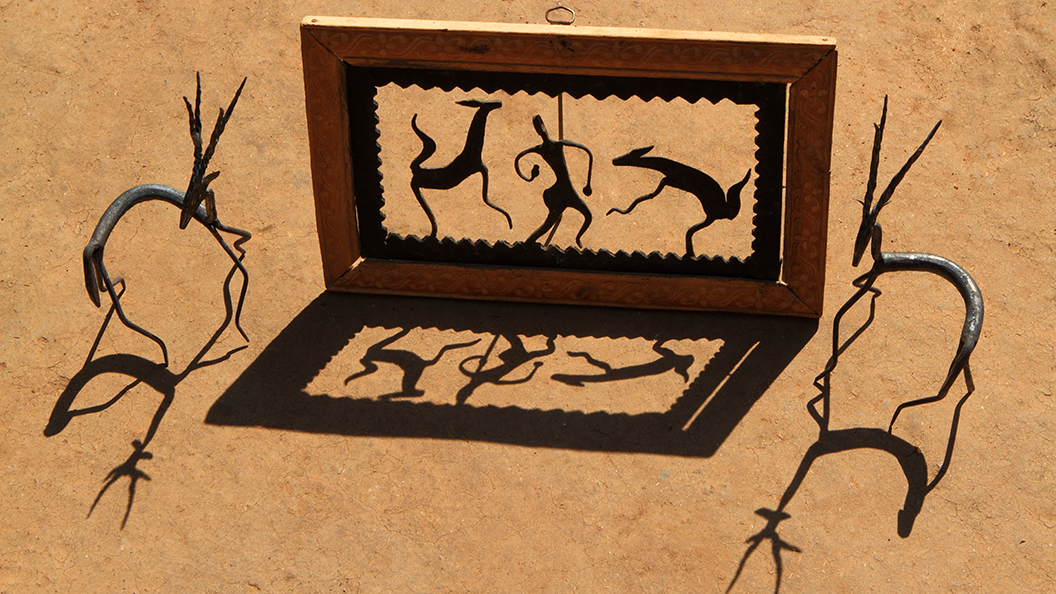
“Wrought Iron Craft of Bastar" or “Bastar Iron Craft” is a traditional art form for making figurines with recycled household items or iron scrap. It is practiced by the Bastar community of Chattisgarh. The tradition began with the ironsmith tribal communities, namely Gondi and Maria, making farming and hunting equipment with iron scrap. Over the years, it has evolved into a valuable art form.
Heritage Value
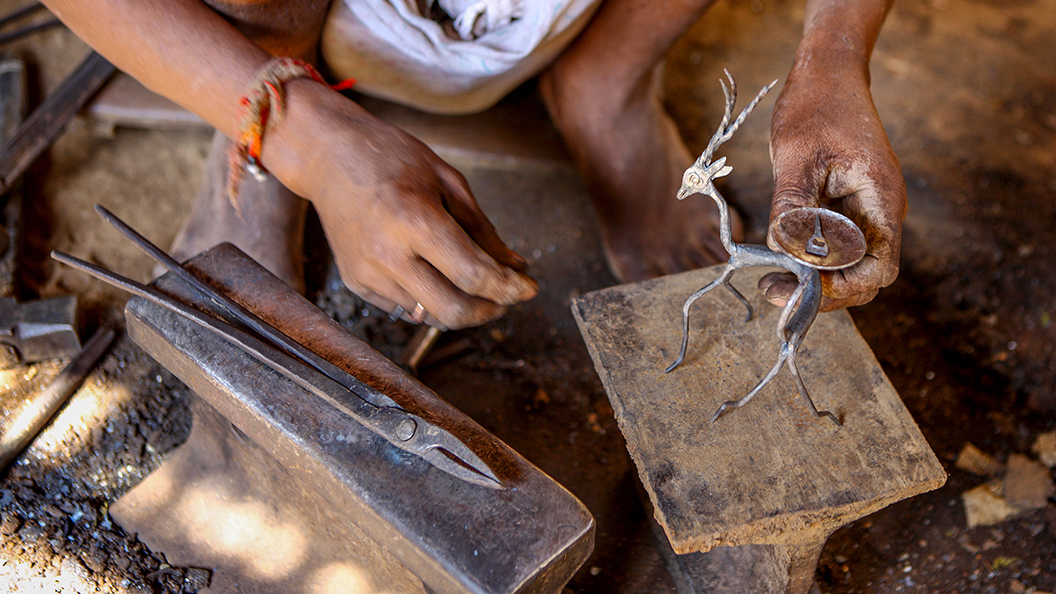
Besides Bastar, the other centres of wrought iron craft are in Kondagaon, Umargaon, and Gunagaon. Made by the local lohars or ironsmiths, the tools used in iron crafting are dukhna sar (furnace), muthli (hammer), chimtas (forceps), sandasis (tongs), and chenni (chisels).
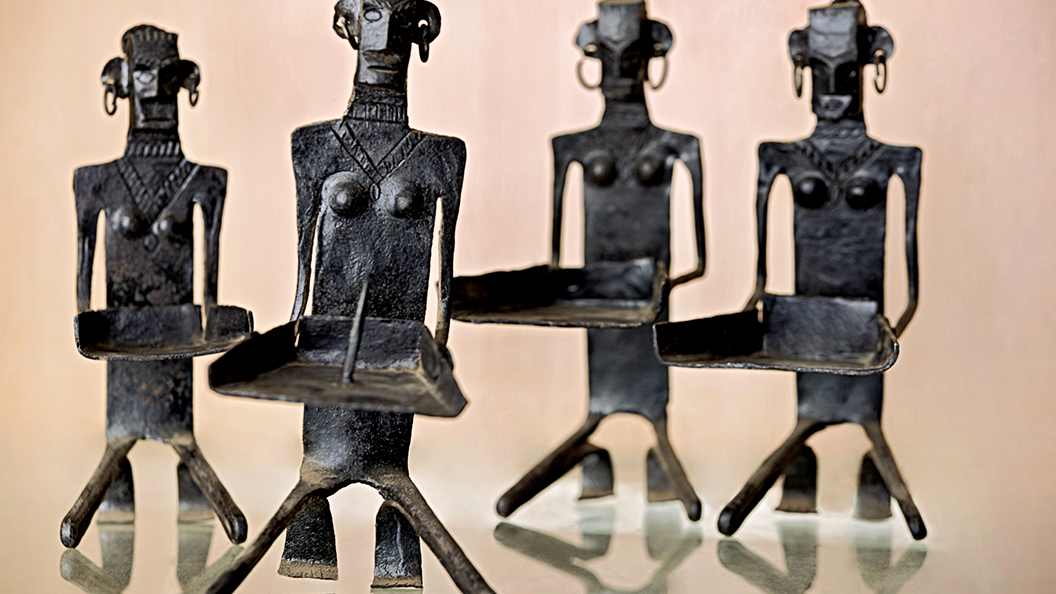
The time-consuming process begins with repeatedly beating hot iron scraps and removing unnecessary portions. Later, the sharp edges are filed and a varnish is applied to create a smooth lustre. Both solid and hollow shapes are made with this process. The most common wrought iron creations include lamps, figurines of animals, and other artefacts.
This art form has been certified with a Geographical Indication (GI) tag since 2008-2009.
The time-consuming process begins with repeatedly beating hot iron scraps and removing unnecessary portions. Later, the sharp edges are filed and a varnish is applied to create a smooth lustre. Both solid and hollow shapes are made with this process. The most common wrought iron creations include lamps, figurines of animals, and other artefacts.
This art form has been certified with a Geographical Indication (GI) tag since 2008-2009.
Memory Vault
Bastar boasts a large number of iron ore deposits. As a result, the tribal communities began extracting iron and became ironsmiths. They spearheaded the making of iron-wrought products, now known worldwide for their simplistic yet creative appeal.
Disclaimer:
Any information on this page is anecdotal and based on publicly
available details. If you're interested in learning more,
click here.