THE CRAFT
Wood Turning

From the state of Rajasthan
Rajasthan
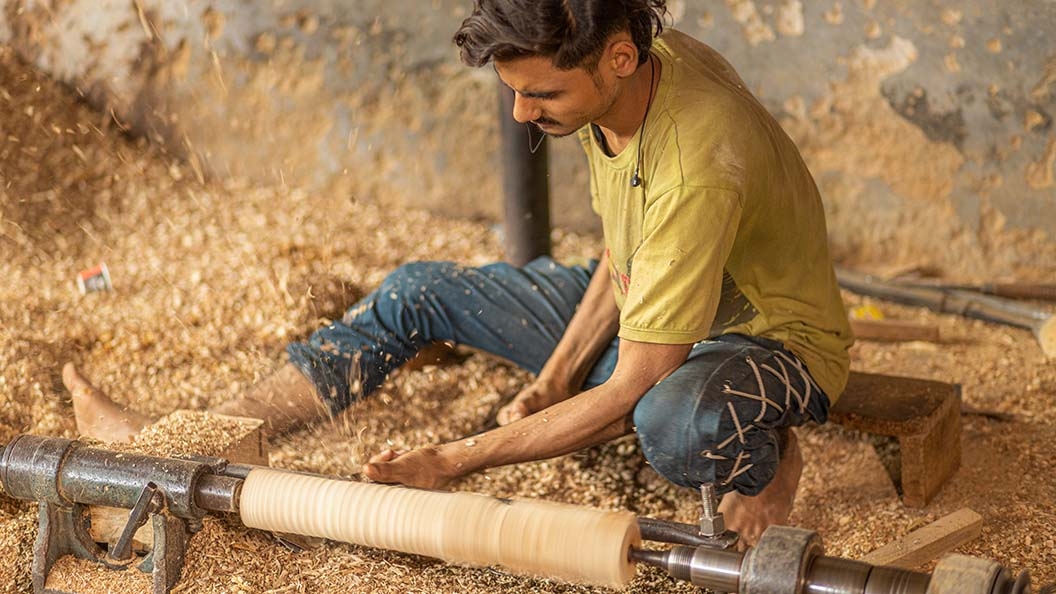
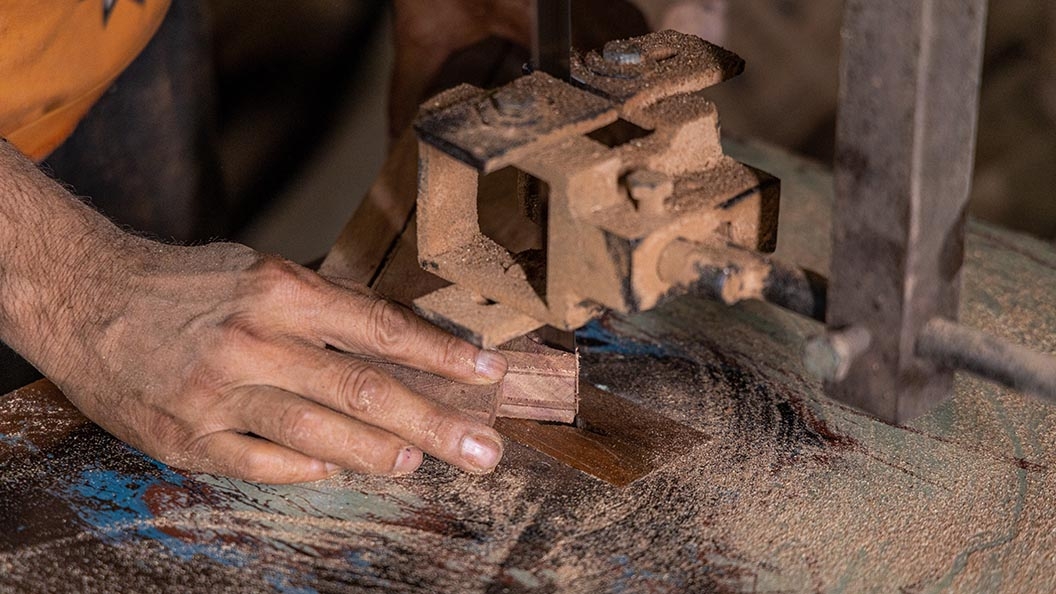
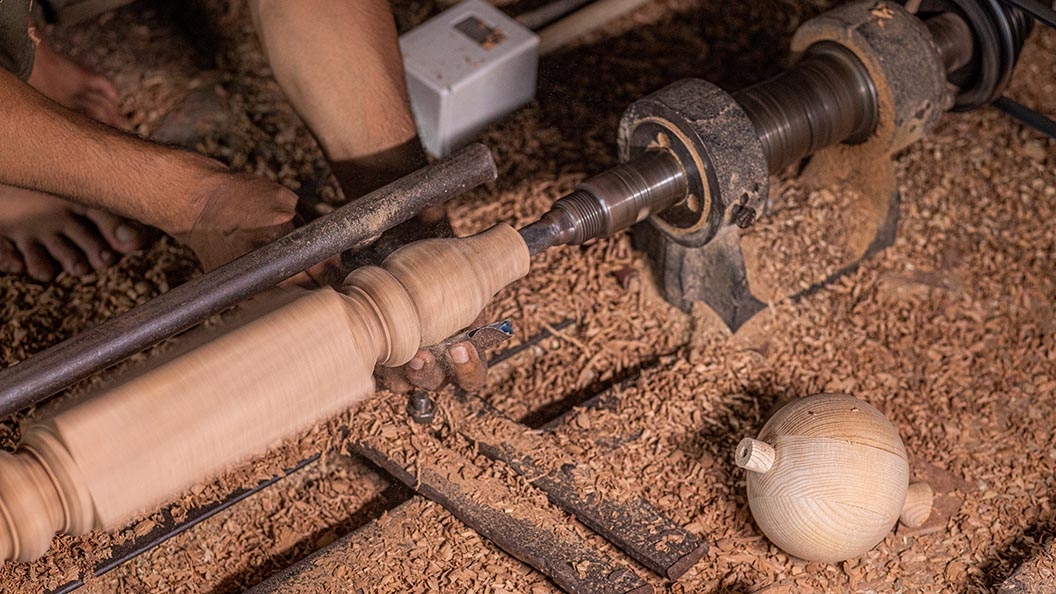
In Rajasthan, woodturners use a lathe, just like in West Bengal, but they shape the wooden objects slightly differently. The craftsmen use tools by hand, just like in other handicrafts. However, in woodturning, a piece of wood is mounted on a spindle and rotated, while a cutting tool is used to shape the wood into different designs.
Houses carrying the influence of royalty still use this kind of wood-turned carvings.
Houses carrying the influence of royalty still use this kind of wood-turned carvings.
Heritage Value
Woodworking is a big part of Rajasthan's rich crafts and culture. It can be seen in palaces, shrines, and havelis (bigger living quarters). Woodturning has been practiced in Rajasthan since the 17th century, and one can still see examples of it in museums today.
Traditional entrances into grand buildings often have wooden doors with intricate carvings. These doors are called Akbari Mughal Rajput style doors, and they are a symbol of Mughal aesthetics. The carvings often feature designs of lotuses, peacocks, betel leaves, and medallions.
Rajasthani architecture is known for its latticed windows or jaalis, door arches, and parapet walls. Carved beds and divans with jali and net carving are popular in Barmer and Bikaner. Bassi, near Chittogarh, is famous for its high-quality wood carvings and ritualistic paintings. In Pipar and Bhari Sajanpur in the Pali district, craftsmen make paper-thin bowls of Rohida wood that for Jain monks.
Rajasthani craftsmen also make Kaavad, which are wooden shrines that open into seven panels. The panels are hand-painted with mythological stories.
Traditional entrances into grand buildings often have wooden doors with intricate carvings. These doors are called Akbari Mughal Rajput style doors, and they are a symbol of Mughal aesthetics. The carvings often feature designs of lotuses, peacocks, betel leaves, and medallions.
Rajasthani architecture is known for its latticed windows or jaalis, door arches, and parapet walls. Carved beds and divans with jali and net carving are popular in Barmer and Bikaner. Bassi, near Chittogarh, is famous for its high-quality wood carvings and ritualistic paintings. In Pipar and Bhari Sajanpur in the Pali district, craftsmen make paper-thin bowls of Rohida wood that for Jain monks.
Rajasthani craftsmen also make Kaavad, which are wooden shrines that open into seven panels. The panels are hand-painted with mythological stories.
Memory Vault
In some parts of Rajasthan, it's tradition to gift a newly married daughter a wood-carved, peacock-shaped sindoor (vermilion) box. This is part of her wedding trousseau.
Disclaimer:
Any information on this page is anecdotal and based on publicly
available details. If you're interested in learning more,
click here.