
THE CRAFT
Vilakku Lamps
From the state of Kerala and Tamil Nadu
Kerala and Tamil Nadu
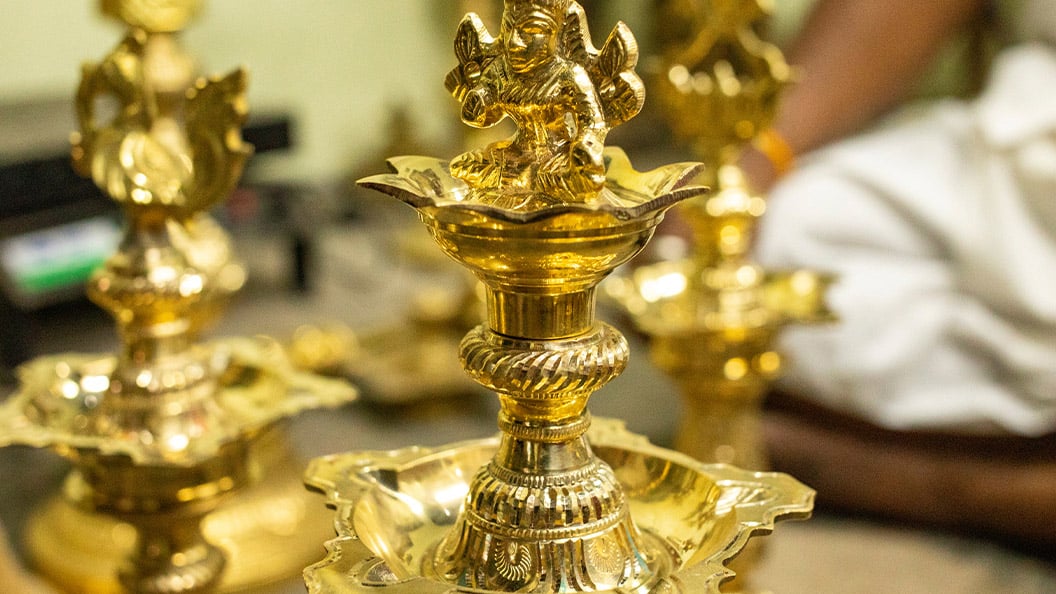
The Nilavilakku (also termed as Vilakku) is a traditional floor-standing lamp commonly used in Kerala and Tamil Nadu. The name comes from nilam (meaning floor) and vazhaipoo, signifying the shape of the top of a banana flower. It is lit for auspicious occasions in temples before prayers. People also light these lamps for official, informal and domestic celebrations. Often, rituals heralding the new or marking a significant milestone feature the vilakku. The lamp plays an important role in ceremonies within Hindu families in Kerala.
Heritage Value
As the sun sets, sometimes young girls carry the lit lamps to the verandah to start evening prayers. Hindu temples use various types of lamps, like kuthuvilakku (brass lamps) and thookuvilakku (hanging lamps). These are closely connected to traditional beliefs and activities in Kerala. The thiruvilakku; or kuthuvilakku are exquisitely crafted lamps, also known as ‘deepa’ in Sanskrit. It's important in the shrines of South Indian homes and symbolises Mahalakshmi, deity of fortune and prosperity. The lit lamps are believed to ensure the well-being and bestow blessings on a woman's family members. There are three different ways to light the bronze or brass nilavilakku. Firstly, with a single wick directed towards the deity or sacred space. Secondly, with two lighted wicks in two directions. The third way is with five wicks representing the five directions.
Memory Vault
The annual Lakshadeepam festival of Sri Padmanabha Swamy Temple in Trivandrum dates back to 1750. During this festival, the people show their love for the lamps. Yet, the Kerala Nilavilakku is also found in Syrian Christian art forms. A dance style, Margamkalli, is centered on the traditional Kerala lamp.
Disclaimer:
Any information on this page is anecdotal and based on publicly
available details. If you're interested in learning more,
click here.