THE CRAFT
Thanjavur Painting

From the state of Tamil Nadu
Tamil Nadu
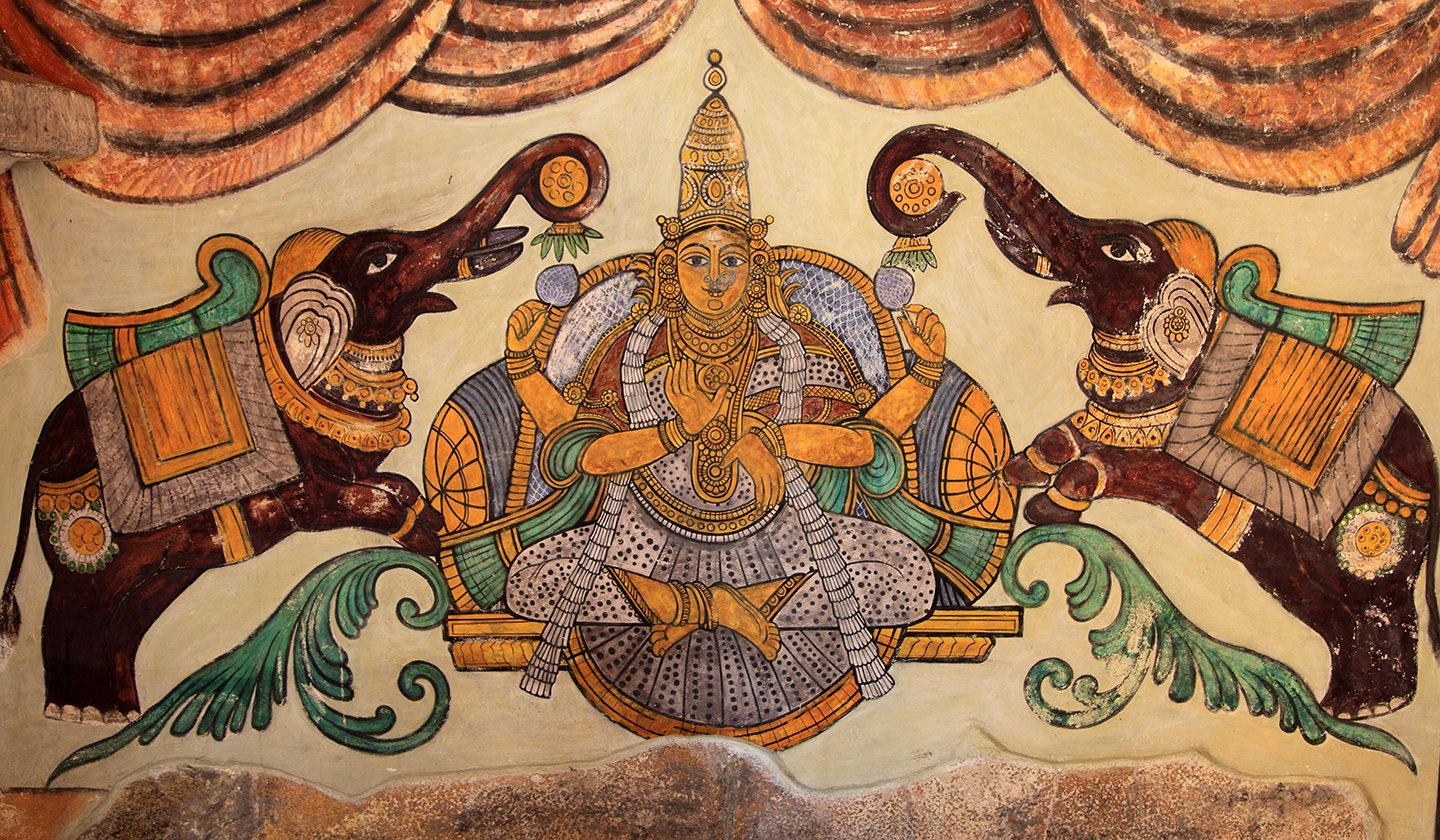
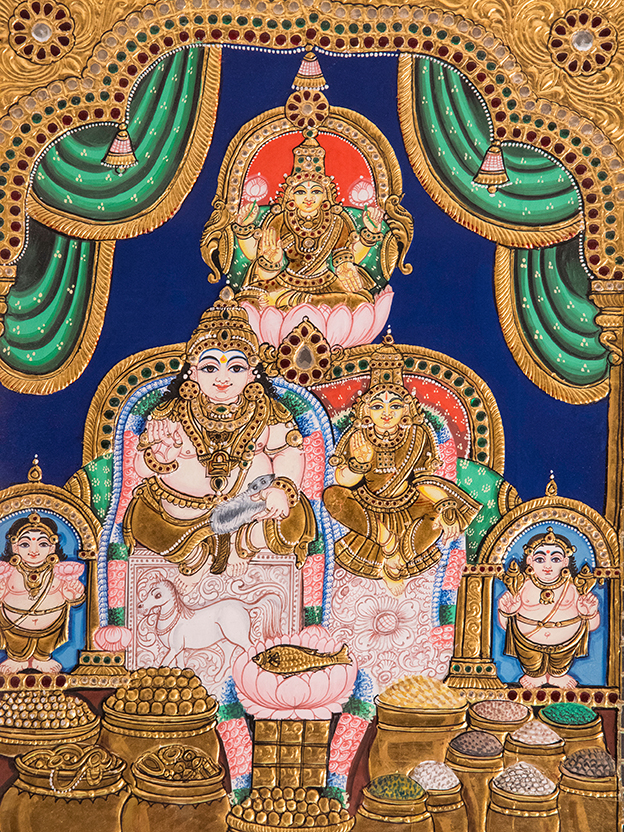
Thanjavur painting, or Tanjore painting, is a classical art style originally from the town of Thanjavur in Tamil Nadu. It has its roots in 16th century Indian art from during the rule of the Vijayanagara Rayas. These paintings include rounded faces, almond-shaped eyes, and graceful bodies. Other distinct features include flat colours, arches, drapes, and ornate borders, as well as shading on faces to add depth.
Heritage Value
The paintings are commonly known as palagai padam, meaning picture on a wooden plank, and are created on boards of jackfruit or teak wood. They are famous for depictions of deities, and using embellishments, particularly gold foil. Other decorations include cut glass, pearls, and precious and semi-precious stones. The themes of these paintings involve Bal (baby) Krishna, Lord Rama, and various other divinity, saints, and figures from Hindu mythology.
Thanjavur painting was certified with a Geographical Indication (GI) tag by the Government of India in 2007–08.
Thanjavur painting was certified with a Geographical Indication (GI) tag by the Government of India in 2007–08.
Memory Vault
The Raju community of Tanjore and Tiruchy and the Naidu community of Madurai traditionally made Tanjore paintings. Originally hailing from Andhra Pradesh and Telangana, these artists eventually migrated to Tamil Nadu.
Disclaimer:
Any information on this page is anecdotal and based on publicly
available details. If you're interested in learning more,
click here.