THE CRAFT
Thangka Painting

From the states of Sikkim, Arunachal Pradesh,and Himachal Pradesh
.jpg)
Ladakh, Sikkim, Arunachal Pradesh, Himachal Pradesh
Thangka is a traditional art form originating in Nepal and later practiced in Tibet. Its origins lie in Nepalese art, and it later became popular in Tibet.
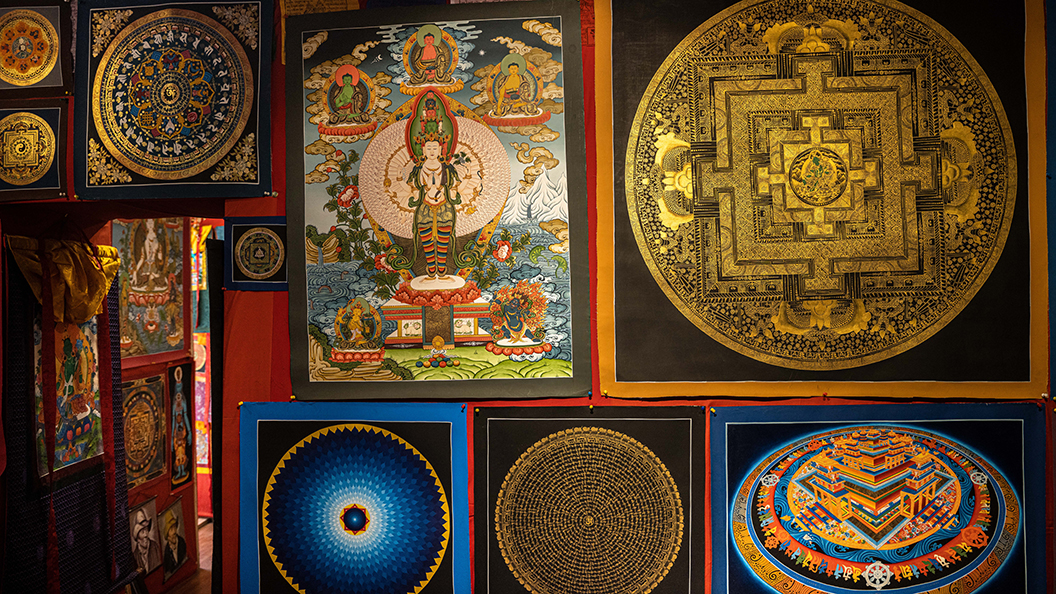
These three-dimensional paintings have picture panels on scrolls of silk or cotton. They depict peaceful or wrathful gods and goddesses, and meditative mandalas.
In India, this tradition holds significant religious and cultural importance wherever Buddhism is practiced. This includes Ladakh, Sikkim, Arunachal Pradesh, and parts of Himachal Pradesh.
These three-dimensional paintings have picture panels on scrolls of silk or cotton. They depict peaceful or wrathful gods and goddesses, and meditative mandalas.
In India, this tradition holds significant religious and cultural importance wherever Buddhism is practiced. This includes Ladakh, Sikkim, Arunachal Pradesh, and parts of Himachal Pradesh.
.jpg)
Heritage Value
The artists of Thangka must know how to draw each deity in the right sizes and proportions, according to Buddhist iconography.
Thangkas are painted on flat surfaces but can be rolled up like scrolls when not on display. The artists use stone colours, vegetable dyes, gold dust, and gold thread. For bordering, they use rich silk and brocade, and add silver knobs at the bottom.
Thangka paintings were commissioned for many different reasons. They are believed to help people meditate, seek a long life, show thanks for recovering health, or accumulate merit.
Thangkas are painted on flat surfaces but can be rolled up like scrolls when not on display. The artists use stone colours, vegetable dyes, gold dust, and gold thread. For bordering, they use rich silk and brocade, and add silver knobs at the bottom.
Thangka paintings were commissioned for many different reasons. They are believed to help people meditate, seek a long life, show thanks for recovering health, or accumulate merit.
Memory Vault
In 2022, Sikkim’s Thangka master artist Khandu Wangchuk Bhutia was awarded the Padma Shri for his contribution to the form.
In Tibetan culture, appliquéd and embroidered pieces are more recognized than painted Thangkas. However, painted pieces are more common in the West and considered more valuable.
There are older appliquéd Thangkas in international museums. The Metropolitan Museum of Art in New York City has a special one from the 19th century, that's part of its permanent collection.
In Tibetan culture, appliquéd and embroidered pieces are more recognized than painted Thangkas. However, painted pieces are more common in the West and considered more valuable.
There are older appliquéd Thangkas in international museums. The Metropolitan Museum of Art in New York City has a special one from the 19th century, that's part of its permanent collection.
Disclaimer:
Any information on this page is anecdotal and based on publicly
available details. If you're interested in learning more,
click here.