THE CRAFT
Sholapith

From the state of West Bengal
West Bengal
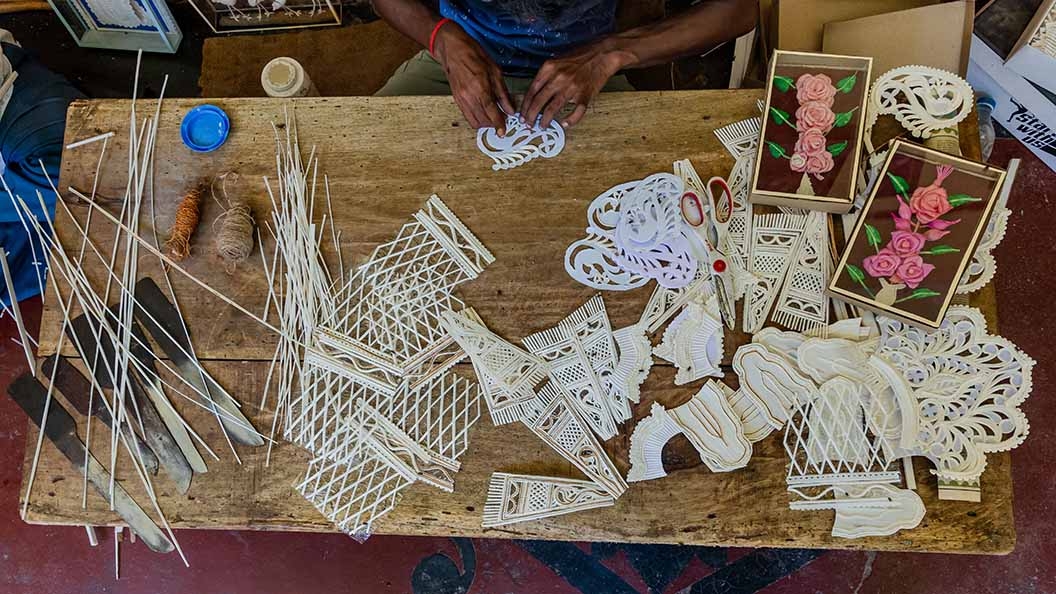
One of West Bengal's well-known crafts, Sholapith, involves making intricate art out of natural plant-based materials. These are essentials in Bengali Hindu marriages. Sholapith is part of the bride's crown-shaped headgear (mukut) and the groom's conical white headgear (topor). Various religious and societal rituals also use and feature Sholapith.
Heritage Value
Sholapith art has interesting mention in Bengali folklore. The tale goes that Lord Shiva beseeched Lord Vishwakarma, the god of architecture and creative prowess to make a white crown for his nuptials to Goddess Parvati. When Lord Vishwakarma faced challenges, Lord Shiva then created a human form named Malakar . He entrusted him with the task of creating the headgear, garlands, and other accessories. Now, the Malakar community still revere Lord Shiva. They believe their existence to be a manifestation of his blessings.
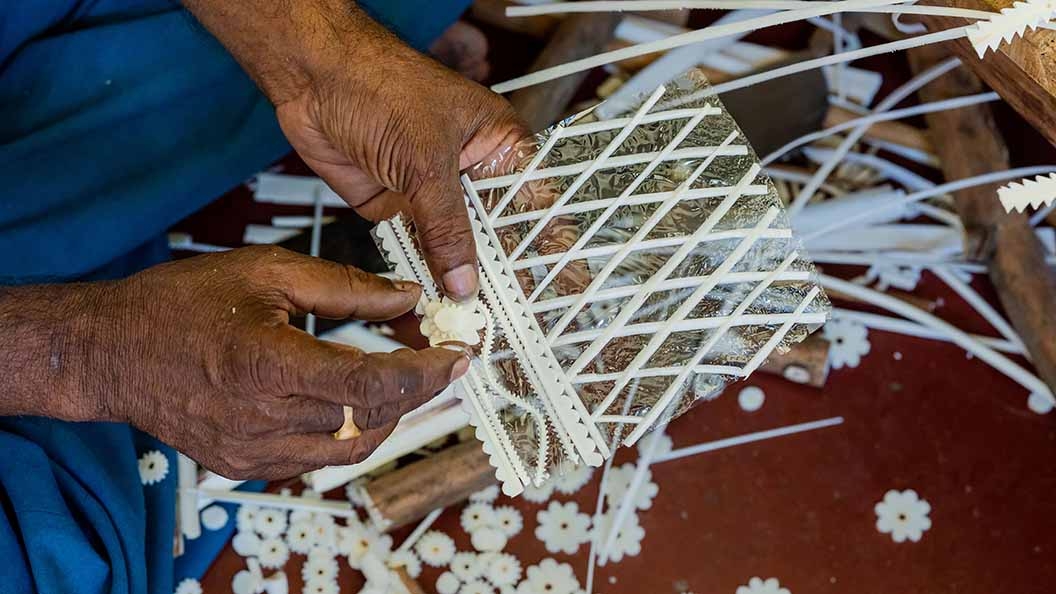
Their art embraces eco-friendly and biodegradable principles. The artists use material extracted from a soft white core from the stem of a spongy plant.
Their art embraces eco-friendly and biodegradable principles. The artists use material extracted from a soft white core from the stem of a spongy plant.
Memory Vault
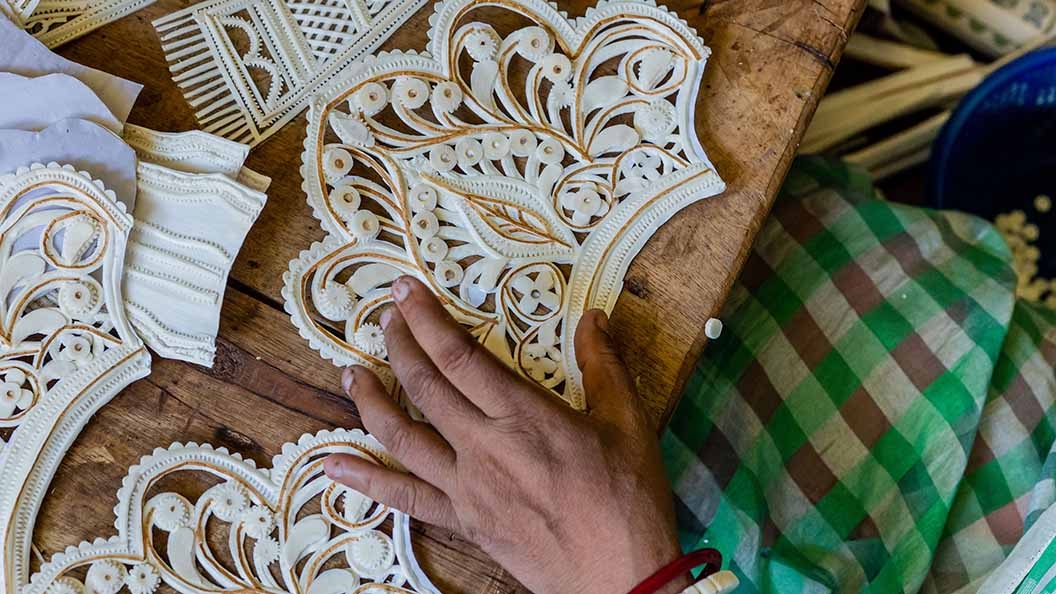
Durga Puja celebrations prominently feature Shola art. Traditional pandals often opt for daaker saaj or sholar saaj, (decorations). Earlier, adornments for Goddess Durga and her children used to be crafted from beaten silver foils. The material was imported from Germany via post (daak). Now, this practice has changed, paving the way for sholar saaj to take its place.
Disclaimer:
Any information on this page is anecdotal and based on publicly
available details. If you're interested in learning more,
click here.