THE CRAFT
Rosewood Carving

From the state of Karnataka
Mysuru, Karnataka
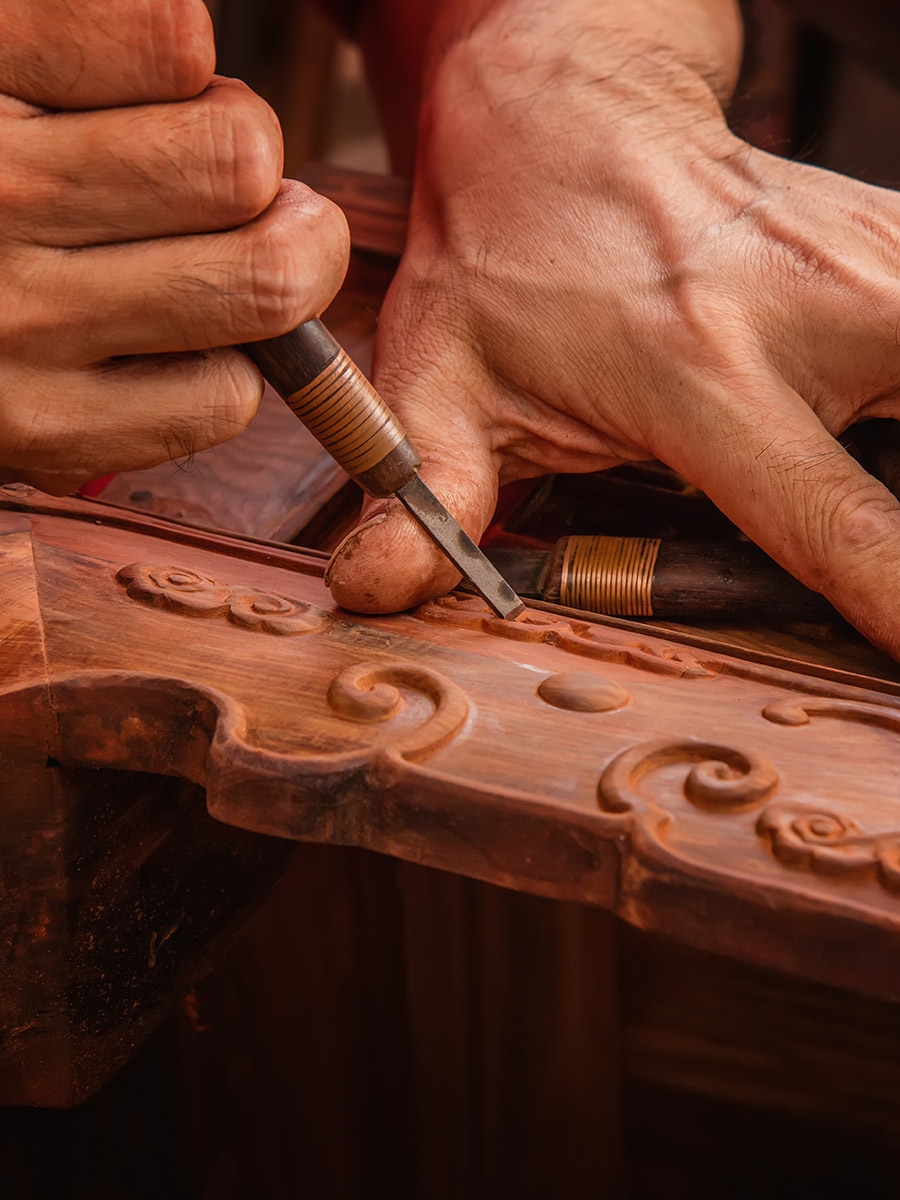
The dry deciduous forests of India, that include Sikkim, Bihar, Odisha, as well as central and Southern India, are the natural grounds for Indian rosewood or Dalbergia Latifolia. The dense inner part of the trunk of this tree is dark and hard. The durability makes it very useful for wood work such as inlay and carving. Unlike the sandalwood carving of Karnataka, rosewood work is specialized to Mysuru and Bengaluru.
Heritage Value
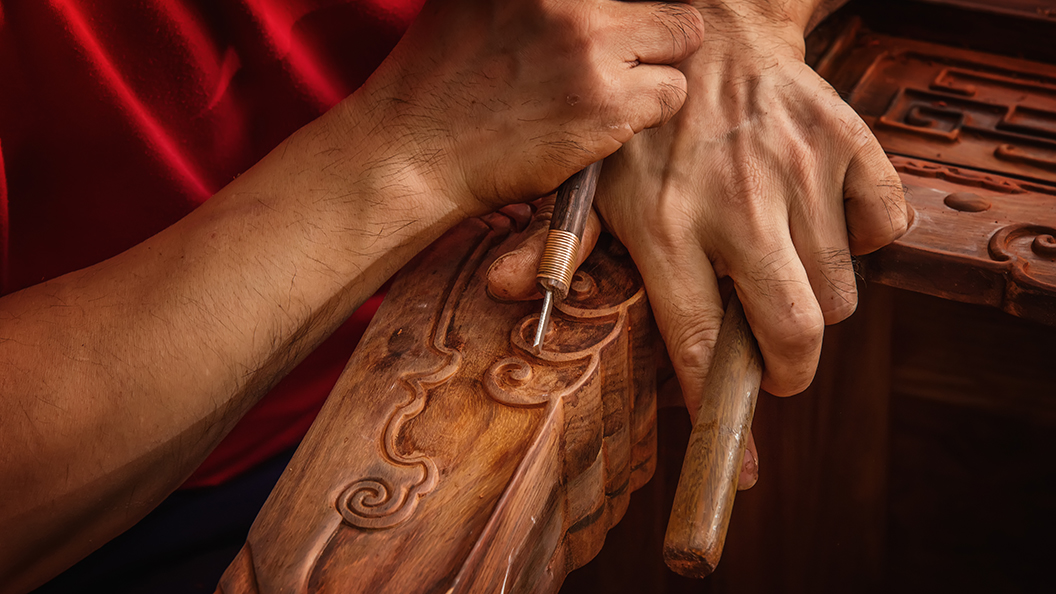
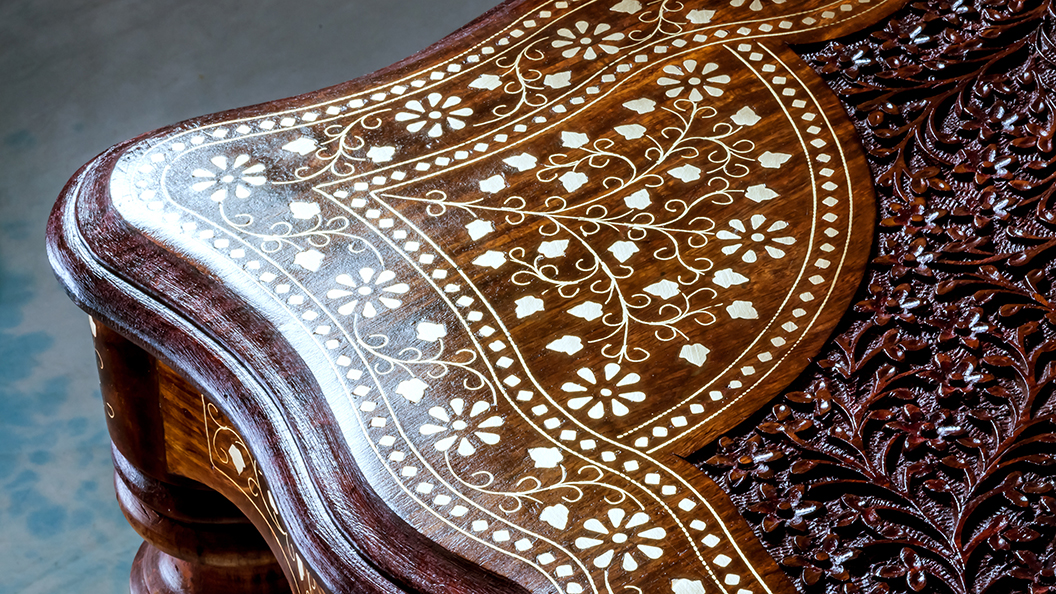
Noticeably, rosewood products are carved into round shapes. Furniture pieces as well as elephant figurines made in rosewood are in great demand. Large door arches and frames, and bracketed pillars of rosewood are common across temples and palaces in Mysuru. Some artisans also carve deities out of rosewood. Besides carving, rosewood is considered the ideal kind of wood to absorb inlay work. Inlaying is usually done with ivory (before its ban), bone, or plastic, inset into recessed forms and embedded with glue.
Rosewood carving was certified with a GI (Geographical Indication) tag in 2005.
Rosewood carving was certified with a GI (Geographical Indication) tag in 2005.
Memory Vault
Historically, rosewood carving flourished during the 18th century, during the rule of Wodeyar dynasty and especially Tipu Sultan, who had shifted their capital to Mysore. They would commission decorative objects such as musical instruments, doors, and furniture for the Mysore palace from the artisans. A catalogue of the Indian Art Exhibition held in Delhi in 1903 suggests that the inlay work of Mysore was distinctive because the ivory was ornamented. A pattern etched on the ivory surface was smeared with black lac and fused with heat.
Disclaimer:
Any information on this page is anecdotal and based on publicly
available details. If you're interested in learning more,
click here.