THE CRAFT
Rogan Art

From the state of Gujarat
Gujarat
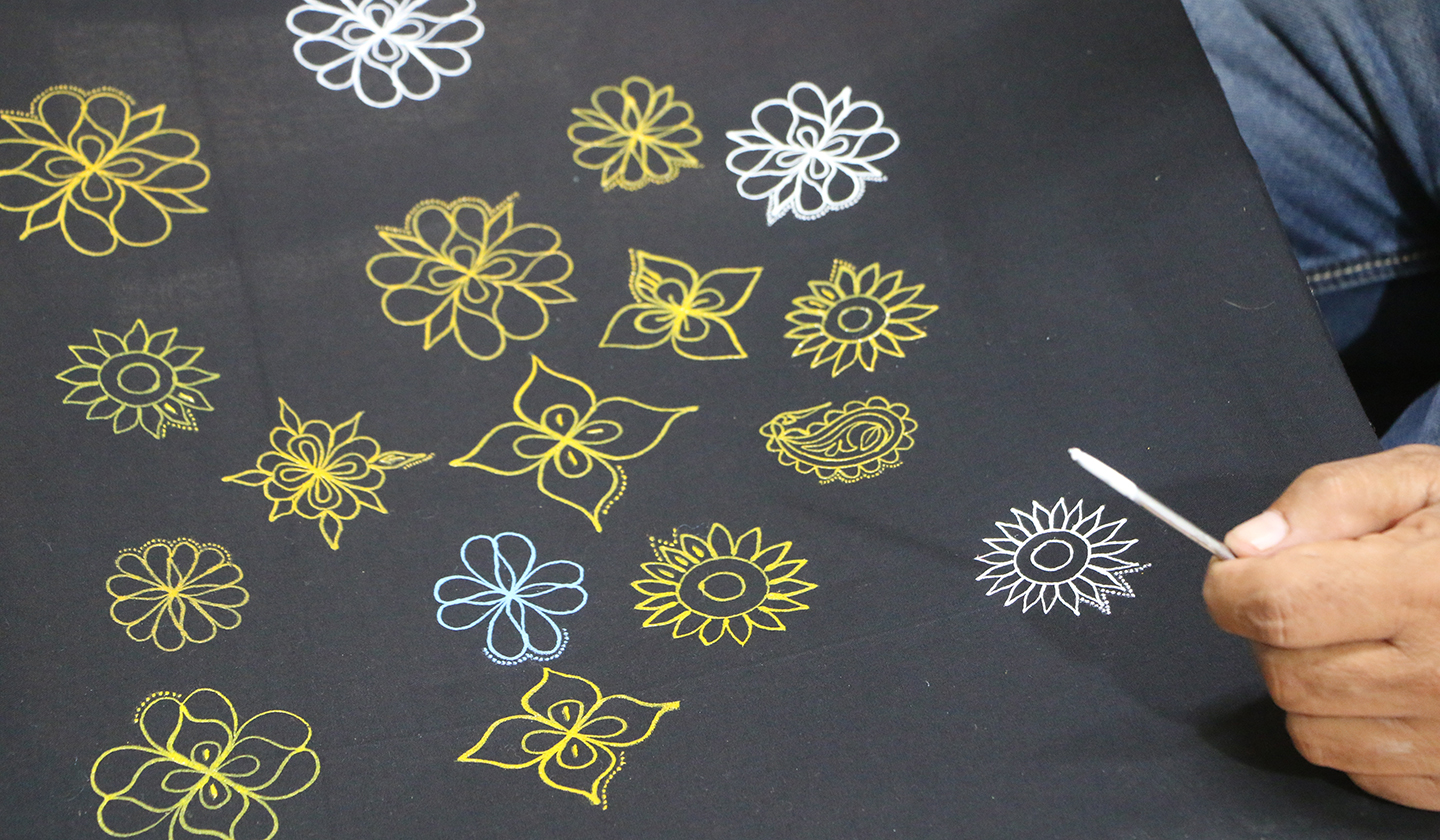
Rogan art, used on paintings and fabrics or saris, has its origins in Persia and Sindh. It made its way to Nirona Village in Kachchh, Gujarat, given the craft route across borders approximately 400 years ago. Rogan means “oil-based”. Traditionally, this craft featured floral and geometrical motifs. However, over time, new designs such as “The Tree of Life,” have gained significant popularity.
Heritage Value
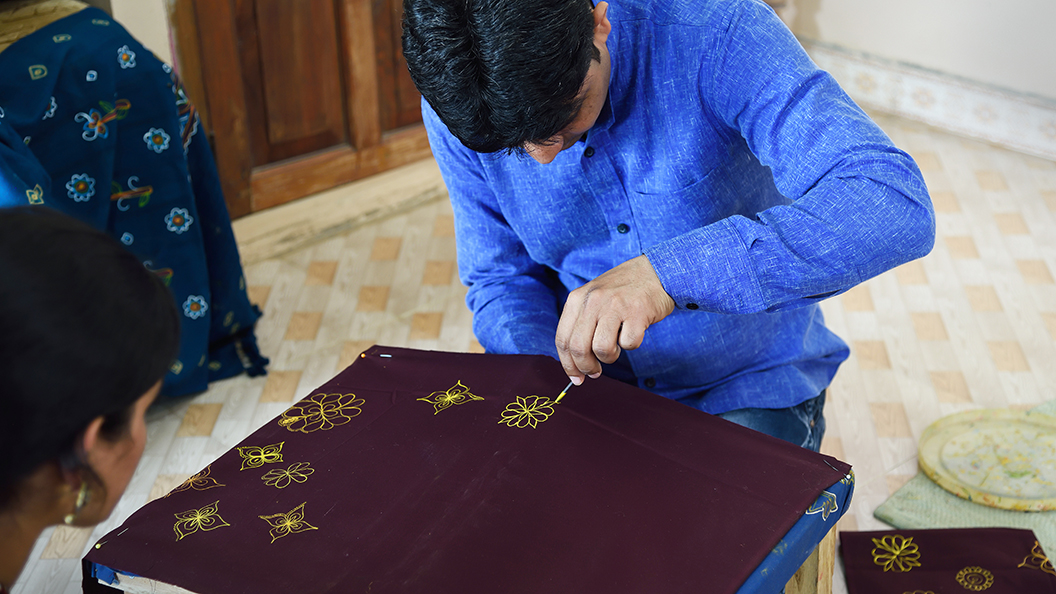
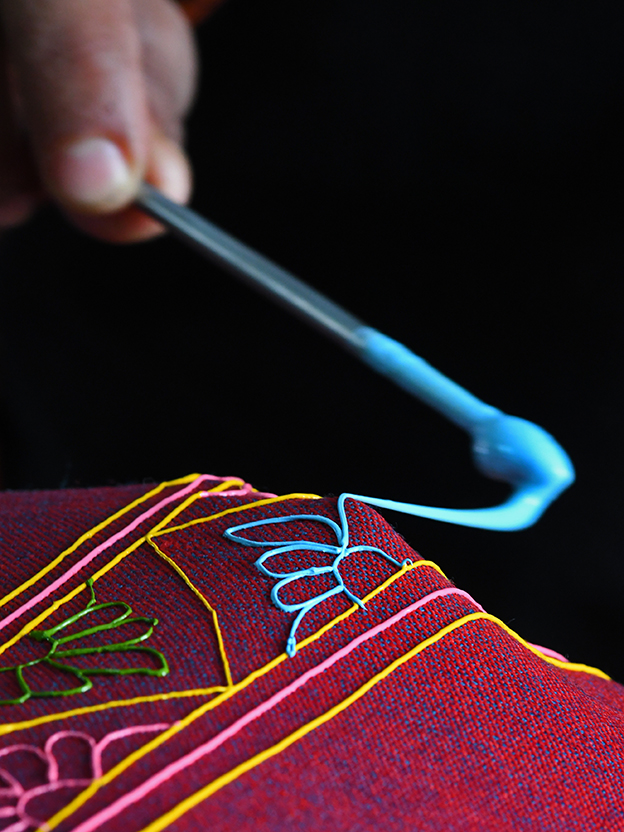
Rogan art uses castor or linseed oils. First, the oil is applied and left for a couple of days to harden and become a jelly-like substance. Colours like red, yellow, white, blue, and green are derived from powdering naturally available local stones. These mineral pigment colours are mixed with water to form a paste, to which the jelly is added. The paste is kneaded using a metal rod. Since it is hand mixed, the artisan's palm softens the paste, allowing it to be shaped into structures. Skilled artisans use the metal rod and their hands to twist these structures into motifs and images. Next, the fabric is removed from the frame, and two artisans precisely fold the fabric to print a mirror image by applying pressure. The fabric is left to dry in the sun for approximately two hours. Once dry, intricate details are added to deepen the sense of design or a narration on the artwork.
Memory Vault
In 2014, Prime Minister Shri Narendra Modi gifted some Rogan paintings to the former US President Barack Obama. These were made by Khatri Abdul Gafur, the famous Rogan painter of Nirona and winner of multiple awards. In the past, only men learnt the craft. Now, Kachchi women, who would traditionally only do embroidery as artisans, are also learning the intricate techniques of Rogan art.
Disclaimer:
Any information on this page is anecdotal and based on publicly
available details. If you're interested in learning more,
click here.