THE CRAFT
Pithora Painting

From the state of Gujarat
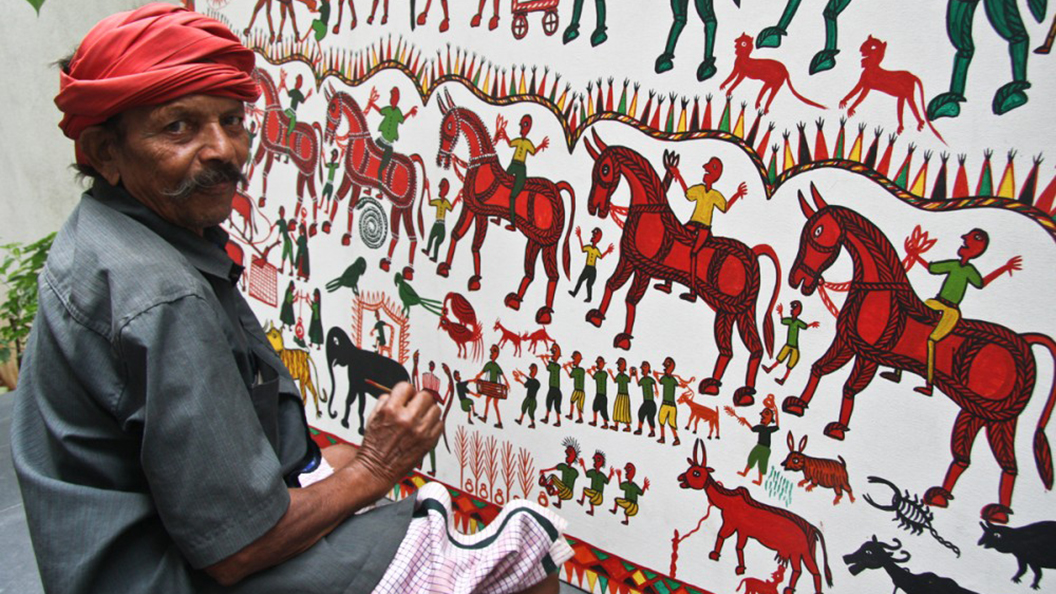
Chhota Udepur, Gujarat
Pithora is a form of ritualistic wall painting by the Rathwa, Bhils, Nayak and Tadi tribes. The name, Pithora, refers to the Hindu deity of marriage, and the art is popular in Gujarat, Rajasthan and Madhya Pradesh. Each Pithora painting is unique, as the artist leaves distinct marks to signify his intellectual and creative rights. It's a folkloric way of copyrighting designs. These paintings are believed to go back a few thousand years, derived from the cave paintings at a local hilltop near koraj-i-dungar.
Heritage Value
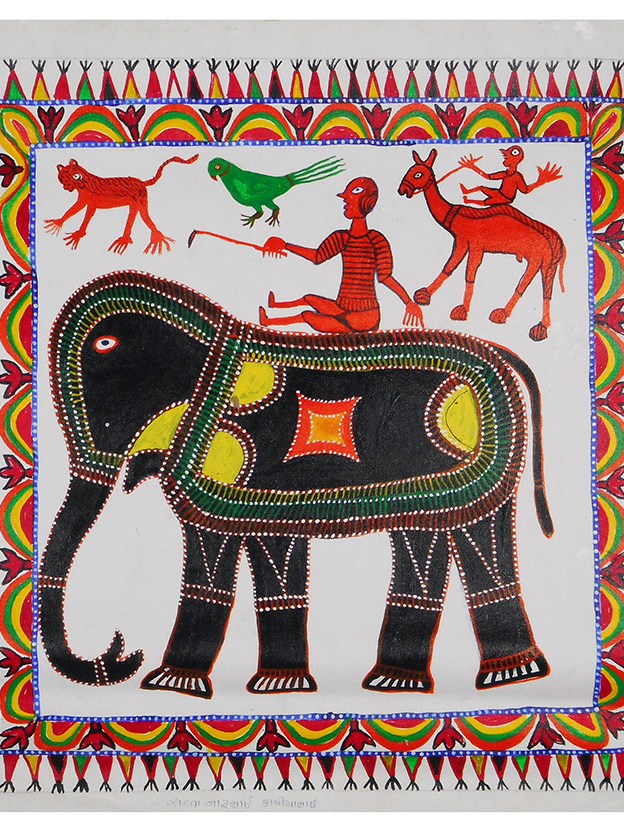
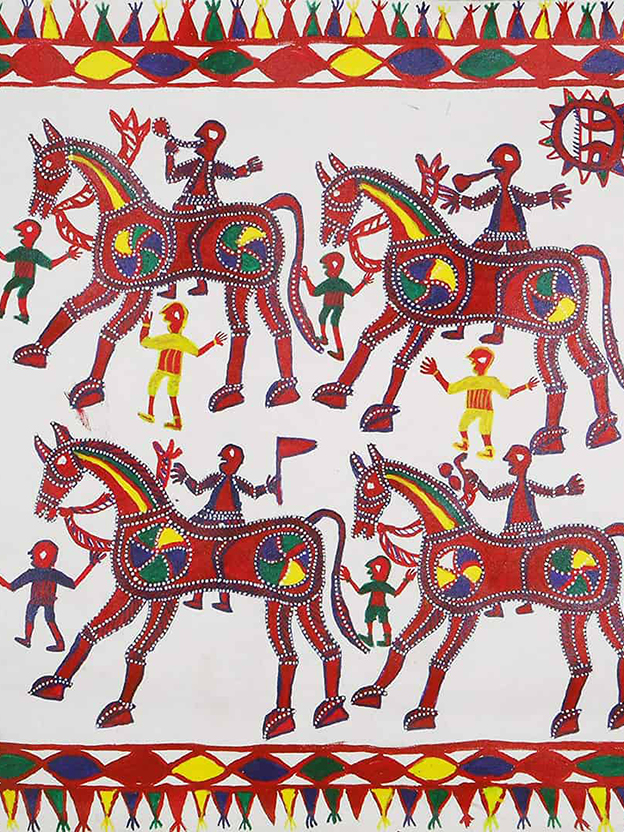
For people from the Rathwa tribe, Pithora is not merely a painting but a medium to express their faith, culture and history. Baba Pithora is one of the main deities worshipped by the Rathwa community, and these paintings are a form of devotional appeasement. These drawings appear on three walls inside the homes of Rathwa, especially in the main threshold of the house. The process of painting is part of a ritual to invoke peace, prosperity, and removal of obstacles from the lives of a particular family. Typically, there are two varieties of Pithora, depending on nature of marital vows and the finances of the family. There’s the Ardho Pithoro (half Pithora) and the Akho Pithoro (complete Pithora). They are also drawn on walls as a form of superstitious intervention if the cattle in the rural house is unyielding or if the children are unwell. In the former, five to nine horses are drawn with only having a rider, while in the latter, there are a total of 18 horses with their celestial riders.
Memory Vault
Since they are expressions of faith and ritualistic belief, Pithora paintings are incomplete without singing and chanting.
Disclaimer:
Any information on this page is anecdotal and based on publicly
available details. If you're interested in learning more,
click here.