
THE CRAFT
Phad Painting

From the state of Rajasthan
Bhilwara, Rajasthan
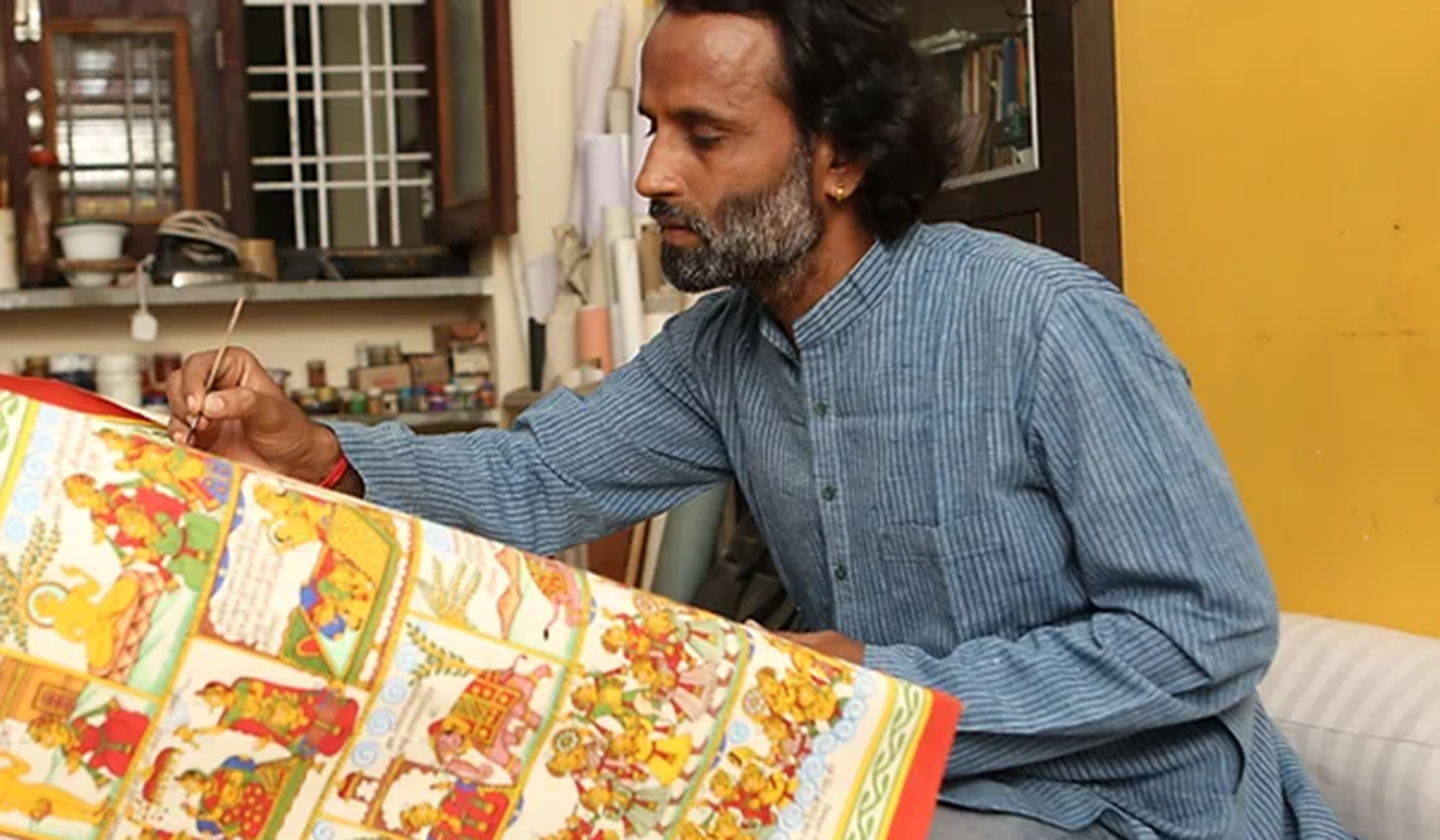
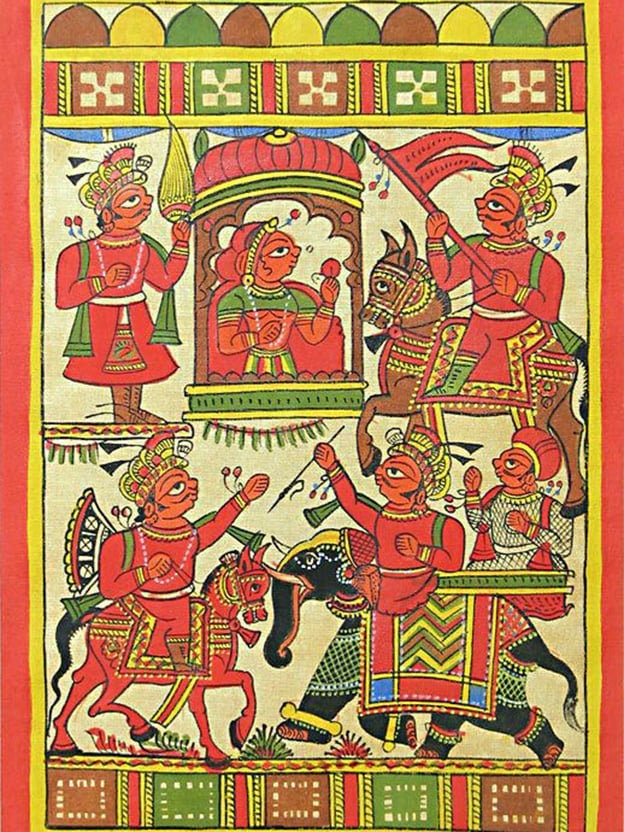
The Phad painting tradition of Rajasthan is more than 700 years old, and it originated in Bhilwara. Phad paintings are created on a scroll made of handmade cloth, which itself is known as phad. The painting style depicts legends of Rajasthani folk deities like Pabuji and Devnarayan, worshipped by the nomadic Rabari tribe. This craft is also closely linked to an elaborate music-and-dance tradition, usually by a pair of balladeers known as the Bhopas.
Heritage Value
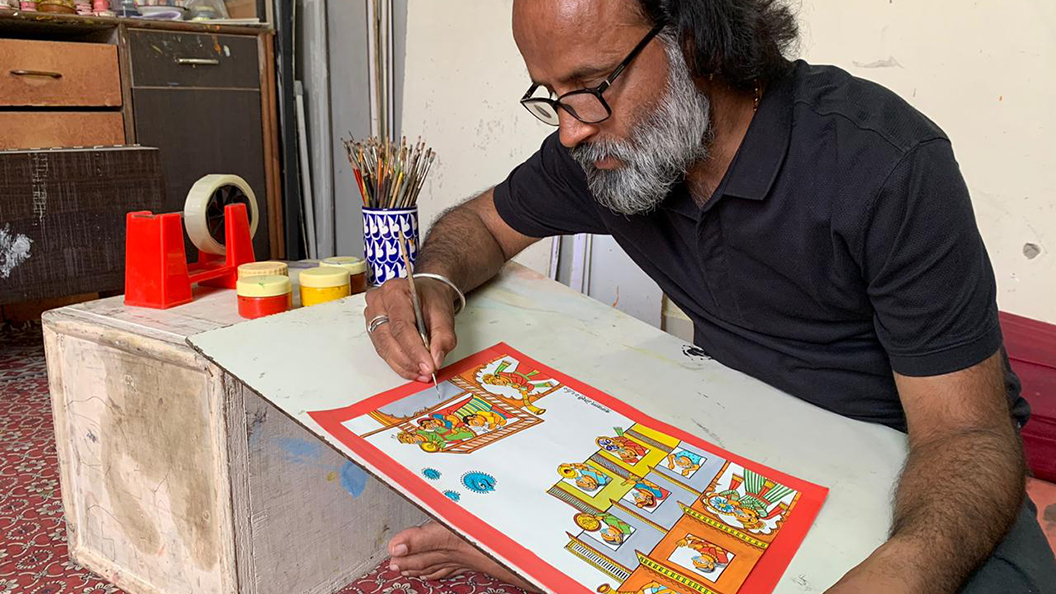
Before painting on the “phad”, the handwoven cloth is first soaked overnight to make the threads thicker. It is then starched and burnished, which makes the surface glazed and crisp, ready for painting. The colours come from natural sources like stones, flowers and herbs. The figures in the paintings usually wear traditional attire in vivid colours. The singers carry the painted phads and an indigenous musical instrument, the ravan hattha. They travel from village to village narrating stories from the Ramayana, Hanuman Chalisa and other mythological tales. The phads of Pabuji are normally about 15 feet (4.6 m) in length, while the phads of Devnarayan are normally about 30 feet long. This traditional art form was practiced only by the artists of Joshi communities, until about 50 years ago.
Memory Vault
In 1960, renowned artist Shree Lal Joshi opened a school called Joshi Kala Kendra to teach this distinct style of painting to keen learners. Now, the school is called Chitrashala and is located in the Bhilwara city in Rajasthan.
Disclaimer:
Any information on this page is anecdotal and based on publicly
available details. If you're interested in learning more,
click here.