
THE CRAFT
Palm leaf Weaving

From the state of Tamil Nadu
Tiruvannamalai, Tamil Nadu
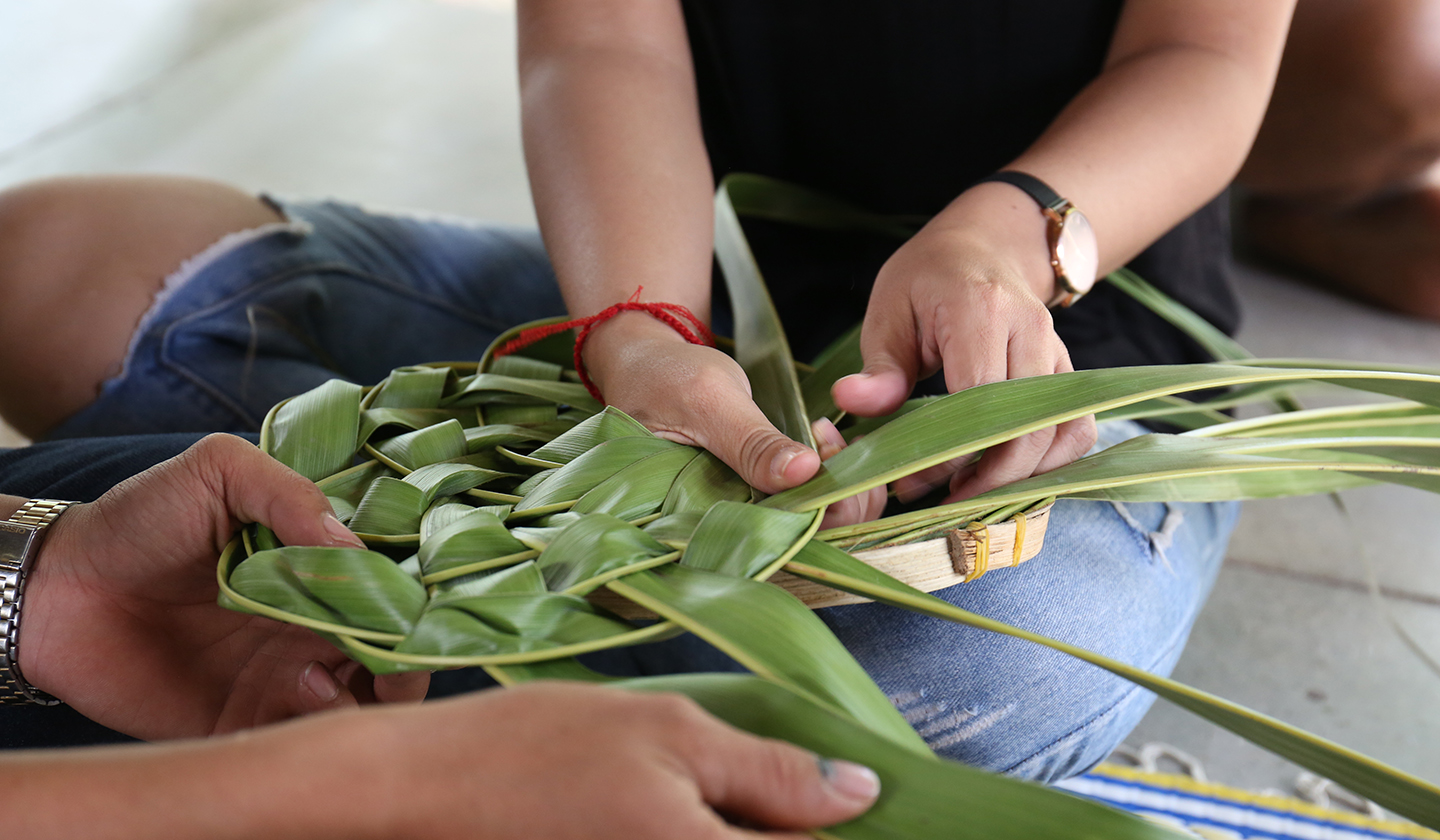
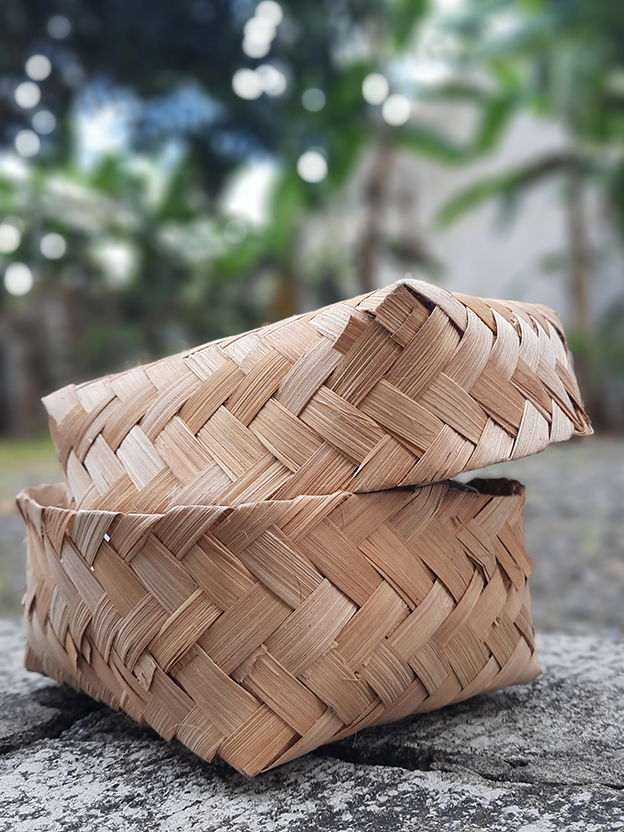
Palm, the state tree of Tamil Nadu, has traditionally been part of the daily lives of the people of the state. Several products are made out of its leaves. Most often, they are braided together to make mats, baskets, boxes and table mats. Tiruvannamalai district in North Tamil Nadu, the abode of elephants, is also famous for this craft.
Heritage Value
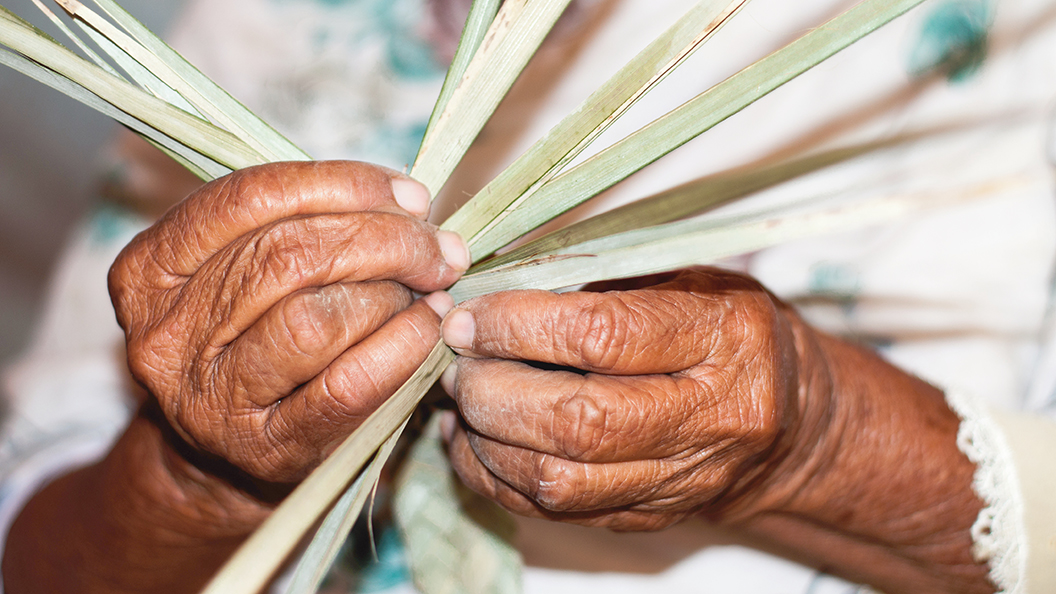
In Tiruvannamalai, the craft is mostly practiced by women. Palm leaf weaving is intricate work that requires hand-eye coordination and requires great attention to detail. The process involves using tender palm leaves separated from the strips and joined by winding a running strip over them. After that, these are folded almost like knotting ribbons and tied by a thin strip of leaf that connects both the layers at equal intervals. The whirling pattern that emerges like a stack of gift-wrapped boxes is unique to palm leaf weaves. Dried palm leaves are most commonly used for the whirling pattern. On the other hand, the ivory-coloured tender new leaf of the palm tree, locally known as kuruthu, is also used for weaving.
Memory Vault
The palm tree is known as a celestial tree because all its parts are useful. Dried palm leaves were used to write manuscripts in ancient times. Now, dried palm fronds provide livelihood to thousands of women across the state. The craft is also practised in Pulicat, a fishing town on the Coromandel Coast where baskets were made for Dutch settlers during colonial rule.
Disclaimer:
Any information on this page is anecdotal and based on publicly
available details. If you're interested in learning more,
click here.