THE CRAFT
Miniature Painting

From the state of Rajasthan
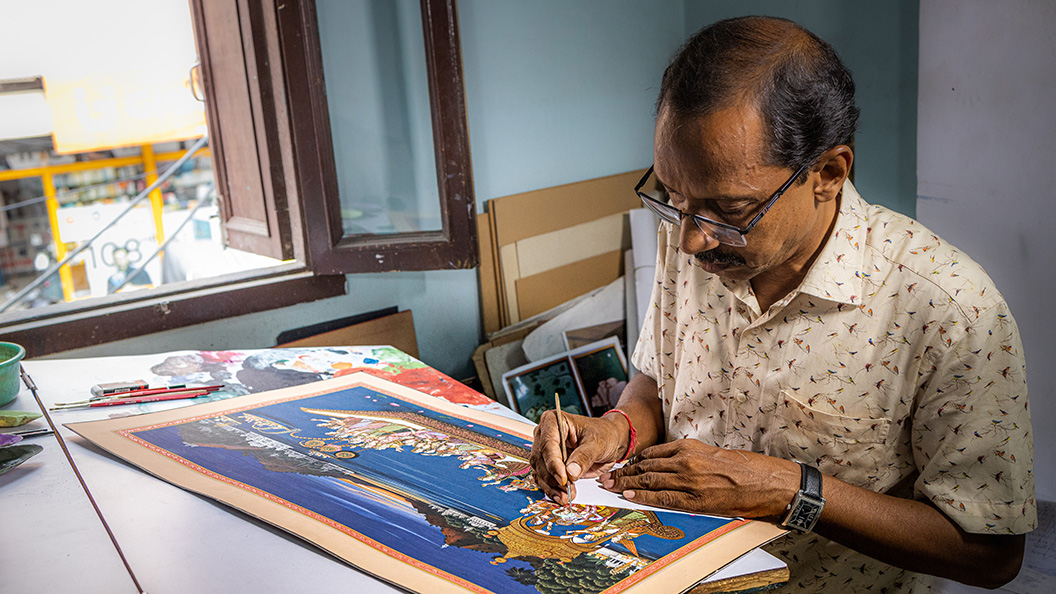
Jaipur, Rajasthan
Indian artists have long showcased their remarkable skill by illustrating palm-leaf manuscripts. They adopted the Persian miniature style and enriched their own artistic vision. Today, miniature art, also known as 'liming,' thrives in cities like Jaipur, Kishangarh, Bikaner, Jodhpur, Bundi, and Udaipur. It is a distinct art form with its own unique character, distinguishing it from the other art of the Mughal era.
Heritage Value
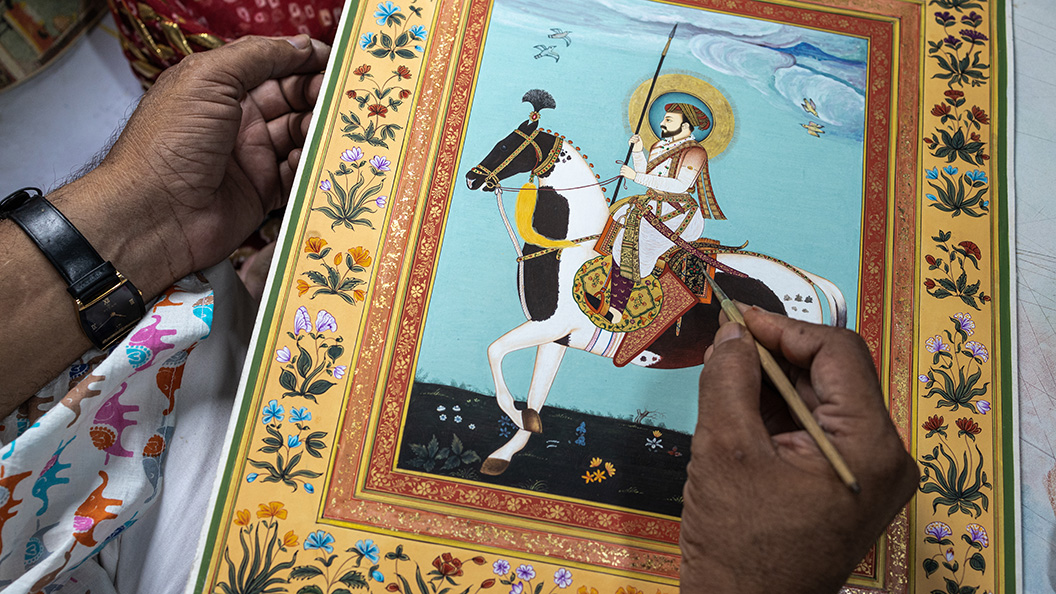
In 1555, Mughal king Humayun became a patron and introduced the art form in India. He deeply admired the art during his exile to Persia and brought miniaturists along with him.
Intercultural exchanges with Rajput rulers brought about another evolution. Maharaja Jai Singh II encouraged beautiful paintings of Radha and Krishna. The painters started used backdrops like the picturesque Rani Sisodia Garden in Jaipur as a backdrop for their paintings. This marked the start of the Jaipur gharana, or Jaipur School of miniature art.
The artists paint on layered handmade paper called wasli. They sketch an outline in black or brown, followed by careful coloring. The tiny motifs are painted using fine-tip brushes made out of camel or squirrel hair. The colours are painstakingly extracted from peepal fruit, palash flowers, leaves, gold, and silver. The paintings are burnished with agate for its sheen.
Today, artists modernize their paintings, making them suitable for contemporary living rooms.
Intercultural exchanges with Rajput rulers brought about another evolution. Maharaja Jai Singh II encouraged beautiful paintings of Radha and Krishna. The painters started used backdrops like the picturesque Rani Sisodia Garden in Jaipur as a backdrop for their paintings. This marked the start of the Jaipur gharana, or Jaipur School of miniature art.
The artists paint on layered handmade paper called wasli. They sketch an outline in black or brown, followed by careful coloring. The tiny motifs are painted using fine-tip brushes made out of camel or squirrel hair. The colours are painstakingly extracted from peepal fruit, palash flowers, leaves, gold, and silver. The paintings are burnished with agate for its sheen.
Today, artists modernize their paintings, making them suitable for contemporary living rooms.
Memory Vault
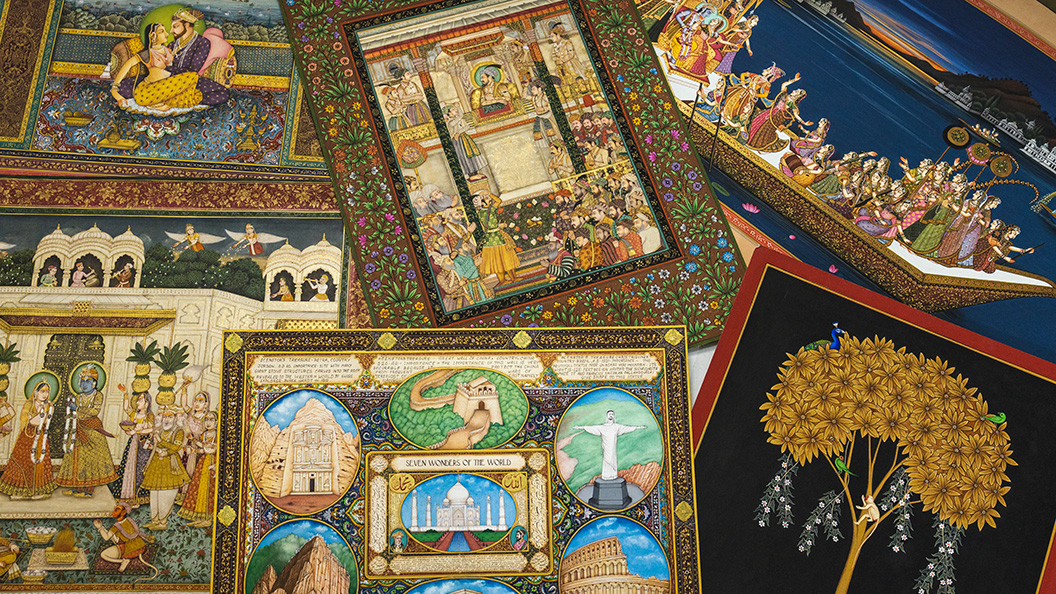
Some aspects of the 18th century masterpiece, Kamasutra by Vatsyayana, have been depicted through miniature paintings. Contemporary coffee-table books showcase these and give it a populist spin. It expands work on miniature paintings from mythological and divine tales to narratives of intimacy.
Disclaimer:
Any information on this page is anecdotal and based on publicly
available details. If you're interested in learning more,
click here.