THE CRAFT
Meenakari

From the state of Rajasthan
Jaipur, Rajasthan
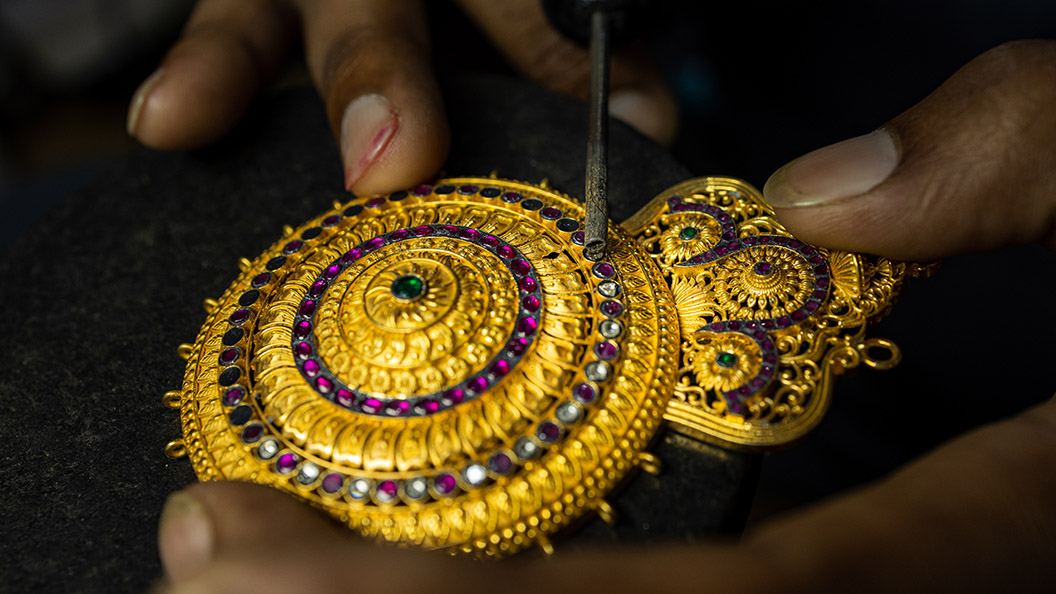
Meenakari is a kind of enamel painting on jewellery and other decorative items, originally a Persian art form. Rajasthani artisans, commonly from the Soni or Verma community practice this craft. They are popularly known as meenakars.
Heritage Value
The term Meenakari comes from Mina, meaning paradise, and Kari, referring to working on an object. This art form was brought to India in the 16th century by Mughal rulers.
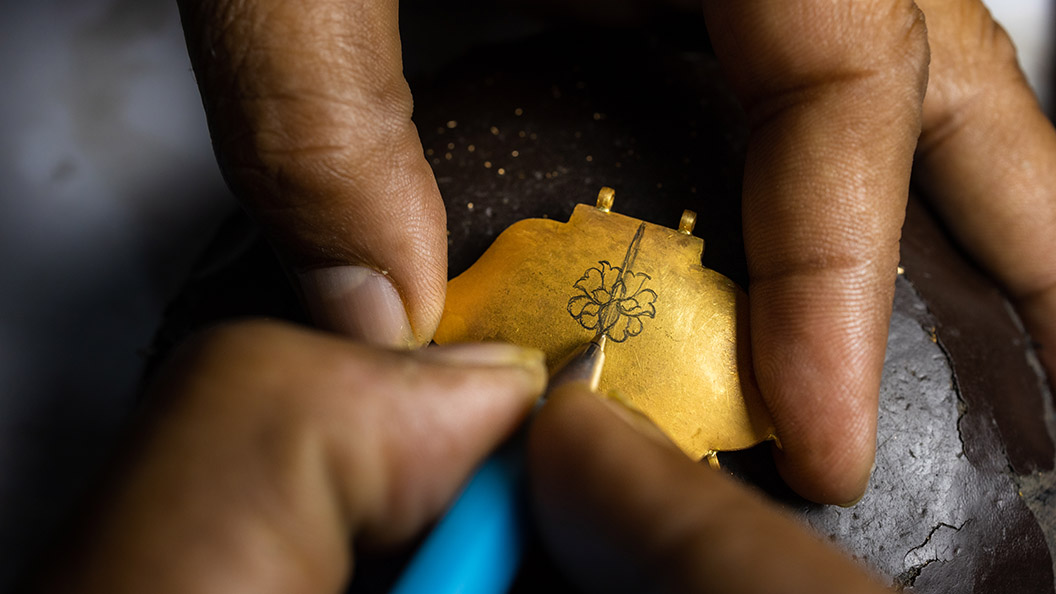
The artists first mould and cast a metal sheet for enamelling. Then, an engraved impression of the design is formed by pressing the mould on the sheet. The enamel design is made by crushing glass and then mixing it with pomegranate seeds and water. This crushed glass concoction, also made with mortar and pestle, is applied onto a blistering hot sheet with fine needles, a brush or spokes, following the design mould. Enamelling can be done in different colours, like red, green, white or even gold. However, the most famous and traditional hue is blue, made with cobalt oxide.
The artists first mould and cast a metal sheet for enamelling. Then, an engraved impression of the design is formed by pressing the mould on the sheet. The enamel design is made by crushing glass and then mixing it with pomegranate seeds and water. This crushed glass concoction, also made with mortar and pestle, is applied onto a blistering hot sheet with fine needles, a brush or spokes, following the design mould. Enamelling can be done in different colours, like red, green, white or even gold. However, the most famous and traditional hue is blue, made with cobalt oxide.
Memory Vault
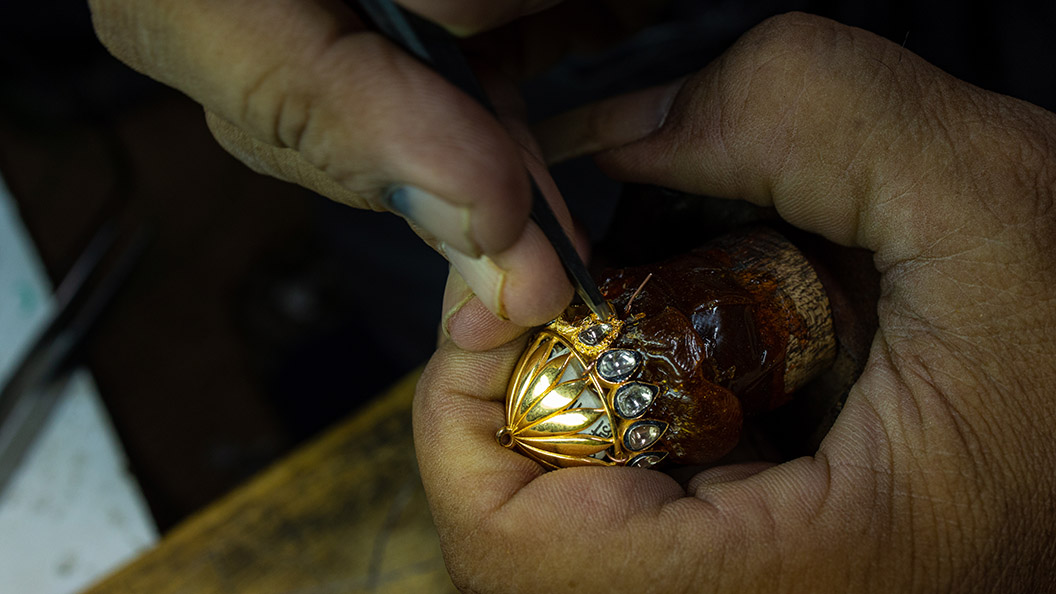
It's said that Raja Man Singh of Amber popularised this exquisite art form in Rajasthan. He invited skilled meenakars from Lahore to Jaipur, which emerged as a hub for the art.
Disclaimer:
Any information on this page is anecdotal and based on publicly
available details. If you're interested in learning more,
click here.