THE CRAFT
Mangalgiri Handloom

From the state of Andhra Pradesh
Mangalagiri, Andhra Pradesh
Located 12 kilometres from Vijayawada in Andhra Pradesh, Mangalagiri is known for its paddy cultivation and exquisite handloom saris. Historical inscriptions dating back to 1593, mention the migration of local weavers due to burdensome taxes imposed by the Qutub Shahi rulers. This resulted in a severe blow to the weaving industry, and the tax was eventually withdrawn.
Heritage Value
These saris were originally worn during rituals and visits to the Panakala Narasimha Swamy Temple. It was customary to buy a sari from a local craftsman after the temple visit. The craftsmanship of this five-centuries-old textile has now captivated modern wearers, too.
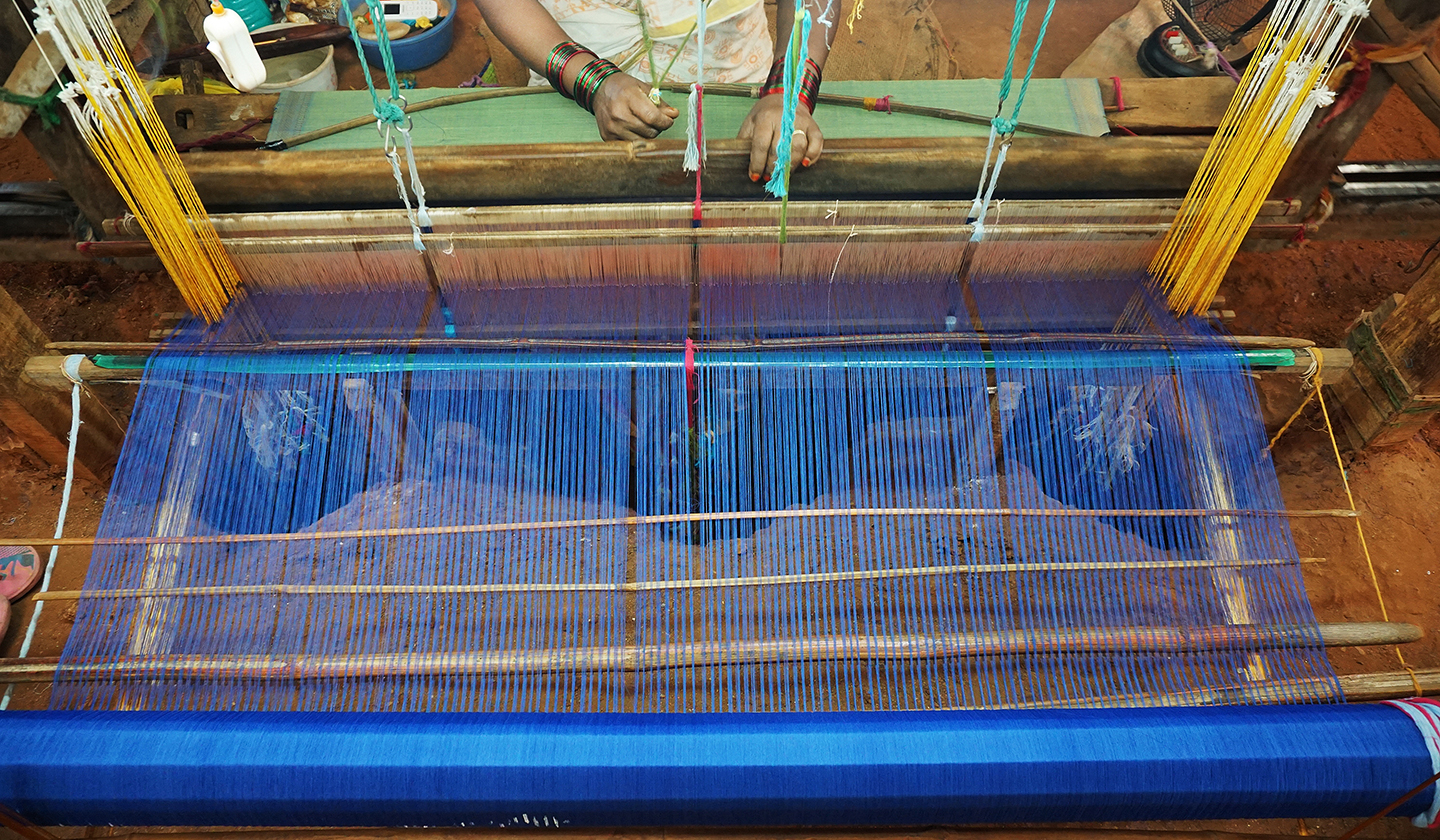
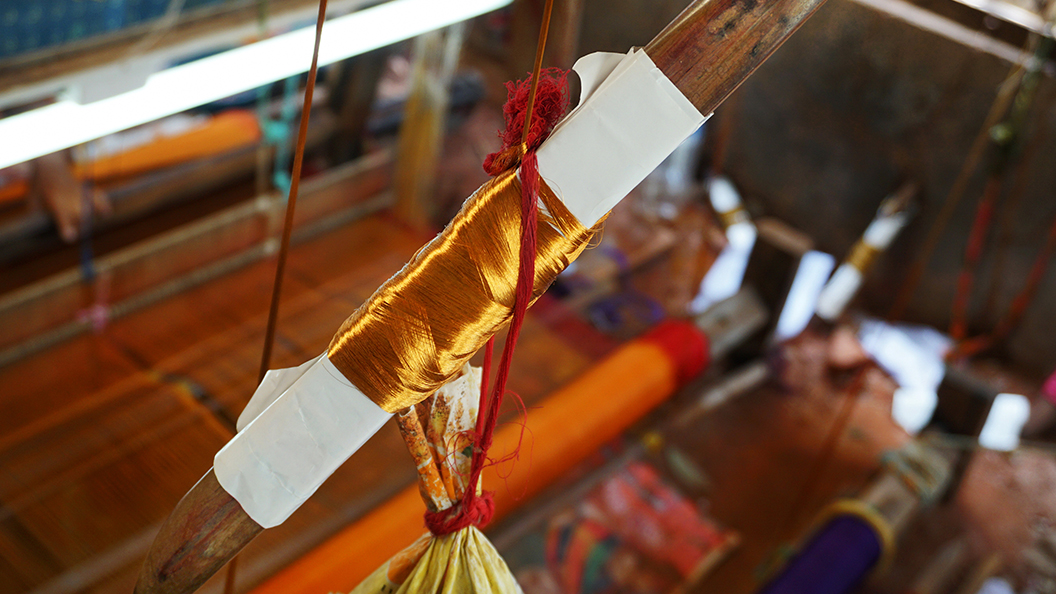
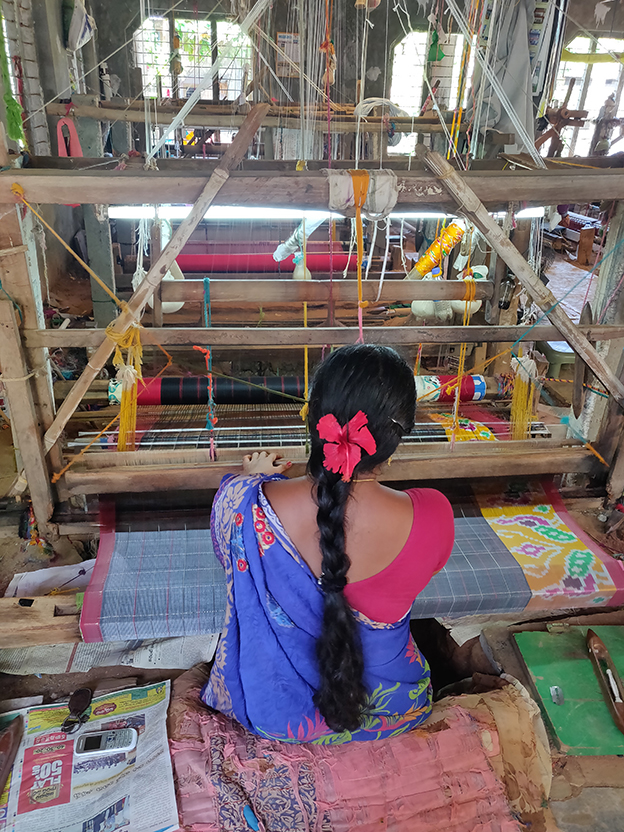
The artists weave with a warp and weft method that uses pit looms, and sometimes jacquard weaving. The dyed cotton yarn is wound into a warp and weft using a charka, shift bamboo, bobbin and pirn (rod around which a weft thread is wound). The warp extension is made suitable for weaving by spraying rice congee (starchy broth).
These saris feature brocade borders and pallu with lustrous zari stripes, also called the Nizam border. The body of the sari is usually minimal, without any patterns or motifs. Weavers can take two to three days to finish a six-yard sari.
The Mangalagiri textile was certified with the Geographical Indication (GI) status in 2013. This helped empower 5,000 skilled weavers.
The artists weave with a warp and weft method that uses pit looms, and sometimes jacquard weaving. The dyed cotton yarn is wound into a warp and weft using a charka, shift bamboo, bobbin and pirn (rod around which a weft thread is wound). The warp extension is made suitable for weaving by spraying rice congee (starchy broth).
These saris feature brocade borders and pallu with lustrous zari stripes, also called the Nizam border. The body of the sari is usually minimal, without any patterns or motifs. Weavers can take two to three days to finish a six-yard sari.
The Mangalagiri textile was certified with the Geographical Indication (GI) status in 2013. This helped empower 5,000 skilled weavers.
Memory Vault
When Union Finance Minister, Nirmala Sitharaman presented her first budget in 2019, she chose to wear a Mangalagiri sari. Her bright pink Mangalagiri sari with a gold border complimented her holding the traditional bahi khata (an accounting notebook bound with red fabric).
Disclaimer:
Any information on this page is anecdotal and based on publicly
available details. If you're interested in learning more,
click here.