THE CRAFT
Loin Loom

From the state of Nagaland
Kohima and Dimapur, Nagaland
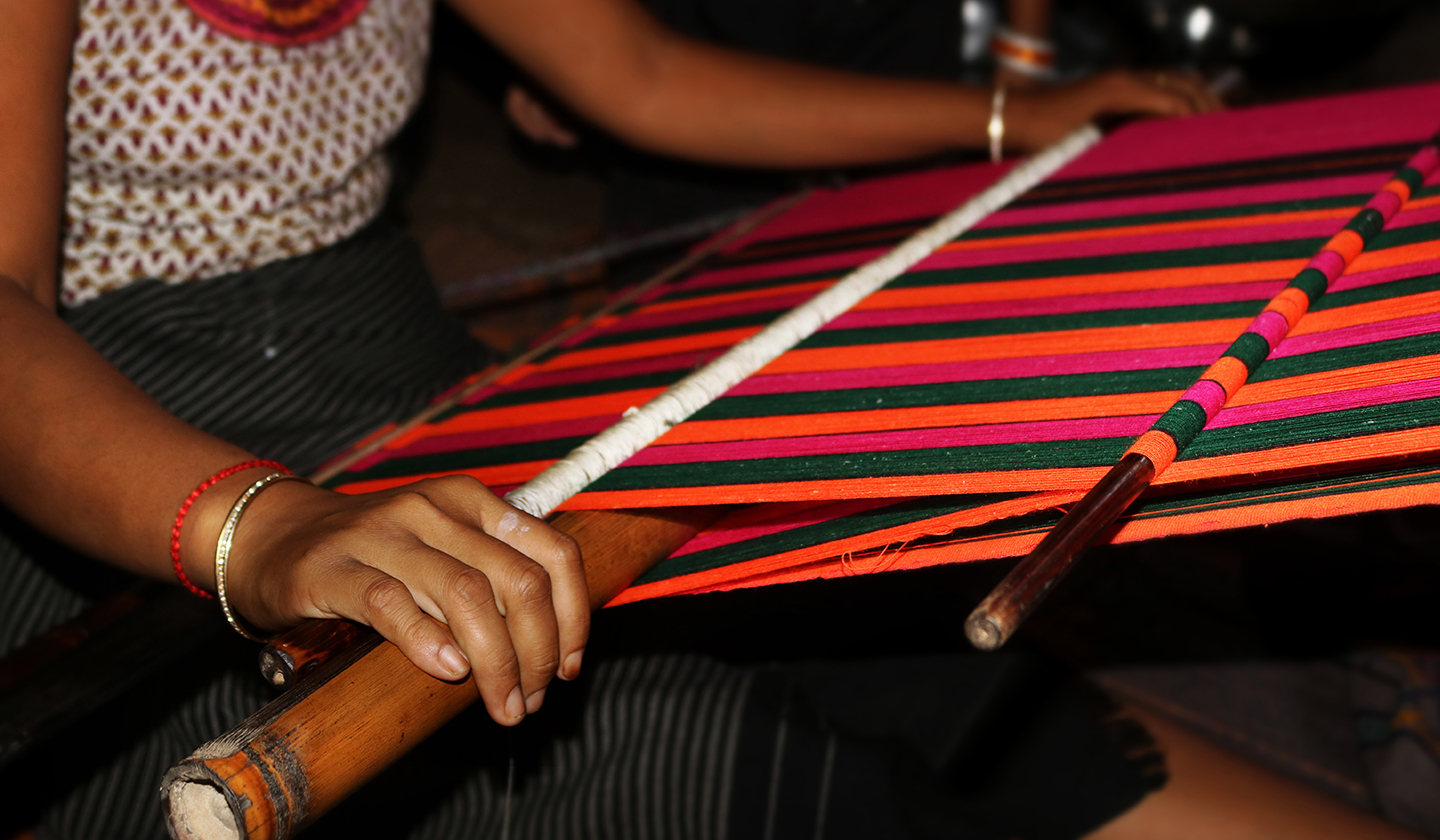
In Nagaland, 16 primary tribes distinguish themselves not only through customs and dialects, but also through clothing and their motifs. Tribal garments serve as significant indicators of family and hometown. Some designs are crafted to commemorate special occasions. For all this, the Loin loom is made to adapt easily to the bodies of female weavers. It's essentially a women’s craft, and this is a matter of cultural and entrepreneurial obligation.
Heritage Value
In the past, weaving, spinning cotton yarn, and dyeing fabric were highly valued skills for a prospective bride. It was customary for girls to learn the art.
The weavers first extract cotton seeds, roll them on a stone and use a loom with a back strap, supporting a continuous horizontal warp. The warp beam, made of six sticks called kotong, is secured to a wall with loops. The lower cloth beam connects to the weaving belt that the weaver wears around their lower back, to maintain warp tension. Threads are carefully wound onto a frame with lease sticks, and tools like a shed pole and heald stick are used to create two layers.
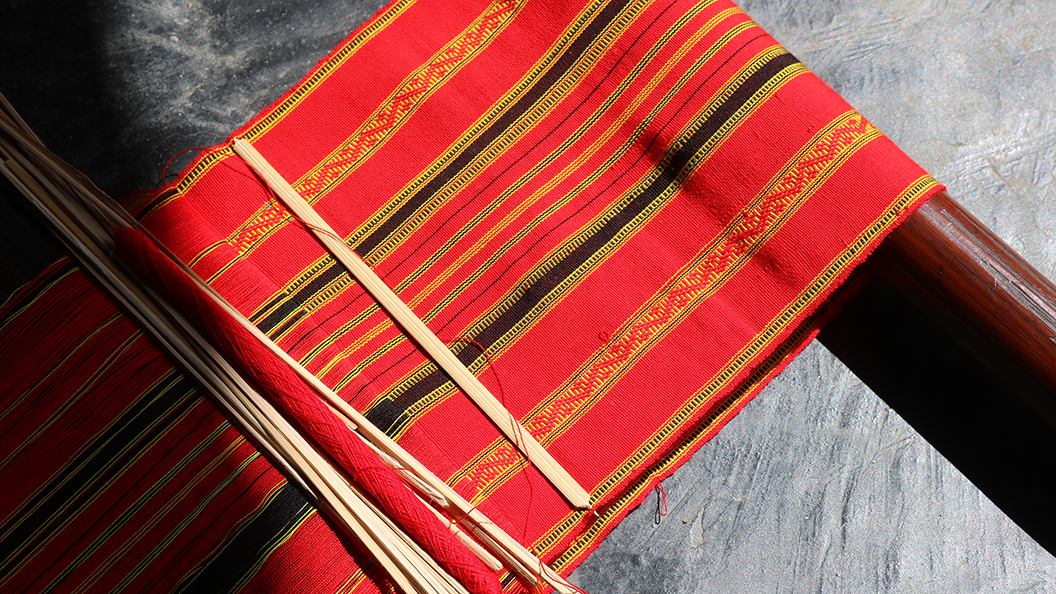
The resulting cloth exhibits ribbed texture and black or red stripes on white. To make longer fabrics, multiple pieces are stitched together. The unique concept of the half heald guides alternate warp threads.
The weavers first extract cotton seeds, roll them on a stone and use a loom with a back strap, supporting a continuous horizontal warp. The warp beam, made of six sticks called kotong, is secured to a wall with loops. The lower cloth beam connects to the weaving belt that the weaver wears around their lower back, to maintain warp tension. Threads are carefully wound onto a frame with lease sticks, and tools like a shed pole and heald stick are used to create two layers.
The resulting cloth exhibits ribbed texture and black or red stripes on white. To make longer fabrics, multiple pieces are stitched together. The unique concept of the half heald guides alternate warp threads.
Memory Vault
This ancient skill is deeply rooted in the lives of Naga tribes. It shares similarities with techniques in Mexico, Peru and Guatemala, called the back-strap loom. Nagaland’s crafts industry has survived because of self-reliance and a well-managed raw material.
Disclaimer:
Any information on this page is anecdotal and based on publicly
available details. If you're interested in learning more,
click here.