THE CRAFT
Kutchi Hand Embroidery

From the state of Gujarat
Kachchh, Gujarat
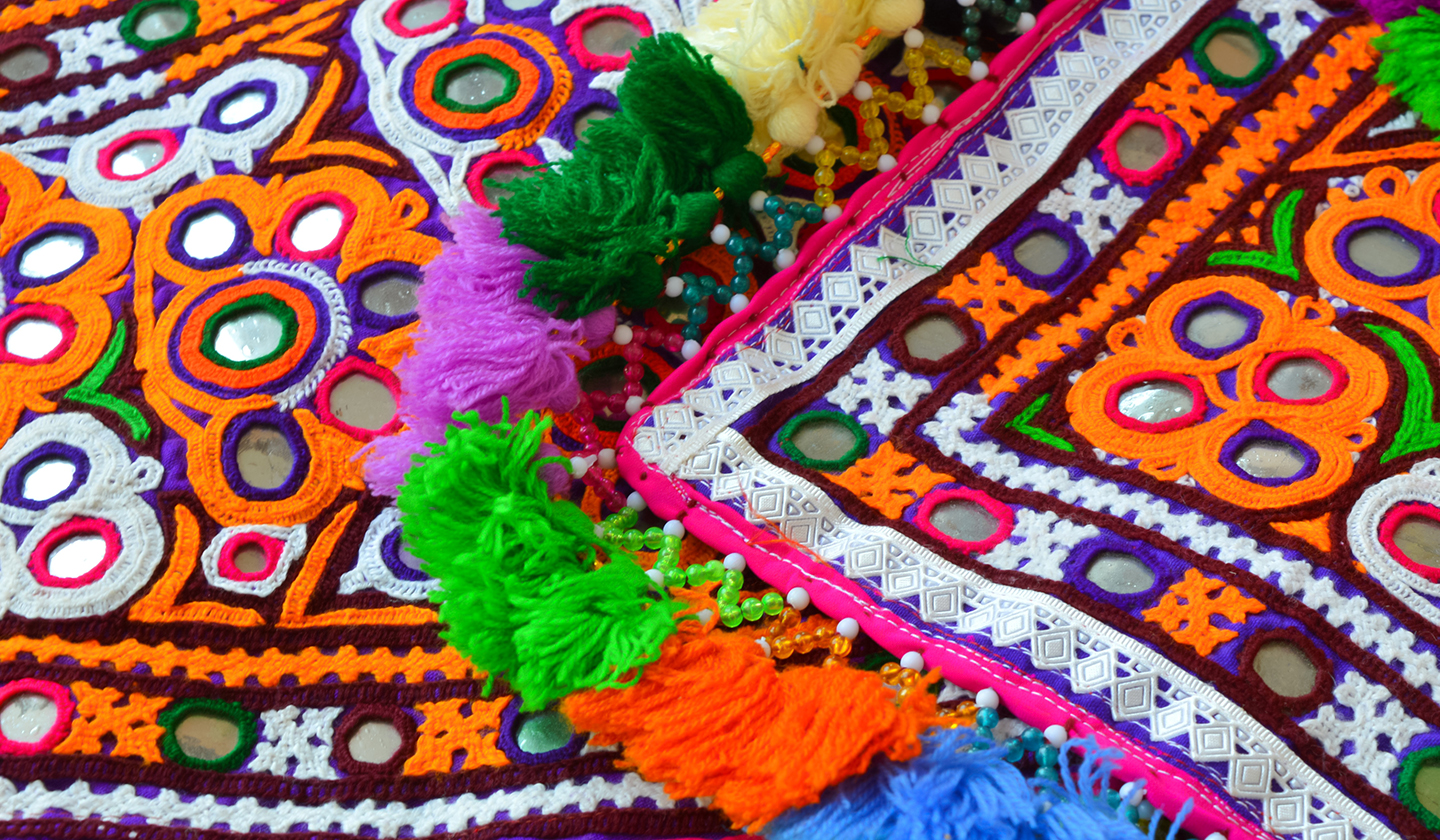
The embroidery of Kachchh is part of its rural-pastoral, crafts-rich identity. So much so, that no mention of the region is complete without it. A mix of techniques from different communities create the vast library of Kachchh embroidery. It also includes mirror work, or shisha kaam, stitches like pako, soof, hurmicho and aari, and several other forms of embroidery by women in the Kachchh villages.
Heritage Value
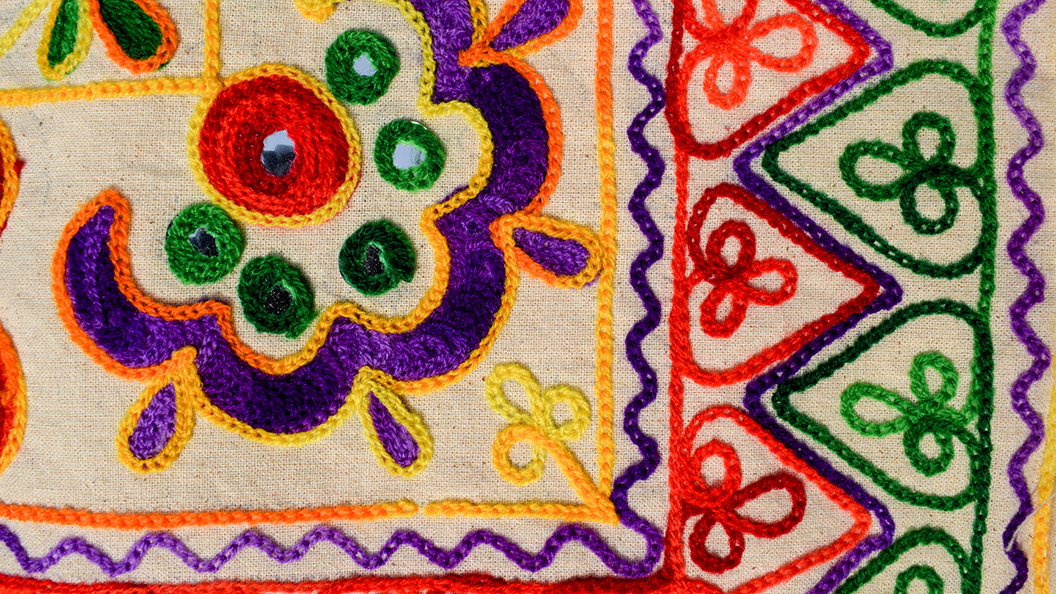
Kachchh embroidery is also known as Kutchi or Kachchhi embroidery, and Mochi Bharat, though aari embroidery—its other name—is separately recognised too. The roots of this can be traced back to the skilled artisans of the mochi (shoemaker) community. Artists enjoying patronage from courts in Kachchh and Kathiawad, they began practising aari work. This involved intricate embroidery on textiles and decorative items.
Kachchh embroidery uses traced or untraced design on fabrics like cotton, silk, wool, and mashru (silk-cotton blend). Coloured threads, including floss silk, are used to do the needlework as well as chain stitches. Artisans also use mirrors, beads, seashells and sequins to create luminescent patterns. The motifs are inspired by nature, geometric shapes and local folklore, daily life, flora and fauna. Materials, motifs, and techniques vary among different communities, but the underlying meaning and message binds together craft, community identity and functionality.
Kachchh embroidery uses traced or untraced design on fabrics like cotton, silk, wool, and mashru (silk-cotton blend). Coloured threads, including floss silk, are used to do the needlework as well as chain stitches. Artisans also use mirrors, beads, seashells and sequins to create luminescent patterns. The motifs are inspired by nature, geometric shapes and local folklore, daily life, flora and fauna. Materials, motifs, and techniques vary among different communities, but the underlying meaning and message binds together craft, community identity and functionality.
Memory Vault
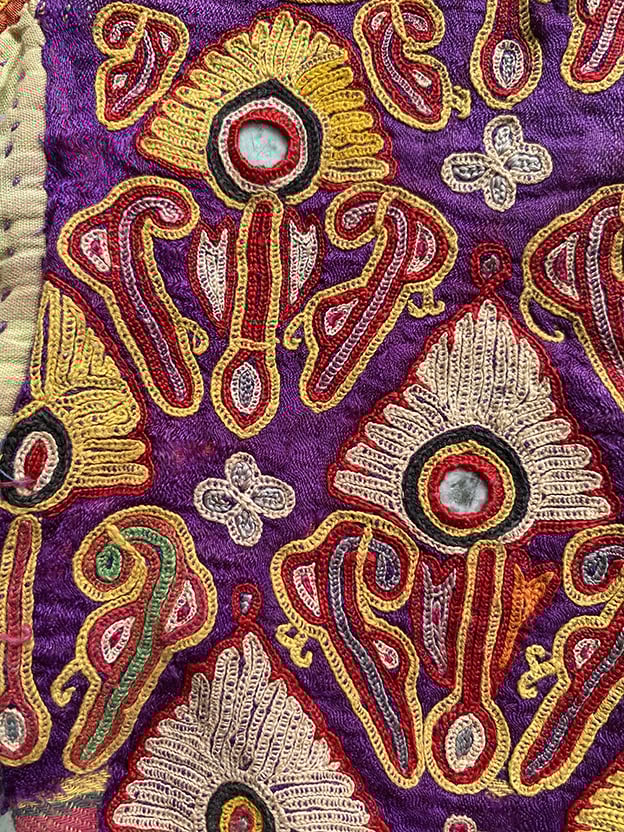
The "Living Emrboideries of Kutch", is a unique museum in the Living and Learning Design Centre near Ajrakhpur in Kachchh. The museum was launched by Shrujan founder and social entrepreneur, the late Chandaben Shroff. Distinct by community, and curated with customs, rituals and pastoral lifestyles, it best exhibits the embroideries of Kachchh. Sanjay Leela Bhansali’s 2013 film, Goliyon Ki Rasleela Ram-Leela beautifully explores Kachchi embroideries.
Disclaimer:
Any information on this page is anecdotal and based on publicly
available details. If you're interested in learning more,
click here.