THE CRAFT
Kotpad Handloom

From the state of Odisha
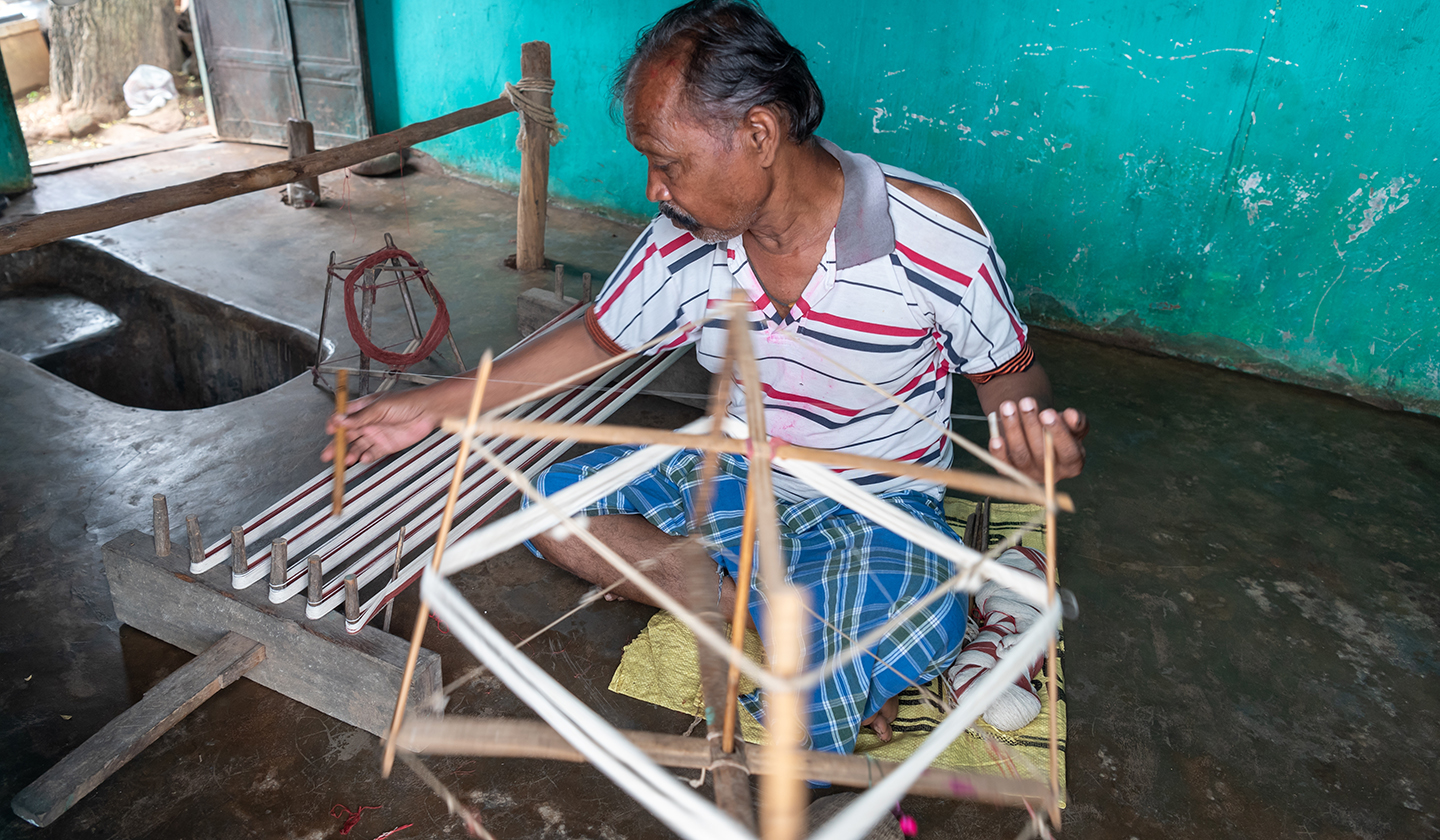
Koraput, Odisha
The Mirgan tribal communities in Odisha’s Koraput district have been weaving Kotpad handloom for more than a century. This technique is known for its simplicity and hand-dyed cottons in red, black and brown.
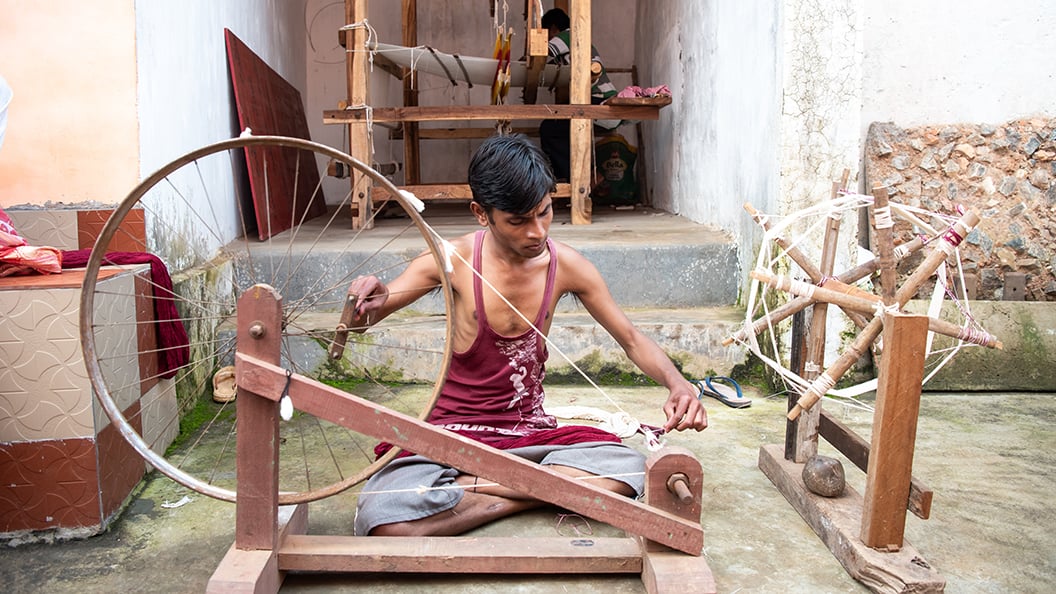
Heritage Value
Skilled weavers, or panikas, use pit treadle looms and three shuttles to weave the fabric with organic cotton by interlacing the warp and weft threads. The saris, pata, gamcha, and tuval feature triangular motifs, called kumbha. The textile boiled with root extracts from the the Madder tree to bring out distinct colours. The play of red with off-white, with motifs inspired by nature and local cultural landscapes, adds to their simplistic charm.
The Saris are categorised based on rituals and have distinct motifs. For example, the kumbhakarno pata is a bridal sari with an elaborate pallu and borders adorned with kumbha motifs. The sunder mani pata, worn during special events, has two broad bands on the pallu and motifs on either side of these bands. Men can also use this style for tuval or lower garments, which have motifs and borders.
This art form was certified with the Geographical Indication (GI) tag in 2005.
The Saris are categorised based on rituals and have distinct motifs. For example, the kumbhakarno pata is a bridal sari with an elaborate pallu and borders adorned with kumbha motifs. The sunder mani pata, worn during special events, has two broad bands on the pallu and motifs on either side of these bands. Men can also use this style for tuval or lower garments, which have motifs and borders.
This art form was certified with the Geographical Indication (GI) tag in 2005.
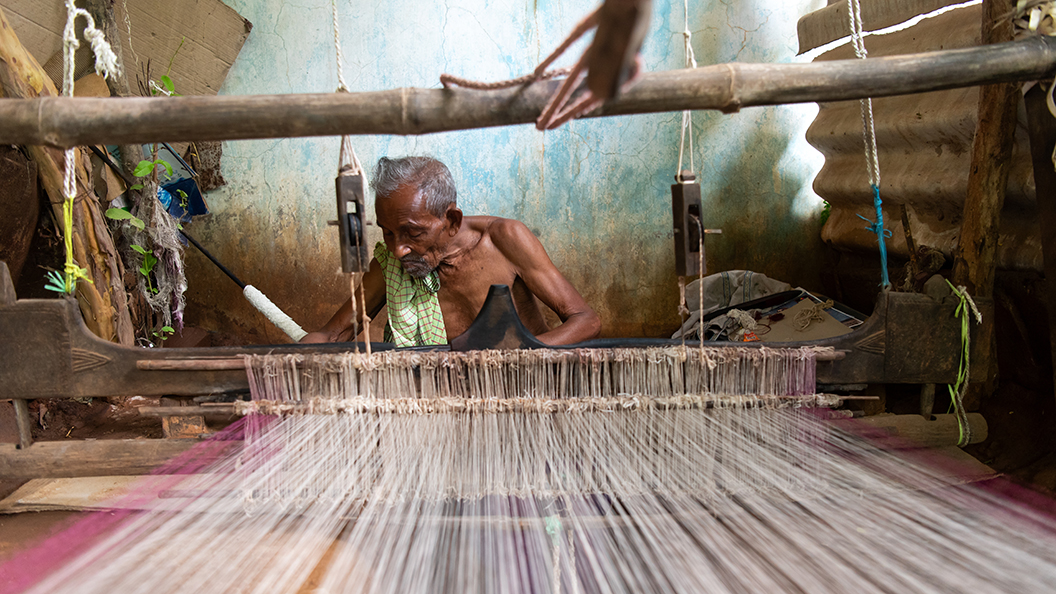
Memory Vault
Several noted artists and scholars work with the Mirgan communities to showcase this craft. This includes textile artist Pankaja Sethi, and Bengaluru-based revivalist Anupriya Mridha. A documentary by Biswanath Rath, Kotpad Weaving: The Story of a Race Against Time, received 6 awards and recognition at 33 film festivals globally. It poignantly narrates the challenges faced by this languishing textile tradition.
Disclaimer:
Any information on this page is anecdotal and based on publicly
available details. If you're interested in learning more,
click here.