THE CRAFT
Kerala Mural Painting

From the state of Kerala
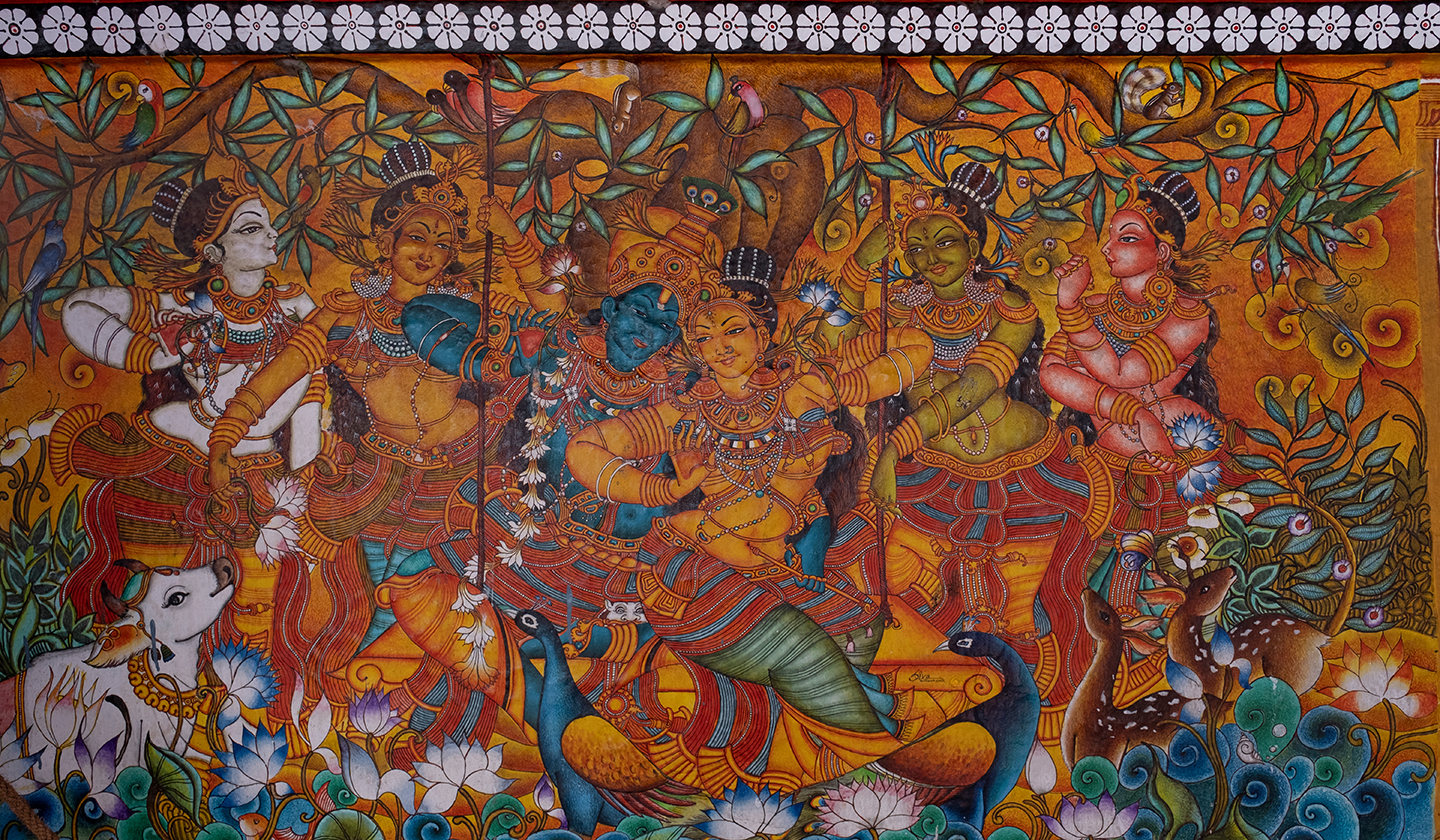
Ernakulam, Kerala
The mural paintings of Kerala adorn the walls and ceilings of temples. They traditionally depict scenes from Indian mythologies. Influenced by Dravidian rituals, these murals seamlessly blended with the intricate wood carvings at the temples. The oldest examples of these murals can be seen at the Thirunandikkarai Cave Temple. It is now a part of Tamil Nadu’s Kanyakumari district.
Heritage Value
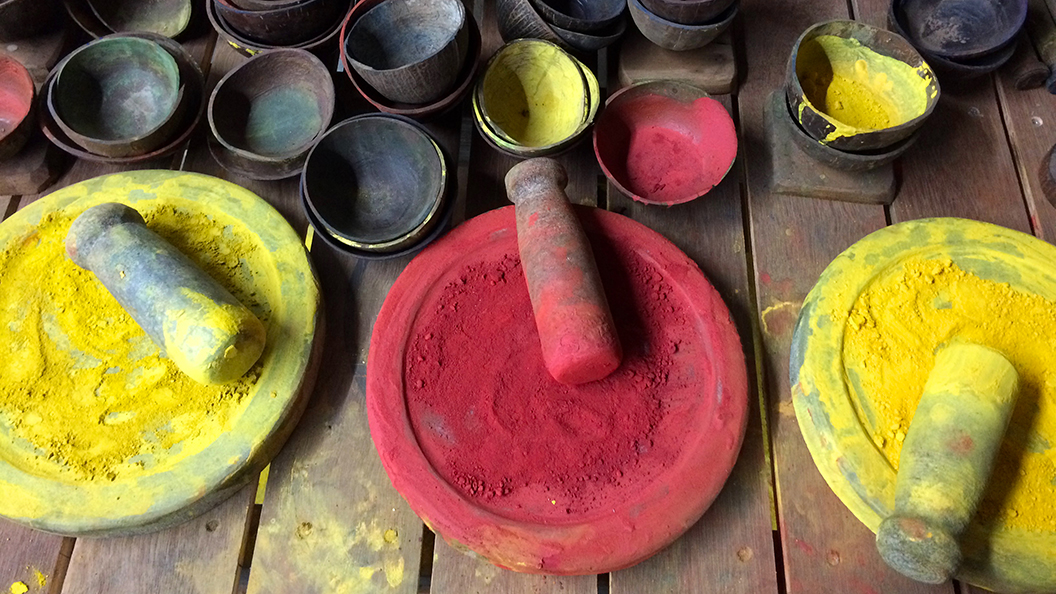
Kerala’s mural art traditions can be traced back to the 8th century. The most notable examples emerged between the 15th and 19th centuries. The muralists adhered to Shilparatna, a Sanskrit guidebook on pigment preparation, brush techniques, plaster application, sketching methods, colour palettes and even postures and proportions of figures. The iconography finds its foundation in dhyana slokas. These are a collection of verses defining nine rasas (emotions). They offer information on embellishments, weapons, vehicles, proportions and colour schemes. The pigments, brushes and adhesive were made with natural minerals and plants.
Under noble patronage, such murals graced the walls of royal households and palaces. This includes the Mattancherry Palace in Kochi. The largest panel, known as the "Gajendra Moksha", is located at Krishnapuram Palace in Alappuzha district. Contemporary artists still follow the traditional principles, connecting the past and the present.
Under noble patronage, such murals graced the walls of royal households and palaces. This includes the Mattancherry Palace in Kochi. The largest panel, known as the "Gajendra Moksha", is located at Krishnapuram Palace in Alappuzha district. Contemporary artists still follow the traditional principles, connecting the past and the present.
Memory Vault
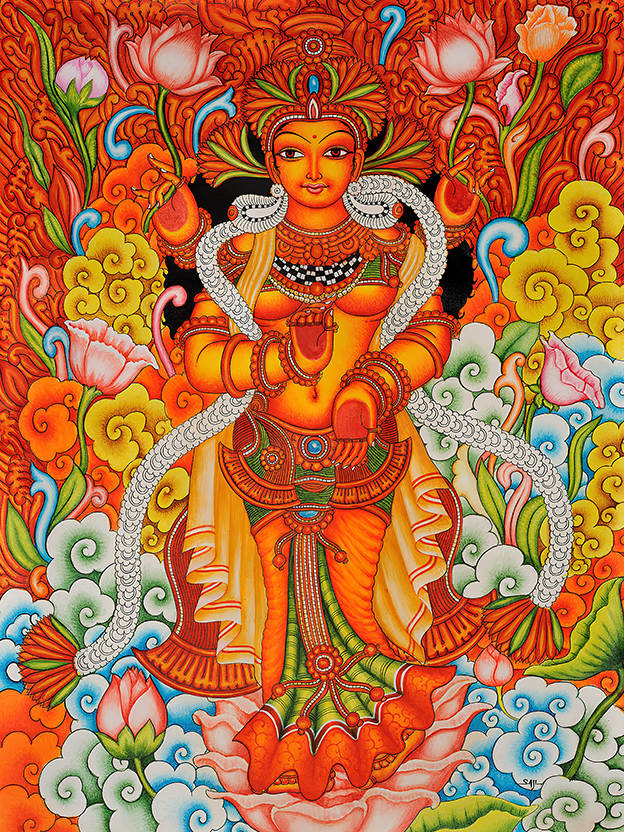
Expanding its horizons beyond temple walls, the art form is now found on canvases, clay, fabric and paper. Muralist PK Sadanandan has added a unique twist, by using canvas sourced from fishing boats in Kochi. His works can be seen in galleries and were also exhibited at the Kochi-Muziris Biennale 2016.
Disclaimer:
Any information on this page is anecdotal and based on publicly
available details. If you're interested in learning more,
click here.