THE CRAFT
Kanchipuram Handloom
From the state of Tamil Nadu
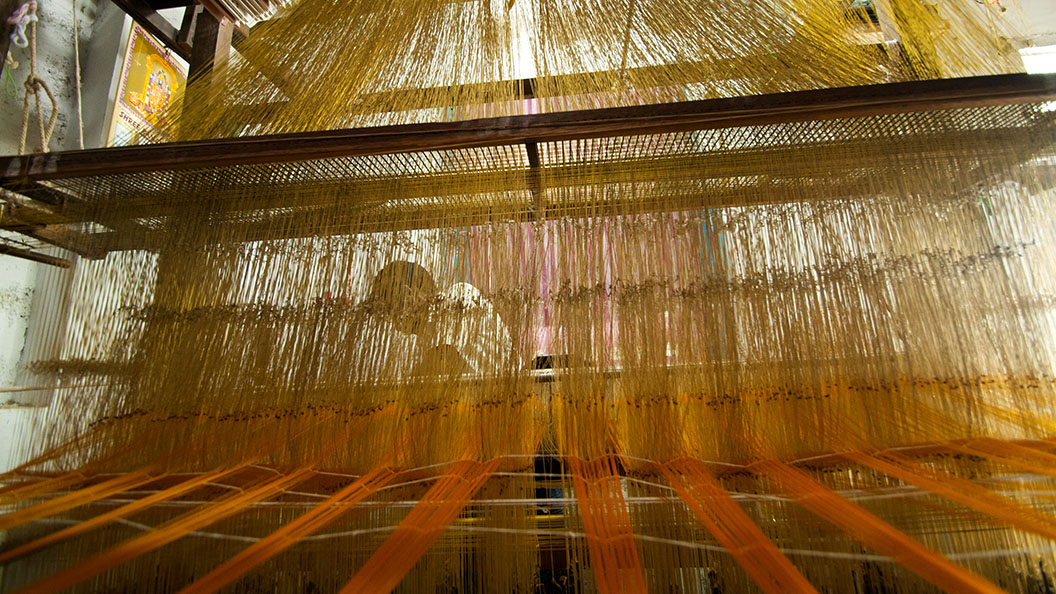
Kanchipuram, Tamil Nadu
With a history spanning over 150 years, handwoven saris from Kanchipuram, also known as Kanjeevaram, tangibly represent India’s weaving legacy. The artisans mix graphic, geometric designs, with animal and bird motifs. The opulent temple borders are woven in vibrant silken thread and golden yarn. This is counted among India’s most prized handloom traditions, with its roots in the silk city of Tamil Nadu.
Heritage Value
Ancient southern texts talk about rich silks from Kanchipuram as early as the 2nd century. Historians believe the industry could have started with the migration of the Pattu Saliyar silk weavers. They supposedly belonged to the ancient port city of Kaveripoompattinam, which was submerged by the sea. The tradition could have also originated much later, when Devanga and Saliyar weavers migrated from Gujarat during the reign of Emperor Krishnadevaraya (1509-1529 CE). This woven legacy achieved new heights with weavers from Andhra Pradesh. They shifted base in the 15th century during the Vijayanagara rule. The weave regained its former popularity in the late 18th century.
Kanchipurams are woven as nine-yard saris for ritualistic wear with pure mulberry silk. The silk is adorned with silver or gold zari. The borders showcase traditional motifs such as rudraksha, kuyilkan, gopuram, gandaberunda, and mayilkann. Specific colours are marked for different events. An authentic Kanchipuram sari is a product of three-ply silk. It should have contrasting borders known as karai created through the interlocking korvai weaving technique. The pallu, or thalaippu, is joined using the petni technique.
Kanchipuram silk saris were certified with the Geographical Indication (GI) tag in 2005.
Kanchipurams are woven as nine-yard saris for ritualistic wear with pure mulberry silk. The silk is adorned with silver or gold zari. The borders showcase traditional motifs such as rudraksha, kuyilkan, gopuram, gandaberunda, and mayilkann. Specific colours are marked for different events. An authentic Kanchipuram sari is a product of three-ply silk. It should have contrasting borders known as karai created through the interlocking korvai weaving technique. The pallu, or thalaippu, is joined using the petni technique.
Kanchipuram silk saris were certified with the Geographical Indication (GI) tag in 2005.

Memory Vault
The Madras Census Report of 1981 credits the origin of the weave to Chola King Raja I (985-1014 CE), because he invited the migration of weavers. This inclusion of weavers in the census is an exceptional part of the documented history of a weave. In popular culture, Bollywood actor Rekha has become synonymous with ornamental Kanchipuram saris. The evolution of her glamorous style centred on these saris has written an iconic chapter in the history of the silk.
Disclaimer:
Any information on this page is anecdotal and based on publicly
available details. If you're interested in learning more,
click here.